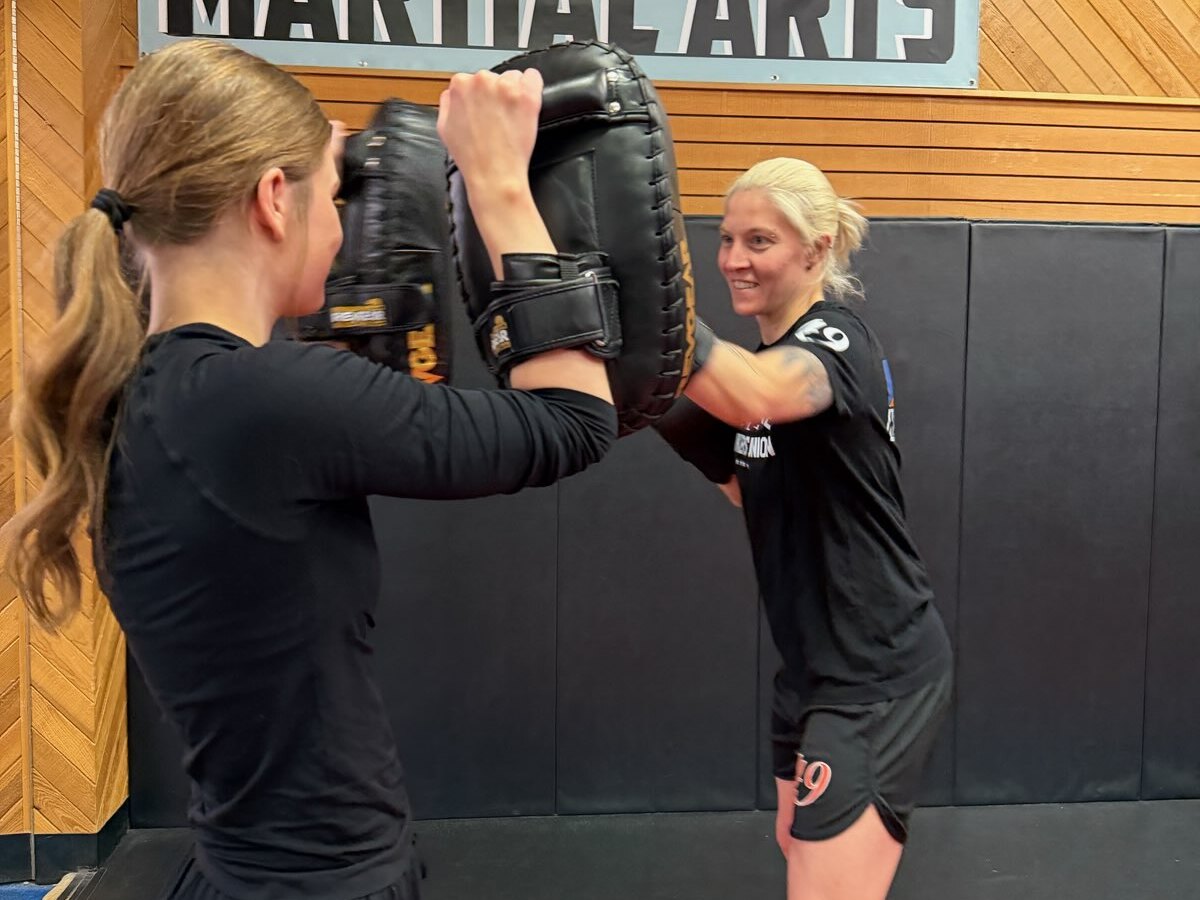
Bag Mistakes That Hurt Your Hands
Boxing | Bag Work
Heavy Bag Mistakes That Hurt Your Hands
Most sore hands on the bag come from a bent wrist, landing on the wrong knuckles, or hitting hard before your hands are ready. Wrap your hands, keep your wrist straight behind the two big knuckles, and snap each punch in and back. Big gloves can hide every one of these mistakes, so check your form even before anything hurts.
- 01
Wrap your hands first
Wraps hold the small bones of your hand together and keep the wrist from bending inside the glove. Take off rings first and spread your fingers while you wrap, so the wrap isn't too tight when you make a fist. Most adults use 180 inch wraps. Put the loop over your thumb, go around the wrist three or four times for support, then around the knuckles three or four times, then cross between the fingers and finish at the wrist. Firm enough to hold everything in place, loose enough that your fingers don't tingle or go numb. Make a fist: it should feel snug, with no gaps over the knuckles.
- 02
Make a real fist
Curl your fingers into your palm and lock your thumb across the outside of your first two fingers. Don't let it stick out, and don't tuck it inside your fingers. Keep the fist relaxed in your guard and squeeze it tight right as the punch lands.
- 03
Line up the wrist and knuckles
Your forearm, your wrist and the two big knuckles, the ones at the base of your index and middle fingers, make one straight line. On the jab and the cross, land with those two knuckles and keep the wrist flat, with no bend up, down or to the side. On the uppercut, your palm faces you and the same two knuckles land with the wrist straight. A push up on your fists shows you where that line is.
- 04
Stand at the right distance
Stand where your punch lands with the arm nearly straight and a soft elbow. Too far away and you reach, and the wrist bends as the arm runs out. Too close and the punch jams with the elbow still bent, so the wrist takes the shock.
- 05
Punch from the face, back to the face
Every punch leaves from your guard and snaps straight back to it, with your hands up and elbows in the whole time. Hit through the surface of the bag, then pull the hand home. A punch that snaps is a lot easier on your wrist than one that shoves.
Things to look out for
A bad fist
The thumb sticks up, gets tucked inside your fingers, or the fist is only half closed when it lands. A loose thumb catches on the bag, a tucked thumb takes the hit, and a half open fist lets the knuckles fold.
The fix: Close the fist all the way before it lands, with the thumb locked across the outside of your first two fingers. Squeeze right at impact and relax again on the way back.
A bent wrist
The wrist bends down, up or sideways as the punch lands, usually because you're reaching or getting tired. The force goes into the joint instead of up through your forearm, and the wrist gets sore and stays sore.
The fix: Line the wrist up with the two big knuckles. Hold a fist push up for 20 to 30 seconds to feel that line, then throw slow punches on the bag looking for the same feeling.
A flat wrist on hooks
On the hook the fist lands flat, so the middle knuckles and the back of your hand hit first. Scraped middle knuckles come from this.
The fix: Land the hook with your palm facing down or facing you, both are common. Either way, the two big knuckles meet the bag and the wrist stays straight in line with your forearm. Stand a little off center so the hook goes into the bag instead of wrapping around the edge.
Only training in big gloves
Big puffy gloves feel fine no matter which knuckles land. The bad habits stay hidden until you switch to smaller gloves or your hands start to ache.
The fix: Use wraps and gloves around 12 to 16 ounces for bag work, on a bag that has some give, since a rock hard or half empty bag is rough on hands. Do light rounds where you pay attention to which knuckles land. You should feel the two big knuckles every time.
Hitting hard before you warm up
Your first punch of the day is your hardest. Cold hands and wrists take the full shock before they're ready, and they get sore fast.
The fix: Roll your wrists and open and close your hands before you glove up. Start with a light round at about half power and build from there.
Pushing the bag
The fist lands and keeps shoving, so the bag swings away. A push keeps the load on your wrist and elbow longer, and your hand stays away from your face.
The fix: Snap the punch in and pull it straight back. If the bag swings a lot after each punch, you're pushing. Think of touching a hot stove.
Body shots too low
You throw body punches low on the bag, around belt level. The wrist bends down as the fist drops, and on a person that height is the hip bone, which is hard on your hand.
The fix: Aim body shots at the ribs, around where the elbow would sit. Bend your knees to get down to it instead of dropping your fist or bending at the waist.
Drills you can practice
Drill 01
Fist push up hold
3 sets of 20 to 30 seconds holding a push up on your first two knuckles, on a mat or carpet, with 30 seconds rest. Start on your knees if you need to. Keep the wrist in a straight line with the forearm and notice how that feels, because it's the line you want when a punch lands.
Drill 02
Light knuckle touch round
2 rounds of 2 minutes with wraps and bag gloves on, at about a quarter of your power. Jab and cross only, landing softly and noticing which knuckles touch first. If you feel the small knuckles or the wrist bending, slow down and fix it before you hit any harder.
Drill 03
Build up rounds
3 rounds of 2 minutes with 1 minute rest. Round one at half power, snapping the jab and cross straight back to your face. Round two at three quarters, adding the lead hook with the wrist turned in. Round three, hit harder only with the punches that are still landing clean.
Frequently Asked Questions
Why do my wrists hurt after hitting the bag?+
Usually the wrist is bending as the punch lands. It happens most when you reach for the bag, push instead of snap, or get tired and the fist goes loose. Line the wrist up with the two big knuckles, stand at the right distance, and take some power off until it's clean.
Which knuckles should you punch with?+
The two big knuckles, at the base of your index and middle fingers. They sit right in line with your forearm, so the force goes straight up the arm. Some boxing styles land certain punches with the bottom knuckles, but beginners start with the two big ones.
Do big gloves protect your hands?+
They pad the hit, but they also hide mistakes. In big gloves you can land on the wrong knuckles with a bent wrist and never feel it. Bag gloves with wraps underneath let you feel which knuckles are landing.
Do I need hand wraps for the bag?+
Yes, every time you hit the bag. Wraps hold your wrist and the small bones of your hand together inside the glove, and the glove alone doesn't do that. At AK-49 Martial Arts, gloves and wraps are handed out for class.
Is it normal for my knuckles to be sore?+
A little tenderness in the first few weeks is common while your hands get used to the work, especially in new gloves. If a wrist or knuckle hurts during a round, stop hitting with that hand and tell your coach. Most of the time it's the fist, the wrist line or the distance, and fixing it takes care of it. Swelling or bruising over the knuckle by your little finger, a common spot for a break called a boxer's fracture, a fist you can't close all the way, numbness, or pain that lasts more than a few days means stop hitting and get it checked by a doctor.
Are You Ready?