
Boxing for Beginners
Boxing | Starting Out
Boxing for Beginners: Where to Start
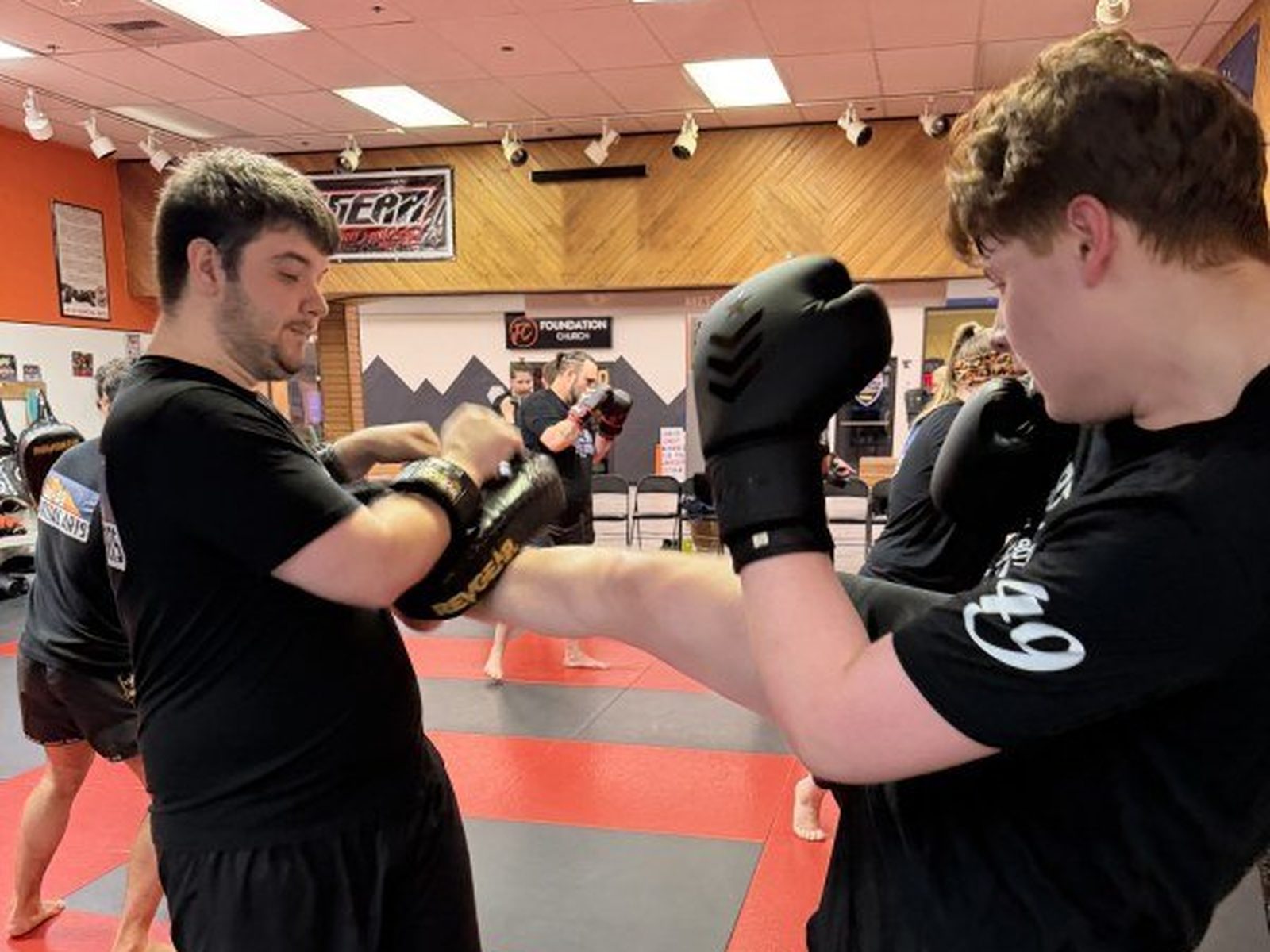
Start with your stance and your guard, then learn to move your feet without crossing them, then the jab and the cross. On every punch the big things are a good athletic base, hands up, elbows in, punching from the face and bringing it right back to the face. At AK-49 Martial Arts in Soldotna, boxing skills are taught inside Adult Kickboxing and Muay Thai, and kids 7 and up learn them in Kids Kickboxing.
Where to start
- 01
Good athletic base
Feet about shoulder width, one foot ahead of the other (left foot forward if you're right handed, usually the other way if you're left handed), knees a little bent and your weight on the balls of your feet, with the back heel a little off the floor. Don't line your heels up on one line. Leave some room side to side so a push doesn't tip you over, and turn your lead side a little forward so you show a smaller target. You should feel light enough to move and balanced enough to punch.
- 02
Hands up, elbows in
Both fists up at your cheeks, chin tucked a little, eyes looking out over your gloves. Your elbows stay down and close to your ribs, so your arms cover your body while your fists cover your head. This is your guard. Every punch starts here and ends here.
- 03
Move without crossing your feet
Move the foot closest to where you're going first, then bring the other one the same distance. Going forward, the front foot leads. Going back, the back foot leads. Take small steps, don't hop, and finish every step the same width you started.
- 04
Punch from the face
Your first two punches are the jab and the cross. The jab is your front hand, quick, for finding your range and setting things up. The cross is your back hand, with your hips and back foot turning behind it for power. Each one leaves from your face and goes straight out, with no wind up and no dropping the hand first. Reach until the arm is nearly straight with a soft elbow, without snapping it straight into the air, turn the fist over at the end, and land on the first two knuckles with a straight wrist. Keep breathing steady and don't hold your breath. Wrap your hands under your gloves for any bag or pad work.
- 05
Back to the face
Bring the hand straight back to your cheek as fast as it went out. This is the habit beginners lose first, especially once they get tired. A hand that comes back slow or low is where the counter lands.
- 06
Then defense
Once you can stand, move and throw Two Hands cleanly (jab, then cross), you learn to block, then to slip and roll. Stand small with your chin down and keep your eyes on the other person. Try not to lean forward with your head, because it leaves you a blind spot. Sparring is optional and comes much later, with a mouthguard and a patient partner.
What helps you learn faster
Slow first, then speed. Run every drill slow and choppy at first, and stop in each position to check your feet, your hands and your chin. Speed comes once the movement is clean, and power follows the speed. Going fast too early only grooves the mistakes in deeper. If it falls apart when you speed up, slow back down.
A little, often. Simple drills done often beat one long session a week. Two or three classes a week is a good start for most beginners, with a day in between to recover. A few rounds of shadow boxing at home on your off days keeps your stance and your Two Hands fresh. Even experienced fighters keep coming back to these same basics.
Things to look out for
Dropping your hands
The punching hand comes back low, or the other hand slides down while you punch. It gets worse as you get tired, and it's the habit that gets beginners hit the most. The longer it goes, the harder it is to break.
The fix: Every punch ends with the fist back at your cheek. When you shadow box, watch the hand that isn't punching. When you're tired, throw fewer punches before you let the guard sag.
Holding your breath
You tense up and stop breathing while you punch. Your punches get stiff and slow, and you're gassed after one round.
The fix: Breathe normally and keep it steady the whole round, in and out without stopping. On your power shots you can let a breath out as the punch lands. Stay loose between punches and only tighten up as the punch lands.
Punching with just your arm
The arm moves and the feet and hips stay still. The punch has no snap, and your shoulders get tired fast.
The fix: On the cross, pivot on the ball of your back foot so the heel lifts and turns out, and let your hip and shoulder come through with it. The punch starts at your feet. Slow reps in a mirror show you whether the heel is turning.
Leaning in to reach
You lean your head out over your front knee to reach a target that's too far away. You lose your balance, the punch loses power, and your head is the closest thing for them to hit.
The fix: Keep your head over your stance, not out past your front knee. If you can't reach, take a small step in first. Your feet carry you there, your upper body stays upright.
Standing square or on a line
Your feet end up side by side, or one right behind the other. Square, you show your whole front to straight punches. On a line, a little push from the side tips you over.
The fix: Turn your lead side a little forward and keep some space between your feet side to side. A ball should be able to roll through between your heels.
Going too hard, too fast
You throw everything as hard and fast as you can from the first bell. Your form falls apart, your hands drop, and you're done halfway through class.
The fix: Work at a pace you can hold for the whole round. Pick one thing to get right that day and do it well. The power comes later.
Looking away
You look at the floor, at your own hands, or your eyes close as a punch comes in. You can't hit what you can't see, and you can't block it either.
The fix: Chin down, eyes up, looking over your gloves at your target. Pick a spot and keep your eyes on it from the start of the punch to the finish.
Drills you can practice
Drill 01
Mirror stance check
Warm up with a few minutes of easy movement first. Then 3 rounds of 2 minutes with 1 minute rest, in front of a mirror. Round one, get into your stance, hold it for 10 seconds, step out and get back in, checking feet, knees, hands, elbows and chin every time. Round two, slow jabs, back to the face on every one. Round three, slow Two Hands, turning the back heel on the cross.
Drill 02
Box step
3 rounds of 2 minutes with 1 minute rest. Pick a direction, forward, back or to either side, and take two small steps, moving the closest foot first. After every step, check that you're the same width you started. In round three, throw Two Hands after every few steps and get right back into your stance.
Drill 03
Shadow box Two Hands
3 rounds of 2 minutes with 1 minute rest. Throw Two Hands at head height on an imaginary person, breathing steady the whole round. Round one slow, round two at a steady medium speed, round three take a step to the side after each one. Both hands come back to your face every time.
Frequently Asked Questions
Can I learn boxing with no experience?+
Yes. Nobody expects you to know anything on day one. You start with your stance and your guard, and the coach builds the punches and footwork on top of that. Everyone in the room was new once.
What should I learn first in boxing?+
Your stance and guard, then moving your feet without crossing them, then the jab and the cross. After that you learn to block, then to slip and roll. Hooks and uppercuts come once your straight punches are clean.
How long does it take to learn the basics?+
The basics come fast if you keep showing up, and getting really sharp takes years. A few weeks of steady classes is usually enough for your stance and your Two Hands to stop feeling awkward. Two or three classes a week moves you along faster than one.
Can I practice boxing at home?+
Yes. Shadow boxing in front of a mirror is the best place to start, and you don't need gloves or a bag for it. Go slow and get the form right, three rounds of two minutes is plenty. Bring what you worked on to class so the coach can check it.
Does AK-49 Martial Arts have a boxing class?+
No. Boxing skills are taught inside Adult Kickboxing and Muay Thai, and kids 7 and up learn them in Kids Kickboxing. You throw the same punches from a stance that also has to handle kicks. Gloves and wraps are handed out for class.
Are You Ready?