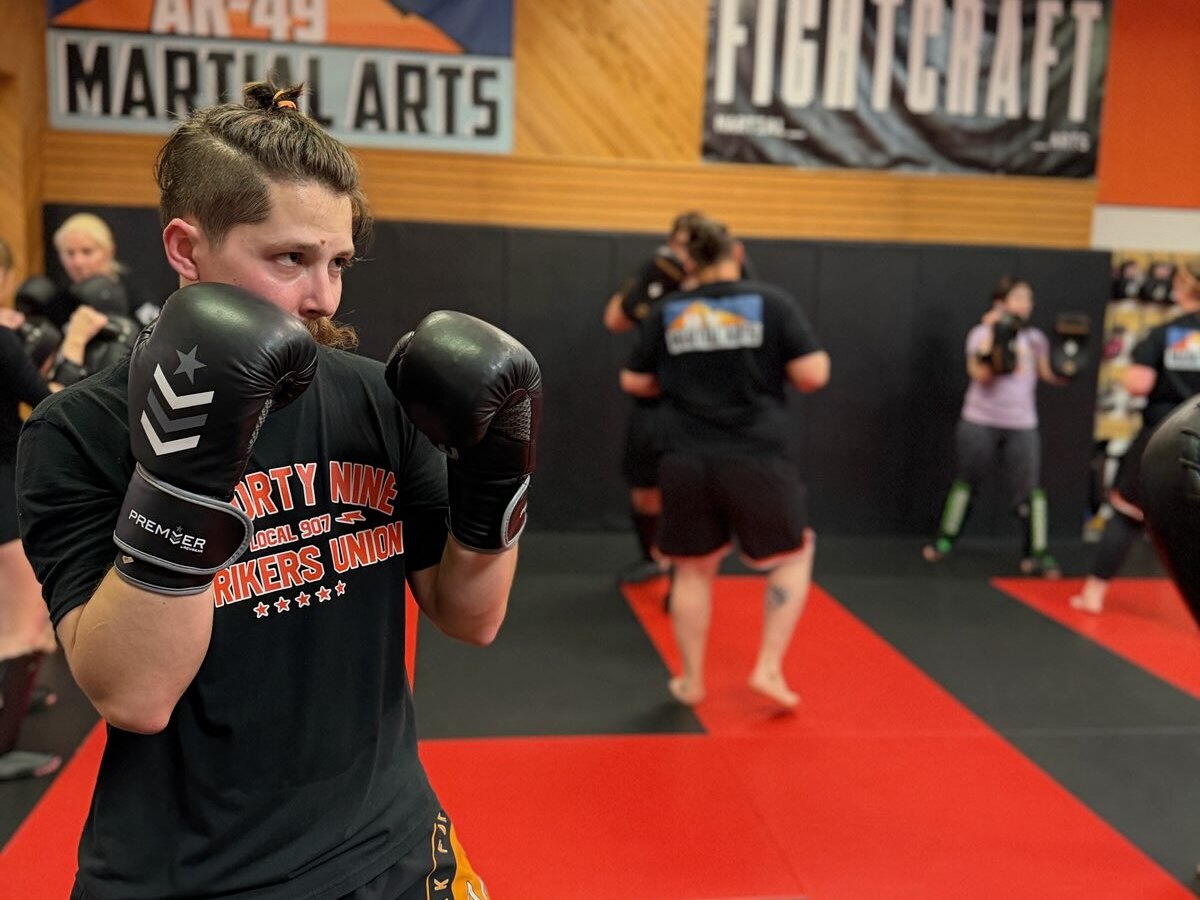
Choosing Your Lead Side
Boxing | Starting Out
Orthodox or Southpaw: How to Choose Your Stance
Orthodox means your left foot and left hand are in front. Southpaw is the mirror, with your right foot and right hand in front. Most people stand with their strong hand in back, so right handers usually start orthodox and left handers southpaw, and if that feels wrong you try both and pick the side where you feel balanced.
How to find your side
- 01
Start with your strong hand in back
Your back hand travels farther and has your hips and back leg behind it, so it's your power hand. Your front hand is closer to the target and throws the jab, which needs speed more than power. That's why most right handers stand orthodox and most left handers stand southpaw.
- 02
Stand square, then step back
Stand with your feet about shoulder width apart, facing forward. For orthodox, step your right foot back and let your heels turn so your left side is in front. For southpaw, step your left foot back instead.
- 03
Rock your weight in each one
In each stance, bend your knees a little and rock your weight forward and back, then side to side. Take a few small steps in every direction. To turn your feet, pivot on the balls of your feet instead of twisting on flat, planted feet, which is hard on your knees. One side usually feels steady and the other feels like you're about to tip.
- 04
Throw a few slow punches
From each side, throw a slow jab and cross and come back to your stance. Both sides will feel clumsy at first, so pay more attention to your balance than to the punches. Pick the side where you stay on your feet and your feet don't tangle.
- 05
Set your stance
Whichever side you pick, turn your lead side a little forward so you aren't square. Front toes point forward or a little in for boxing, and straight ahead in the hybrid MMA stance, depending on your goal, the back foot turns out about 45 degrees, and your feet sit about shoulder width apart with some space between your heels side to side. Knees soft and never locked, back heel a little off the floor, weight about even between your feet on the balls of your feet. Lead hand up at cheek height a little in front, rear hand by your chin, elbows in, chin down.
- 06
Ask your coach to watch
If you still can't tell, say so. A coach who watches you move and hit pads for a few minutes can usually see which side suits you, and can check your balance before you ever do partner work.

What to know about both
If your hands don't agree. Some people write with one hand but throw a ball or punch harder with the other. If that's you, the strong hand rule may not fit, so don't force it. Go with the side where you feel balanced and your back hand hits hardest. The rock test and a few slow punches will tell you more than which hand you write with.
Get one side solid first. Pick a side and stay on it until your stance, jab, cross and footwork feel natural. If you switch back and forth early, you learn everything twice and neither side gets good. Later you can sprinkle in the other side, and you may find you slip better from one side and roll better from the other. Whatever you throw, finish back in the same stance you started in.
Things to look out for
Strong hand in front out of habit
People coming from other sports or other martial arts sometimes put their strong side forward because it feels natural. The jab feels strong, but the back hand has nothing behind it and you end up fighting with one arm.
The fix: Start with your strong hand in back and give the jab a few weeks. It gets quicker with reps. If you try both and you really are more balanced the other way, that's fine, just make it a choice.
Switching sides too early
You change stance every class, or in the middle of a round when one side gets tired. Nothing gets grooved, and your feet never learn where home is.
The fix: Pick one side and keep it for your first months of training. Add the other side later, a little at a time, once the basics feel automatic.
Standing square after you pick a side
Your shoulders face straight ahead like you're waiting in line. Your whole chest is a target, and straight punches have an open lane down the middle.
The fix: Turn your lead shoulder a little forward. Check it in a mirror: you should see a bit more of your front side than your back side.
Heels in a line
Your back foot sits right behind your front foot, like standing on a tightrope. A light push from the side knocks you off balance, and you can't put your weight into a punch.
The fix: Leave room between your heels side to side, enough for a ball to roll through. You should feel steady if someone nudges your shoulder from either side.
Feet too wide or too narrow
A very wide stance feels strong but locks you in place, so you can't step or turn your hips. A narrow stance moves easily but tips over when you punch or get pushed.
The fix: Start about shoulder width with your knees soft. You should be able to step forward, back or to the side without fixing your feet first.
Flat on your heels or up on your toes
On your heels you're slow to move and easy to push back. Up on your toes you bounce, lose your base and have nothing to push off when you punch.
The fix: Keep your weight on the balls of your feet, with your back heel a little off the floor. It should feel like the ready position in any sport, balanced and able to go any direction.
Frequently Asked Questions
What does orthodox mean in boxing?+
Orthodox means your left foot and left hand are in front, and your right hand is in back. It's the most common stance because most people are right handed. The right hand sits back as the power hand, and the left hand throws the jab.
What is a southpaw, and is it better?+
A southpaw stands with the right foot and right hand in front, the mirror of orthodox. Neither one is better. Southpaws face orthodox people all the time, while orthodox people see fewer southpaws, so a lefty can feel awkward to face. For a beginner, the right side is the one where you're balanced.
I'm left handed. Should I box southpaw?+
Usually, yes, because it puts your strong hand in back where it has room to build power. Some lefties start orthodox and do fine, and it gives them a strong jab and lead hook. Try both, see which one feels balanced, and stick with it.
Can I switch stances later?+
Yes. Get one side comfortable first, then start mixing in the other a little at a time. Switching well takes a lot of practice, so it's something you add after the basics, not something to learn at the start.
Is it the same in kickboxing?+
Orthodox and southpaw mean the same thing in kickboxing. The kickboxing stance is a little squarer and longer so you can kick and block kicks, while the boxing stance is more turned and shorter. You pick your side the same way.
Are You Ready?