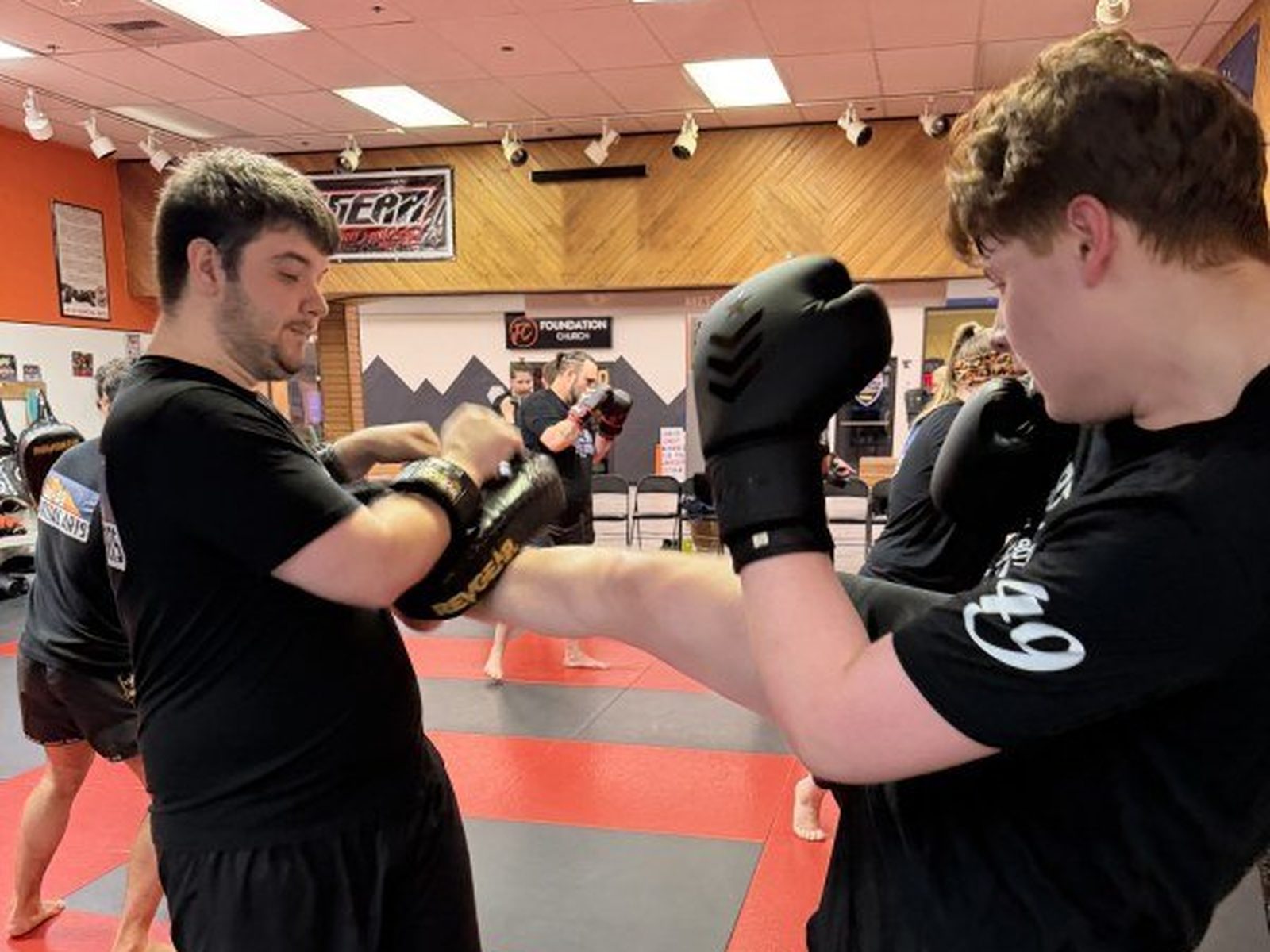
Countering the Jab
Boxing | Counters
How to Counter the Jab in Boxing
To counter the jab, take it away with a small parry, a slip or a pull back, then come right back with your cross or a short combination. The jab is a good first punch to learn to counter, because it's the punch you'll see most and it carries less risk to draw out than a cross or a hook. Your counters start from a good athletic base with your hands up and elbows in, go out from the face and come right back to the face.
- 01
Good athletic base
Feet about shoulder width apart, front foot ahead, knees a little bent and your weight in the middle. Your back foot is on the ball of the foot so it can work like a spring. You should feel balanced enough to defend and punch back without resetting your feet.
- 02
Hands up, elbows in
Both fists sit up by your face, at your cheeks, with your chin tucked a little. Your elbows stay in close to your ribs. Your hands stay home until it's time to punch, so you're ready for whatever comes behind the jab.
- 03
Punch from the face
Fire the cross straight from your face as the jab misses or gets parried, with no wind up. Turn your back foot and hip into it, and let a breath out as it lands. Then add a punch or two, like cross, hook, cross, so it's a combination and not a single shot.
- 04
Back to the face
Bring each hand straight back to your cheek after the combination and get back to your stance. Expect them to throw again, often a second jab, a cross, or a jab to the body. Move your head or your feet after you counter, so you're not standing in the same spot.
- 05
Watch for it
Keep your eyes on their chest and shoulders. The shoulder moves before the glove does, so it's the earliest sign the jab is coming. Stay relaxed so you can react. If you're tense and staring at their glove, you'll be late.
- 06
Parry it
The simplest way to start is the parry. Tap their jab aside with the palm of your rear glove, using the hard part of your palm, and keep it small. Your lead glove stays on your face and your lead elbow stays tight to your ribs, because a jab is often followed by a punch to the body. Don't reach out for it or push it past your center line, because that opens you up for their hook.
- 07
Or slip it
Bend your knees a little and turn your shoulders so your head moves just outside the jab, away from their rear hand. Keep it small, about a glove's width. If you and your partner both stand left foot forward, your head moves to your right, over your right knee. Slipping to the outside puts weight on your back leg and loads your cross. Against a lefty, their jab is their right hand, so the outside slip goes to your left instead.
- 08
Or pull back from it
Shift your weight back onto your back foot so the jab falls just short, with your hands still up. Don't lean way back at the waist or step all the way out of range, only go far enough for it to miss. Keep your chin down and your hands tight to your face while you pull, because the cross often comes right behind the jab. Your back foot works like a spring, and you come right back off it.

When to use it
When they jab a lot. The jab is the first punch everyone learns, so it's the one you'll see the most. When someone keeps throwing it, you have time to learn its rhythm. Pick one defense, like the parry, and answer every jab with your cross. The best time to counter is as their jab comes back, before their hand gets home. You can also beat a slow jab with your own jab, or answer it with a jab to the body.
When they leave the jab out there. A lot of beginners throw the jab and leave it hanging, or push it slowly. That's the easiest jab to counter. Parry it or slip it, and your cross gets to them while their hand is still out. It also teaches you why your own jab needs to come right back.
Things to look out for
Reaching for the parry
You reach your hand out to meet the jab before it gets to you. A fake jab pulls your hand away and leaves your face open for the real punch.
The fix: Let the jab come to you and parry it close to your face with a small tap. Your hand only moves a few inches.
Parrying past your center
You knock the jab way across your body. Your rear hand ends up out of place and you're open for their hook.
The fix: Keep the parry small and stop at your center line. Think tap, not swat.
Floppy hands
Your parrying hand is limp, so a hard jab pushes right through it into your face.
The fix: Keep your hand strong and firm when it meets the punch. Relaxed arm, firm hand.
Only defending
You parry or slip the jab and then just stand there. They get to throw again and again, and you never get a turn.
The fix: In practice, finish your defense with a punch. Parry, then cross. Slip, then cross. Build the habit now so it happens without thinking.
Pulling back and staying back
You lean or step back from the jab and stay there. They can follow you with the next jab or a punch to the body.
The fix: Pull back just enough for it to miss, then come right back with your counter. Pull and return is one motion.
Dropping your hand to counter
As you throw the cross back, your other hand falls off your face. Now you're open to their next punch while you're punching.
The fix: Keep the hand that isn't punching on your cheek. Shadow box in a mirror and watch that hand on every counter.
Closing your eyes
You blink or turn away as the jab comes. You can't time the counter, and you won't see what comes after the jab.
The fix: Keep your eyes on their chest. Start slow so you get used to watching punches come at you.
What to Practice at Home
Drill 01
Shadow counters
3 rounds of 2 minutes with 1 minute rest, in front of a mirror if you have one. Picture a jab coming at you. Round one, parry and cross. Round two, slip outside and cross. Round three, pull back and come back with the cross. Reset to your stance after every rep.
Drill 02
Parry and counter reps
3 sets of 20 slow reps, with 30 seconds rest between sets. Tap an imaginary jab with your rear palm a few inches from your face, then throw a cross, hook, cross. Watch that the parry stays small and your other hand stays home.
Drill 03
Pull counters on the bag
If you have a bag, 3 rounds of 2 minutes with wraps and gloves on. Move around the bag, touch it with your jab, then shift back onto your back foot like the bag is jabbing you. Come right back off the back foot with your cross and a hook. After each counter, move your feet or your head before you go again.
Frequently Asked Questions
What is the easiest way to counter a jab?+
For most beginners, the parry and cross. Tap their jab aside with your rear palm and come right back with your cross. Once that feels natural, add the slip and the pull back.
Which hand do you parry a jab with?+
Your rear hand catches their jab, using the hard part of your palm. Keep it small and don't push it past your center line. Your lead hand stays up at your face.
Why is the jab easy to counter?+
It's usually a lighter punch than the cross or hook, so it's a safer one to let them throw while you work on your timing. It still hurts if it lands clean, so keep your guard up. It also comes straight down the middle, so it's easy to see. Once you can read it, you know when to slip, parry or pull.
Should I counter with one punch or a combination?+
A short combination. A single punch back gives them a chance to reset. Cross, hook, cross is a simple one to start with, then move.
Can I practice countering without a partner?+
Yes. Shadow box and picture the jab coming, then parry, slip or pull and counter. A mirror helps you check that your defense is small and your hands come back. You'll still need a partner at the gym to work on real timing. In class, partners start slow and light with gloves and mouthguards in, and the coach sets the speed before it picks up.
Are You Ready?