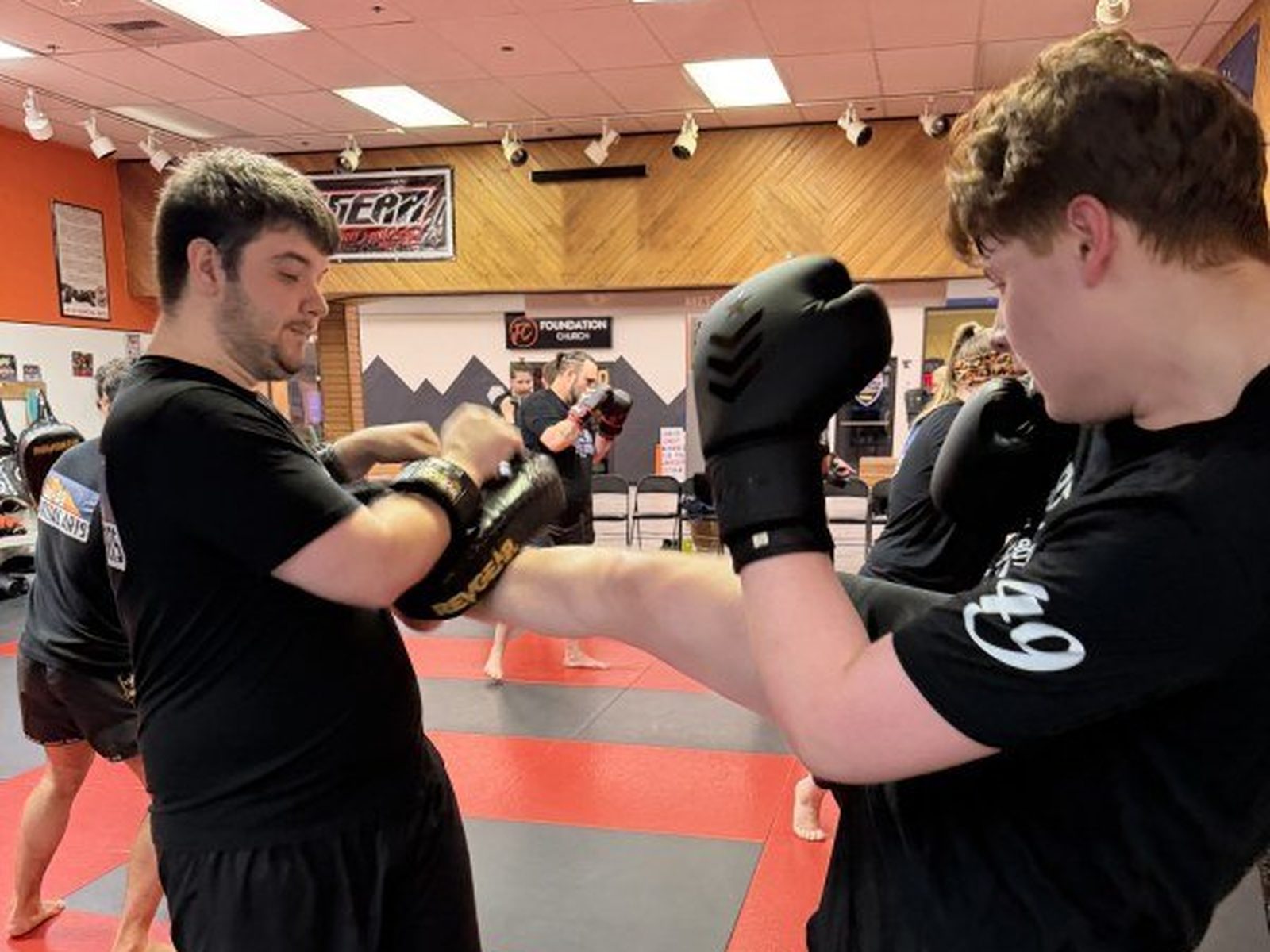
Double Jab
Boxing | Combos
How to Throw a Double Jab
The Double Jab is two jabs in a row from your front hand, either flicked fast or both popped hard off the back foot. A lot of gyms call this the 1 1. At AK-49 Martial Arts we call it the Double Jab. Both jabs start at your face and come straight back to your face, with your rear hand on your chin the whole time. Use it to close distance or to set up the cross.
- 01
Good athletic base
Feet about shoulder width apart side to side and about a step apart front to back, back heel slightly up, knees a little bent and your weight in the middle. Two jabs in a row can pull you forward, so a solid base keeps your head over your feet. You should feel ready to push off your back foot.
- 02
Hands up, elbows in
Both fists sit up at your cheeks with your chin tucked a little and your elbows in close to your ribs. Your rear hand stays on your chin through both jabs. This guard covers your head and body while your lead hand works.
- 03
Punch from the face
The first jab goes straight out from your face with no wind up, until the arm is nearly straight with a soft elbow. Keep the elbow pointing down, the wrist straight and your lead shoulder up a little to cover your chin, with your lead hip and shoulder turning in slightly behind the punch, and turn the fist over in the last few inches so your palm faces the floor as you land on your first two knuckles. Keep breathing steady and don't hold your breath.
- 04
Back to the face
Snap the hand straight back toward your face after the first jab, then send the second one out. After the second, bring it all the way home to your cheek. Coming back each time is what keeps both jabs fast and keeps your face covered between them.
- 05
Same pop on both
Both jabs should land with the same snap and make the same sound on the pad. If the second one turns into a push, go back to single jabs until the pop is there, then put two together slowly. It should sound like two clean taps.
- 06
Flick it or hit it
You can flick both jabs fast from right where you are, or push off your back foot and put your body behind them for power. Start with the flick to learn the rhythm. The flick is for finding your range and keeping them busy, and the harder double is for moving in on someone who's backing up. Either way, keep your shoulder and elbow tight and let your legs do the work.
- 07
Step with it, then step out
To move in, push off your back foot so your front foot slides forward a few inches as each jab lands, then your back foot slides up the same amount right after. That's one short step per jab, and your stance stays the same width the whole way. When you're done, step back out or off to the side and move your head off the center line as you go, because they'll often answer with a cross.

When to use it
To close the distance. When the other person keeps backing away, a single jab often falls short. Two jabs with a short step on each let you work your way in without leaving big gaps. You get close, land something, then step back out before they can answer. It's one of the first combinations you'll learn in class.
To set up the cross. Most people expect a jab and then a cross, so a second jab changes the timing and gets them reacting before your cross comes. Jab, jab, cross is one of the most common combinations in boxing. On the second jab your back foot slides up a little more than usual, a few inches, so your weight settles over your back leg, ready to push into the cross. Your stance gets slightly shorter but never narrow, and your feet never come together. Mix in single jabs too, so they can't guess which one is coming.
Things to look out for
Pushing the second jab
The first jab snaps, but the second one slows down and shoves the target. It doesn't sting, and your hand is away from your face longer.
The fix: Go back to single jabs until each one pops, then add the second slowly. Listen for the same sound on both.
Reaching and leaning
You stretch your arm and lean your head forward to make the second jab land. Your head ends up out past your front foot, off balance and easy to counter.
The fix: Keep your head over your stance and take a short step off the back foot instead. If you're too far away, let your feet close the gap.
Elbow flaring out
On the second jab the elbow drifts out to the side and the punch starts to loop. It's slower, they see it coming, and your ribs open up.
The fix: Keep the elbow pointing down and the shoulder tight on both jabs. Shadow box slowly in a mirror and watch the elbow track straight out.
Dropping the rear hand
While you focus on throwing two jabs, your back hand slides off your chin. It's a common beginner habit, and it leaves your face open to a counter.
The fix: Keep the rear fist touching your chin through both jabs. In the mirror, watch that hand instead of the one punching.
Not coming back between jabs
The first jab stays out and the second one starts from wherever the first ended. It's short and weak, and your face is open the whole time.
The fix: Snap the first jab back toward your face before the second goes. Think of two separate punches, close together.
Holding your breath
You tense up and hold your breath through both jabs. Your arm gets heavy fast, and you're tired before the round is half over.
The fix: Keep breathing normally through both jabs, in and out without stopping. Stay loose between punches and only tighten up as they land.
Same rhythm every time
Every jab you throw comes in a pair at the same speed. The other person picks up the pattern and times you.
The fix: Mix single jabs and doubles, and change the speed between the two. Now and then send one to the body by bending your knees to drop down, with your eyes up and your rear hand on your chin.
What to Practice at Home
Drill 01
Singles to doubles
3 rounds of 2 minutes with 1 minute rest, in front of a mirror. Round one, single jabs only, getting the snap and the return clean. Round two, slow double jabs, checking that your rear hand stays on your chin and the hand comes back between them. Round three, doubles at full speed, breathing steady the whole round.
Drill 02
Forward, back and in place
4 rounds of 2 minutes with 1 minute rest. Round one, double jab standing still. Round two, double jab moving forward with a short push off the back foot on each, then step back out. Round three, double jab while backing up, moving your back foot first. Round four, mix all three and add a cross after some of them.
Drill 03
Double jab on the bag
If you have a heavy bag, wrap your hands and wear bag gloves, then do 3 rounds of 2 minutes with 1 minute rest. Mix single jabs, double jabs and jab, jab, cross, and listen for the same pop on both jabs. Step back out after every combination, and stop if your wrist or hand starts to hurt.
Frequently Asked Questions
What is a double jab?+
Two jabs in a row from your front hand. It's one of the most basic combinations there is. You can flick both fast or pop both hard off your back foot, and both start and end at your face.
Should both jabs be hard?+
They can be flicked or hit with power, but both should pop the same. A soft first jab and a hard second one is fine as long as neither turns into a push. Get the pop on single jabs first, then put two together.
Do you step on both jabs?+
You can throw them standing still, or push off your back foot with a short step on each one to move forward. Stepping on both is how you close the gap on someone who's backing away. Keep the steps small and step back out when you're done.
What does the double jab set up?+
Most often the cross. Bring your back foot in a little on the second jab and the cross is loaded behind it. It also works as a way in before any combination you know.
Why does my lead arm get tired so fast?+
That's normal at first, because that arm is doing twice the work. Usually you're also tensing it the whole time. Stay loose and only tighten as the punch lands, keep breathing steady, and the endurance builds with a few weeks of rounds.
Are You Ready?