
Lead Hook Setups
Boxing | Combos
How to Set Up the Lead Hook in Boxing
The lead hook lands best after something that loads your lead side or pulls their attention somewhere else, like a cross, a jab or a slip. Every punch in the setup starts at your face and comes back to your face, with your other hand on your chin. Get your head over your lead knee first so the hook has power.
Keep your lead foot planted on the hook while you're moving. When you have them on the ropes or against the cage, pivot it for the most power.
- 01
Good athletic base
Feet about shoulder width apart, lead foot ahead, knees a little bent and your weight in the middle. Keep the stance from getting too long, because a power hook from a long stance has nothing behind it. You should feel ready to shift your weight onto your front leg.
- 02
Hands up, elbows in
Both fists start up at your cheeks with your chin tucked a little and your elbows in close to your ribs. Whichever hand isn't punching stays right on your face. When you throw the hook, your other hand stays on your face, because they may throw their own hook back at the same moment.
- 03
Punch from the face
Every setup punch and the hook itself start at your face, with no wind up. For the hook, bring your elbow up behind the fist so your forearm is about level with the floor, keep the wrist straight, and turn your hip and lead shoulder into it. Your lead knee turns with your hip so it never twists, and you keep breathing steady the whole time.
- 04
Back to the face
Bring each hand straight back to your face before the next punch goes. Stop the hook when it reaches the target instead of swinging all the way through, then bring it back to your cheek with the elbow in. That's what keeps you covered when they punch back.
- 05
Off the cross
Throw the cross, and as it turns your hips and brings your rear shoulder forward, your weight shifts onto your front leg. That loads the lead hook, so it comes right back the other way. Jab, cross, hook is one of the first combinations you'll learn because of this.
- 06
Off the jab
Use the jab to touch the target and find your distance, then follow it with the hook. If the jab only just reaches, you're too far for a hook, so step in first. Coaches call the jab 1, the cross 2 and the lead hook 3. At AK-49 Martial Arts, jab, cross, hook is called Three Hands. If you stand right foot forward, everything here flips sides. Jab, hook, cross works like two lighter punches to get there and a hard one to finish. On the move from the jab to the hook you can bend your knees a little to drop your weight into it.
- 07
Fake the cross
Start the cross, but hold it back, and let your weight move onto your front leg as your back foot comes up a little. Your head ends up over your lead knee, without leaning past it, and the hook goes from there. Practice it slowly until you can do it without your hands dropping.
- 08
After a slip
When their cross comes at you, slip by moving your head toward your lead side, just far enough to get off the line, bending your knees instead of your waist. Keep your eyes on them. That puts your weight on your lead leg and loads the hook, so take a half second to get set and come back with it.
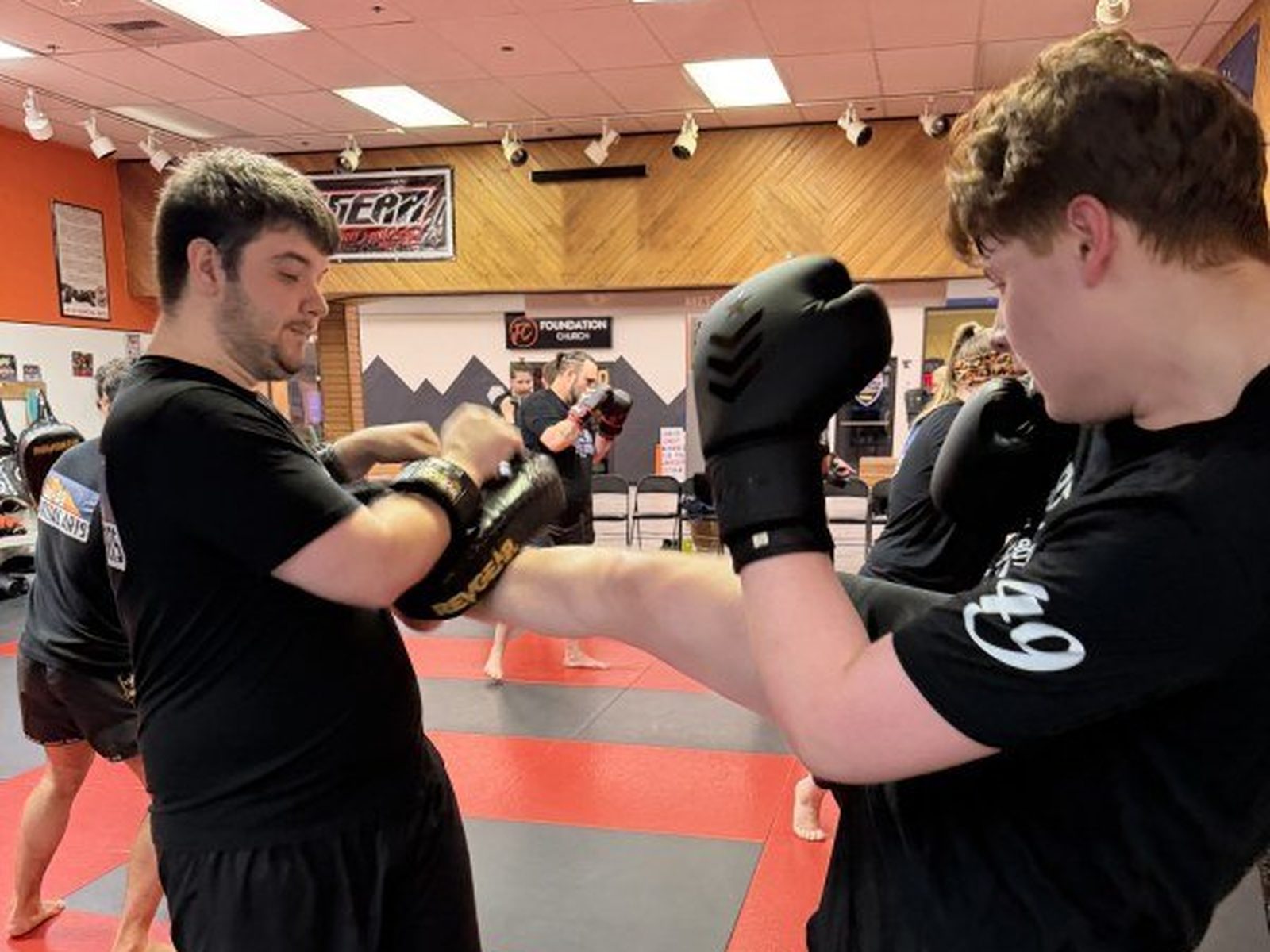
When to use it
In your first combinations. Three Hands, jab, cross, hook, is one of the first combinations you learn, and it's the easiest way to land the lead hook. The cross turns you and sets the hook up for you, so you don't need any fancy timing. Learn it slowly in the mirror or on the pads before you worry about speed. Once it flows, add a cross at the end to make it Four Hands.
When your straight punches get blocked. If your jab and cross keep landing on their gloves, the hook can come around the side of their guard. Straight punches first get them covering the middle, and that leaves the side open. Mix the hook in with your straight punches so they never know which one is coming. A hook thrown on its own from nowhere is much easier to see.
Things to look out for
Winding up
You pull the arm back or drop the hand before the hook goes. The other person sees it coming, and it gives them time to cover or punch you first.
The fix: Start the hook from your guard with no extra motion and let your hip and shoulder turn do the work. Shadow box it slowly in a mirror and watch for any hitch before it goes.
Dropping the rear hand
As the hook goes out, your back hand slides down off your chin. It's the most common lead hook mistake, and a hook coming back the other way lands right there.
The fix: Keep the rear fist glued to your chin on every hook. In the mirror, watch that hand instead of the one punching.
A gap at the shoulder
On the jab to hook, your lead shoulder opens up and your chin is exposed between the two punches. They can beat you to it with a cross.
The fix: Keep your lead shoulder up and tight to your chin as you go from the jab to the hook. Think of hiding your chin behind that shoulder.
Power hook from a long stance
Your feet are too far apart, so you can't get your weight onto your front leg. The hook is all arm and has no power behind it.
The fix: Bring your back foot up a little first so your head can get over your lead knee. Then turn into the hook.
All arm, elbow down
Your elbow hangs low and you swing the hook with just your arm. It's weak and it tires your shoulder out.
The fix: Keep the elbow up behind the punch and turn your hip and shoulder into it. Move your arm less and your body more.
Swinging all the way through
The hook keeps going past the target and turns you too far. You end up off balance with your side open for a counter.
The fix: Stop the hook at the target and bring it right back to your face. Think of hitting a spot on the target and coming straight home.
Holding your breath
You tense up through the whole combination and forget to breathe. You get tired fast and the hook gets slow and stiff.
The fix: Keep breathing normally through the combination, and let a breath out with the hook. Stay loose between punches and only tighten as each one lands.
What to Practice at Home
Drill 01
Three Hands in the mirror
3 rounds of 2 minutes with 1 minute rest, in front of a mirror. Round one, slow jab, cross, hook, checking that your rear hand stays on your chin and the elbow comes up behind the hook. Round two, normal speed, breathing steady the whole round. Round three, add a cross at the end for Four Hands and step back out after each one.
Drill 02
One setup per round
3 rounds of 2 minutes of shadow boxing with 1 minute rest. Round one, every hook comes off the cross. Round two, jab, hook, cross, dropping your weight a little into the hook. Round three, picture a cross coming, slip toward your lead side and come back with the hook, then back to your guard.
Drill 03
Hook setups on the bag
If you have a heavy bag, wrap your hands and wear bag gloves, then do 3 rounds of 2 minutes with 1 minute rest. Throw the jab and cross at normal speed and the hook at about half speed until it lands clean and balanced, then build it up. Keep your lead foot planted while you move around the bag, and stop if your wrist or hand hurts.
Frequently Asked Questions
What's the best setup for the lead hook?+
The cross. It turns your hips, brings your rear shoulder forward and puts your weight on your front leg, which loads the hook. That's why jab, cross, hook is one of the first combinations you learn.
Should you pivot on the lead hook?+
Keep the lead foot planted while you're moving. Pivot it for the most power when they're on the ropes or against the cage. Planting keeps you balanced and ready to move while you're both stepping around, and the pivot puts everything into it once they can't get away. Either way, your hip and shoulder still turn into the punch, your back heel stays a little up and your weight stays between your feet.
Can the hook start a combination?+
Yes, once you're comfortable with it. A hook first can move them out of position for the jab and cross that follow. As a beginner, learn it after the jab and cross first, then try leading with it.
Why does my hook have no power?+
Usually the stance is too long or your head isn't over your lead knee, so the punch is all arm. Bring your back foot up a little, turn your hip and shoulder, and keep the elbow up behind the fist. Throwing it right after the cross helps a lot too.
How close do I need to be to throw a lead hook?+
Closer than for a jab. If you're in close, the hook is short and round. If you're a little farther away, open the elbow so it gets longer and straighter. Use your jab first to find the distance.
Are You Ready?