Punching the Heavy Bag
Boxing | Bag Work
How to Punch a Heavy Bag
Wrap your hands, glove up and stand where your straight punches land with a nearly straight arm. Keep your hands up and elbows in, snap each punch from your face into the bag and right back to your face, and land on the two big knuckles with a straight wrist. Then move around the bag like it's a person, hitting head and body height.
How to hit it
- 01
Wrap up and warm up
Wrap your hands and wear gloves on the heavy bag every time. The wraps should be snug but not cutting off blood, covering your wrist, across the knuckles and around the thumb. They hold your wrist and knuckles together so the punch lands solid. Shadow box a round or two first so your shoulders and wrists are warm before you hit something heavy.
- 02
Good athletic base
Feet about shoulder width apart, one foot ahead of the other, knees a little bent and your weight in the middle. Stay on the balls of your feet so you can step. Your feet and legs are where the power starts, so this matters as much as your hands.
- 03
Hands up, elbows in
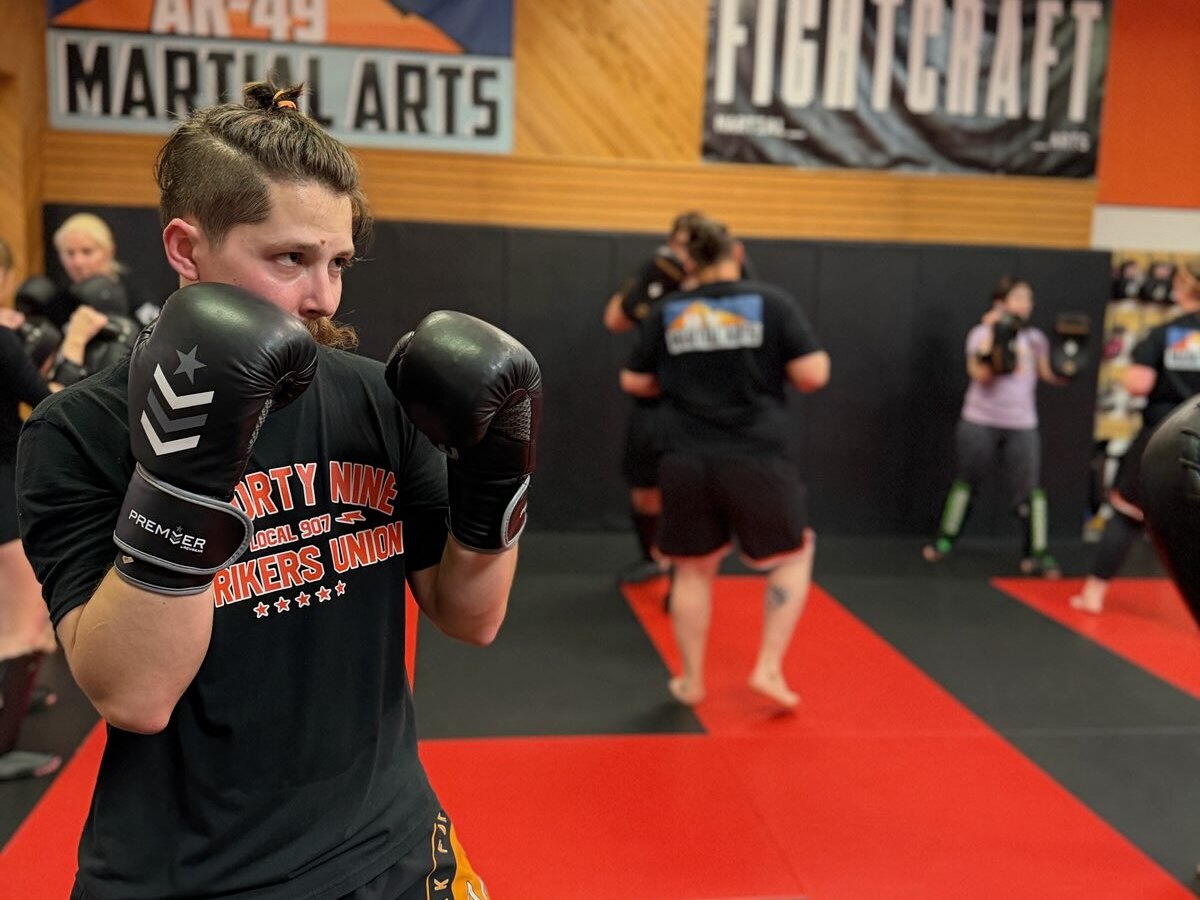
Both fists up by your cheeks, elbows close to your ribs, chin tucked a little. Hold this guard the whole round, even when you get tired. The bag doesn't punch back, so it's easy to get lazy here, and the habit follows you into sparring.
- 04
Find your distance
Stand where your jab and cross land with a nearly straight arm and a soft elbow. For hooks and uppercuts you step in a little closer, with the arm bent at about a right angle and the wrist straight. If you have to lean to reach the bag, step in, and if your punches are jammed with bent arms, step back.
- 05
Punch from the face and snap it
Every punch starts from your face and goes straight out with no wind up. Hit the bag and snap the hand straight back. Land on the first two knuckles with your wrist, forearm and knuckles in a straight line, and squeeze your fist only as it lands. Keep your thumb wrapped outside your fingers and your chin tucked on every punch. On the cross and the hooks, turn on the ball of the foot on the same side and let the hip turn with it, so the punch comes from your body and the arm just delivers it.
- 06
Back to the face
Bring each hand straight back to your cheek as fast as it went out. Your hands come back to your face, not down to your waist. Keep breathing steady.
- 07
Move around the bag
Treat the bag like a person. Step in to punch, step out when you're done, and take small angles to the side. Hit high and low, at head and body height, instead of pounding one spot.

What helps on the bag
Have a goal each round. Pick one thing per round: clean technique, smooth flow, or power. A technique round is slower, checking each punch. A flow round is lighter and steady, keeping your feet and hands moving. A power round is fewer punches with more on them, still snapping back to your face.
Build up slowly. If you're new, start with 2 or 3 short rounds and build from there. The heavy bag is harder on your hands, wrists and shoulders than shadow boxing, and they need time to get used to it. Half power with good form is plenty at first. If a wrist or knuckle hurts, stop and check your fist and wrap before you go again. Add a round or a little more power every week or two, not every session. A bag that's packed rock hard, or so light it flies away, makes good technique harder, so ask the coach which bag to start on.
Things to look out for
Pushing the bag
The fist lands and stays there, shoving the bag instead of hitting it. The bag swings way off, the punch has no snap, and your hand is away from your face too long.
The fix: Snap your punches in and back, like the bag is a hot stove. If the bag swings a lot, steady it with jabs and straight punches instead of grabbing it.
Bending the wrist
The fist lands crooked or on the small knuckles and the wrist folds. Keep doing it and your wrists and knuckles get sore fast.
The fix: Keep the wrist, forearm and two big knuckles in a straight line. Start at half power and wrap your hands every time.
Dropping your hands
The bag doesn't hit back, so the guard slides down to your chest, especially late in a round. You're building a habit that leaves your chin open the first time someone punches back.
The fix: Every punch comes back to your face. Check your guard after every combination, and practice a block or a slip between combinations.
Winding up
You pull your hand back or drop it before punching to get more power. The punch is slow, and anyone watching sees it coming.
The fix: Start every punch from your face. The power comes from your feet and hips turning, not from a wind up.
Leaning on the bag
You stand too close and lean your head or body into the bag, or rest on it when you're tired. Your balance is gone and your punches are jammed.
The fix: Stay in your stance with your head over your feet. When you're tired, step back out, keep your guard up and throw lighter punches.
Holding your breath
You tense up and hold your breath through a combination. You gas out in a minute and your punches turn stiff.
The fix: Keep breathing normally the whole time, and let a breath out with your power shots. Stay loose until the punch lands.
Standing still and punching too low
You plant your feet in one spot and hit the middle of the bag over and over. It turns into arm punching with no footwork, at a height nobody's head is at.
The fix: Move in and out and to the sides, and aim at head and body height. A strip of tape on the bag at head height helps.
Drills you can practice
Drill 01
Jab and cross technique rounds
3 rounds of 2 minutes, 1 minute rest. Throw single jabs, then single crosses, then Two Hands at about half power. After each punch, check your hand is back at your face and your wrist landed straight. Step out and reset every few punches.
Drill 02
In and out rounds
3 rounds of 2 minutes, 1 minute rest. Step in, throw Two Hands, step back out. Then step in, throw Three Hands, step out to the side. Try not to stand in front of the bag longer than the combination takes. Breathe steady the whole round.
Drill 03
Head and body rounds
2 rounds of 3 minutes, 1 minute rest. Mix punches to head height and body height: Two Hands high, then bend your knees for Two Hands to the body, then back up high. Keep your back straight and your hands coming back to your face when you change levels. Finish with a few minutes of easy shadow boxing and some gentle wrist and shoulder stretches.
Frequently Asked Questions
How far should I stand from the heavy bag?+
Where your jab and cross land with a nearly straight arm and a soft elbow. Step a little closer for hooks and uppercuts. If you're leaning to reach, you're too far, and if your arms are bent when they land, you're too close.
Why does the bag swing so much?+
You're probably pushing it. Snap the punch in and pull it straight back to your face. A swinging bag can be steadied with a jab instead of grabbing it.
Do I need hand wraps for the heavy bag?+
Yes. Wraps hold your wrist and knuckles together and protect your hands under the gloves. Don't hit a heavy bag bare handed. Wash your wraps after training so they don't grow bacteria. Gloves and wraps are provided for class at AK-49 Martial Arts.
Why do my wrists hurt after the bag?+
Usually the wrist is bending as the punch lands, or you're landing on the wrong knuckles. Keep the wrist, forearm and two big knuckles in a straight line and slow down until it feels solid. Check that your wraps are snug. Mild soreness that's gone in a day or two is normal. Sharp pain, swelling, or pain that lasts more than a few days means rest it and see a doctor.
How many rounds should a beginner do on the bag?+
Start with 2 or 3 rounds of 2 minutes with a minute of rest. Build up to 3 minute rounds over a few weeks as your hands and wind get used to it. Clean rounds beat a lot of sloppy ones.
Are You Ready?