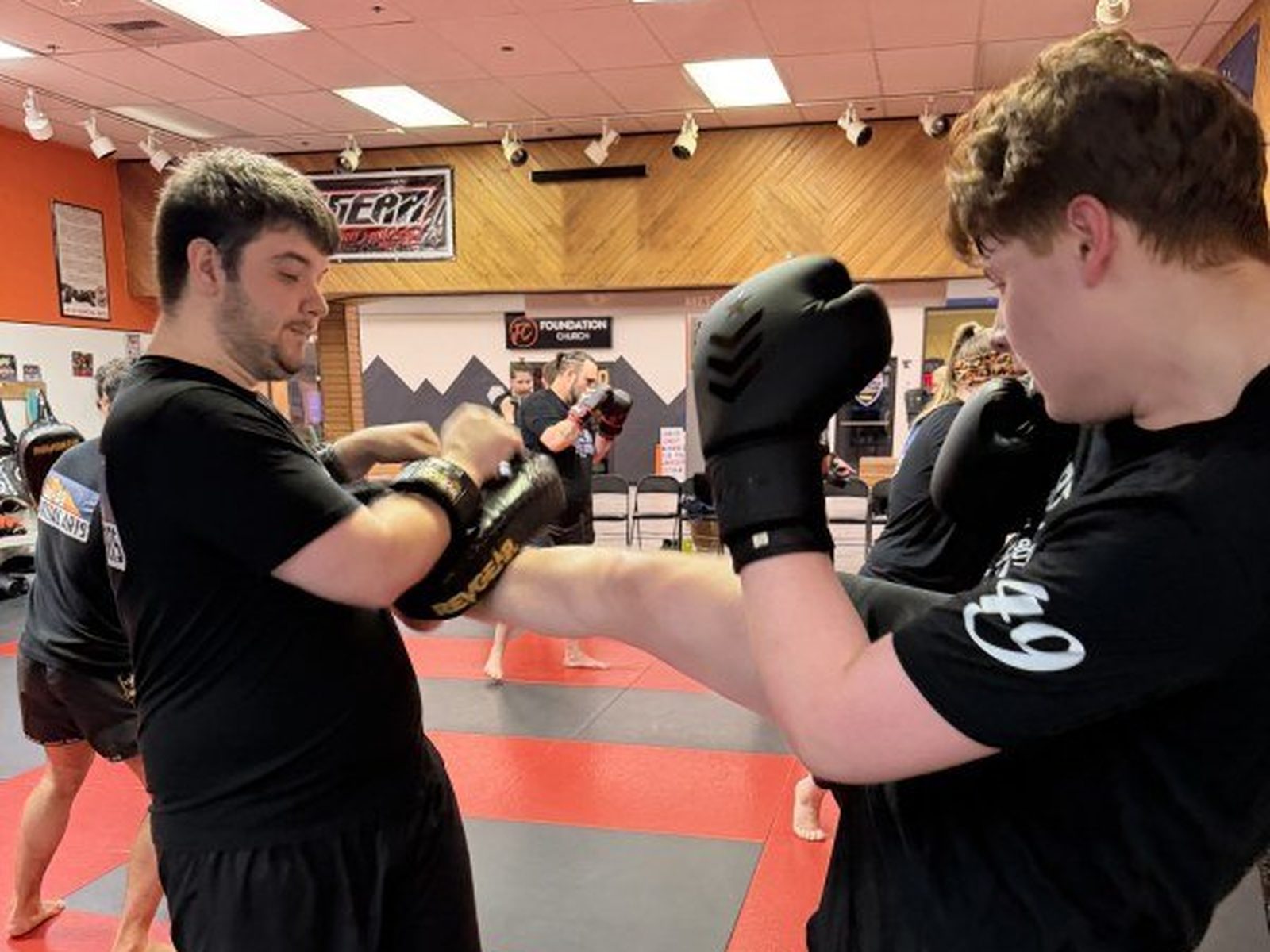
Shadow Boxing With Defense
Boxing | Shadow Boxing
How to Shadow Box With Defense
Shadow boxing with defense means picturing punches coming back at you and answering each one with a block, a parry, a slip, a roll or a pull back. Keep the defense small, keep your hands up and elbows in the whole time, and counter right away. Every defense should leave you back in your stance, ready to throw Two Hands.
How to add defense
- 01
Set your stance and guard
Start in a good athletic base with your knees bent, hands up by your cheeks and elbows in close to your ribs. Every defense starts from here and ends here. If your stance is too tall or too narrow, your head movement turns into leaning and you lose your balance.
- 02
Picture the punch
See the jab or the cross coming before you move, so every defense answers a real punch. Start simple: picture a jab, and only a jab, for a whole round. Random head bobbing with no punch in mind doesn't build the timing you need.
- 03
Block high
Bring your gloves to the hard part of your head and keep them touching it, with your elbows tight to protect your ribs. Don't reach out to catch the punch. A block is the simplest defense, so it's the one you fall back on when you're tired or surprised.
- 04
Parry short
Swat a straight punch away with a short, small movement of your hand, letting it come to you. The parrying hand only moves a few inches and comes straight back to your face. A big swat leaves your head open.
- 05
Slip just enough
Move your head off the center line only far enough for the punch to go over your shoulder, bending a little at the knees and turning your shoulders. Your head stays inside your stance, over your knee and not past it. If you both stand left foot forward, slip their jab by moving your head to your right, outside their arm and away from their rear hand, and slip their cross by moving to your left, so your head ends up outside the punching arm. Make the punch miss by a little, so you're still in range to counter.
- 06
Roll under
For a hook, bend your knees and drop your level so the punch passes over your head, moving in a small U from one side to the other. Keep your back fairly upright and your eyes forward. Let your legs do the work.
- 07
Pull back and come back
Take your head straight back out of range, just enough for the punch to fall short, then come right back in. Keep your chin down and don't let your head go past your back foot. Pulling back and staying there gives the other person all the time they want.
- 08
Counter right away
Punch back after every defense, from your face and back to your face, then get back to your stance. Defense and offense should feel like one movement. A slip to the outside naturally sets up a punch with the hand on that side.

When to use it
After your own combinations. The moment you finish a combination is when people punch back. So when you shadow box, picture something coming back after every combination you throw. Throw Two Hands, then block or slip the imaginary counter. It builds the habit of defending right after you punch.
When you picture a jab and a cross. Most of what comes at a beginner is straight punches. Picture their jab and slip or parry it, then picture their cross and slip the other way or block it. Answer each with your own Two Hands. Once that feels smooth, add a hook and roll under it.
Things to look out for
Slipping too far
You lean way out to the side or bend at the waist. You're off balance, too far away to counter, and in a perfect spot for an uppercut or the next punch.
The fix: Move just enough for the punch to go over your shoulder, with your head staying over your knee. Bend your knees a little and turn your shoulders instead of leaning. If you stand southpaw, flip every direction on this page.
Dropping your hands when you move your head
Your hands fall as soon as your head moves, because you think the movement is doing the work. If the slip is late, there's nothing between the punch and your chin.
The fix: Hands up, elbows in through every slip, roll and pull. The hands are your backup if the head movement is late.
Closing your eyes or looking down
When you roll or duck, your eyes go to the floor. In real training you can't see the next punch and you come up into it.
The fix: Keep your eyes forward on where your opponent would be, even while you roll under. Chin down, eyes up.
Stopping after you defend
You block or slip and then freeze, waiting for the next imaginary punch. The person in front of you just keeps punching.
The fix: Your block, slip or pull should flow straight into a punch. Defend, counter, move.
Bending at the waist
You duck by folding forward at the waist instead of bending your knees. Your head drops low and forward, your balance is gone, and your back gets sore.
The fix: Drop your level with your legs, keeping your back fairly upright. Think of sitting down a little.
Coming up tall
After a slip or a roll you stand straight up out of it. You lose the load in your legs and come up in the same spot.
The fix: A slip or a roll loads your body. Use that to punch back as you come out of it.
Moving your head with no punch in mind
You bob and weave constantly with nothing coming at you. It looks busy, but it doesn't build timing and it tires you out.
The fix: Every defense answers a punch you picture. Fewer, sharper moves at the right time beat constant motion.
Drills you can practice
Drill 01
One defense per round
4 rounds of 2 minutes, 1 minute rest, in front of a mirror if you have one. Round one, block and counter. Round two, parry and counter. Round three, slip and counter. Round four, mix all three. Picture a jab or a cross every few seconds, defend it, throw Two Hands, and reset your stance.
Drill 02
Slip down a line
3 rounds of 2 minutes along a line on the floor, with your head starting over the line. Step forward with the front foot and slip right as it lands, bring the back foot up and slip left, then step again. Go to the end of the room, then come back with the back foot moving first. Go slow and stick each spot with your hands up, then pick up the speed in the last round.
Drill 03
Rope roll
Tie a string or rope across a room at about shoulder height. 3 rounds of 2 minutes, walking along it in your stance and rolling under from one side to the other with your knees bent, then throwing Two Hands after each roll. Keep your eyes forward and your hands at your face the whole time. Clear the space around you first, and if your knees or lower back get sore, make the rolls smaller.
Frequently Asked Questions
Can you practice defense without a partner?+
Yes. Shadow boxing and solo drills teach you the motions and build the habits, like keeping your hands up while your head moves. A partner throwing slow punches later shows you the real timing. Both matter, and the solo work makes partner work go faster.
Which defense should a beginner learn first?+
The block, because it's simple and works even when you're tired or surprised. Then the parry and the slip for straight punches. Rolling under hooks comes after that. Body shots are usually blocked by bringing your elbows down to your ribs, and stepping off the line or pivoting away works against almost anything.
What do I do after I defend?+
Counter right away, then get back to your stance. A slip to one side sets up a punch with the hand on that side. Defend, counter, move is the rhythm.
How far should I slip?+
Just far enough for the punch to go over your shoulder. Your head stays inside your stance, over your knee. If you're leaning past your foot or bending at the waist, it's too far.
Should I move my head all the time?+
No. Constant bobbing tires you out and doesn't build timing. Move your head when a punch is coming, or as you throw your own punches, and keep your guard up the rest of the time.
Are You Ready?