BJJ for Women
Brazilian Jiu Jitsu | Questions
Brazilian Jiu Jitsu for Women
Brazilian Jiu Jitsu is built around positions and leverage that let a smaller person survive and work from underneath a bigger one, which is one reason a lot of women choose it. You use your legs, your guard and good position so you don't have to win a strength contest. You can ask any partner to go lighter, and sparring is optional.
Want more on size and strength? See Is BJJ Good for Smaller People.
What you'll learn
- 01
The guard
You use your legs to keep your partner in front of you. Your feet, knees and shins control the distance, so a bigger partner can't just settle their weight on you. The guard gives someone weaker and lighter than their opponent a way to survive.
- 02
Half guard
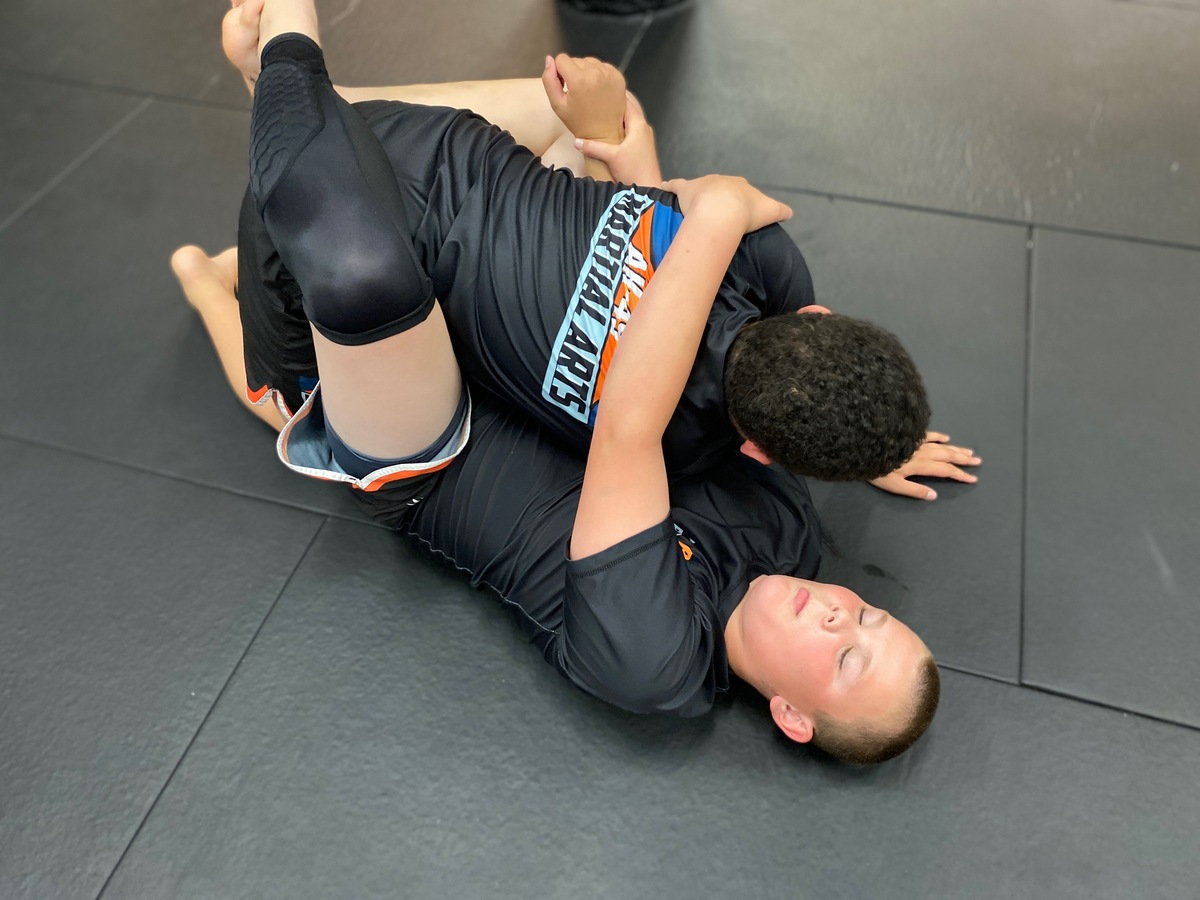
Trap one of their legs with both of yours, your knee shield or shin across their hip to keep their chest off you. Putting two of your limbs against one of theirs is a big part of how smaller athletes handle bigger ones. From there you can work to get your knees back in front of you or come up to your side.
- 03
Using your legs
Your legs are usually a lot stronger than a person's arms, even a bigger person's. Moves like the triangle, where your legs wrap around their neck and one arm to choke, put your legs against their arm and head. Your coach teaches it step by step later, and like any choke it gets applied slowly and released the moment your partner taps. You aim the strongest parts of you at the weakest parts of them, like one arm, the neck or their balance.
- 04
Escapes and frames
Good escapes move a heavy partner's weight off your body and onto your knees and elbows. Keep your elbows tucked to your ribs, put a forearm across their collarbone as a frame, then bridge and shrimp to make space. Your bones hold the weight so your muscles don't have to.
- 05
Tapping
Tap twice on your partner, the mat or yourself, or say "tap," and your partner lets go right away. Tap early, before it hurts. If a partner is using more strength than you're comfortable with, tell them to go lighter.
Why it works
Leverage over strength. Jiu jitsu is how a smaller, calmer person learns to control a bigger one. Small details matter more when you're the smaller person, so the technique you learn in class is what carries you. Ask questions about those details, because they're what make a move work without muscle. Skill and size both matter, and against a bigger person who's just as skilled, size still counts.
You set your own pace. You can drill with a partner and sit out the live rounds until you're ready. When you do roll, you can ask any partner to go lighter. A light roll means slower movement, no slamming or dropping your weight, and letting each other work. For your first month, ask the coach to pair you with experienced partners who move with control. You can always say no to a partner or ask for someone you're more comfortable with, including another woman if one is on the mat. If you're pregnant, recently had a baby or are working around an injury, talk with your doctor and tell the coach so they can adjust what you do. Keep showing up, because steady training is what makes the moves click.
Things to look out for
Pushing on their chest
Someone heavy is on top and you push on their chest with your arms and bridge with no elbow inside. You burn your energy in a minute and they stay right where they are.
The fix: Get an elbow inside, build frames with your knees and elbows, and move their weight onto them. Push only to make a little space, then use it to shrimp.
Lying flat with your knees at the ceiling
You end up flat on your back with your knees pointing up. A bigger partner walks around your legs and settles their whole weight on your chest.
The fix: Turn onto your side so your knees can come back inside. Curl up a little with your elbows tucked, so there's no flat surface for them to lie on.
Trying to move them instead of you
You try to shove a bigger partner off you or lift them away. You can't out push someone heavier, and you tire yourself out trying.
The fix: Hold them in place with your frames and move your own hips around them. Win a little space at a time instead of one big move.
Waiting until they're settled
You let them finish getting to side control or mount before you start your escape. Once their weight is set, getting out is a lot harder.
The fix: Start working while they're still moving into the position. Get your frames in early and keep your knees and elbows between you and them.
Staying quiet when a partner goes too hard
A partner is using too much strength or weight and you just put up with it. You don't learn anything under someone who's smashing you, and it's not safe.
The fix: Tell them to go lighter. Most bigger partners don't realize how heavy they are. If it keeps happening, tell the coach. If any contact feels wrong or a partner makes you uncomfortable in a way that has nothing to do with the technique, stop the round right away and tell the coach.
Drills you can do at home
Drill 01
Bridge to your shoulder
3 sets of 10 with 30 seconds rest. On your back, feet flat near your butt, elbows tucked. Drive your hips up and turn onto one shoulder with your chin tucked, then come down and go the other way. This is the move that knocks a heavier person off balance when they're on top of you.
Drill 02
Shrimp
3 rounds of 1 minute with 1 minute rest. Plant one foot, push off it and slide your hips away to the side, ending on your side with your elbow and knee close together. Picture moving your hips away from someone's weight instead of pushing them. Switch sides every few reps.
Drill 03
Frame and shrimp
3 rounds of 1 minute. Lie on your back with your forearm up across where a partner's collarbone would be and your elbow tucked to your ribs. Hold the frame still while you shrimp your hips away, then bring your knee back in front of you. Your arm braces, your hips do the moving.
Frequently Asked Questions
Is BJJ good for women?+
Yes. It's built on leverage and position, so a smaller person can survive and work from underneath someone bigger. You learn to use your legs, your hips and good frames instead of upper body strength. It's also a full body workout that rarely feels like one.
What should women wear to BJJ?+
A shirt and shorts with no zippers or pockets for your first class. Leggings under your shorts and a sports bra under a close fitting shirt are fine, and gi classes have loaner gis. Braid or tie up long hair, since a single ponytail tends to come loose. Trim your nails, take off jewelry, and wash your gear after every class. Get any rash or skin spot checked before you roll, since ringworm and other skin infections spread on the mat.
Can a smaller woman handle a bigger partner in BJJ?+
The guard and half guard give a smaller person a way to survive and work. Frames, hip movement and staying off your back do most of the work. Skill and size both matter, so against a bigger person who's just as skilled, size still counts.
What if my partner is a lot bigger than me?+
Ask them to go lighter, and keep your elbows in and your knees between you and them. Partners who've trained longer often have the most control, but not always, so speak up with anyone. If a partner won't ease up, tell the coach.
Do I have to spar?+
No. Sparring is optional. You can drill with a partner and sit out the live rounds until you're ready. Most people end up wanting to try it, but nobody is pushed.
Are You Ready?