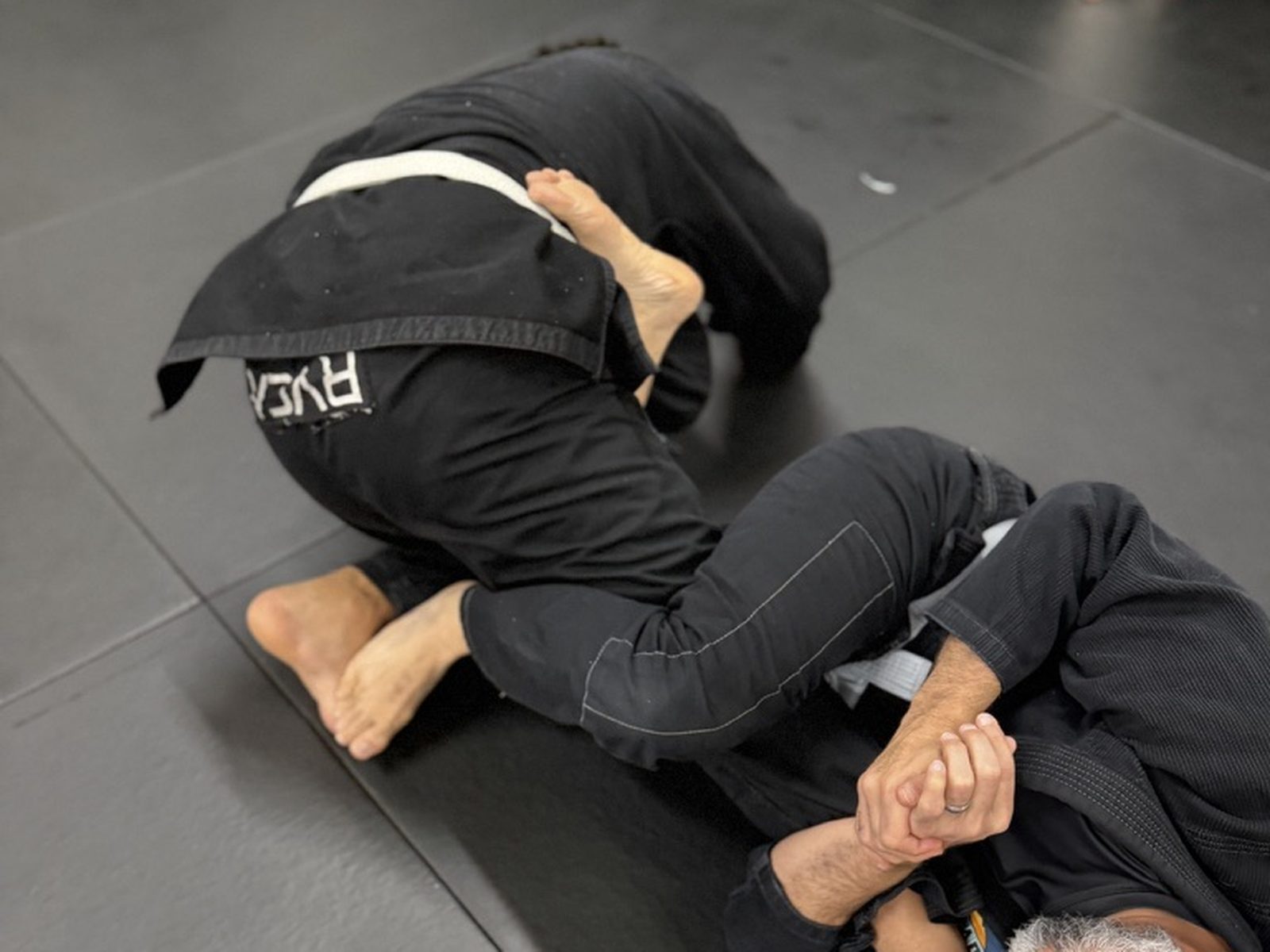
Guard Passing Basics
Brazilian Jiu Jitsu | Guard Passing
Guard Passing Basics in BJJ
Passing the guard means getting past your partner's legs to a pin like side control or mount. Keep good posture and a wide, low base, keep your elbows in and your hands inside, then clear their legs, get past their hips and take control of their head and shoulders. You've passed when they're pinned and their knees point away from you, which takes more than getting past the legs.
For a specific pass, see the Toreando Pass, Knee Slice Pass, Over Under Pass and Passing Half Guard pages.
How passing works
- 01
Good posture
Keep your head up and your back straight, with your head out of reach of their hands and legs. When your head drops and your back rounds, they pull you down and start attacking. You should feel tall and heavy at the same time.
- 02
Wide, low base
Keep your knees or feet wide and your hips low, with your weight in the middle. A narrow base is easy to tip over. If they push or pull, you should be able to stay put without putting a hand down.
- 03
Elbows in, hands inside
Keep your elbows close to your body and your hands inside their knees and arms. Inside position wins the grip fight, and tight elbows keep your arms from getting trapped. As a beginner, keep both hands inside their legs or both outside. One in and one out is the classic triangle setup. Don't post a straight arm on the mat next to their legs either, because that's an easy armbar and hard on your elbow.
- 04
Grips before you move
Get a grip on their legs, knees or pants before you stand or start moving around. Standing in front of their guard with no grips lets them get their feet on you and grab you first. Grab, then go.
- 05
Clear the legs
Against closed guard, start by posturing up tall, hands on their hips or belt, then stand or kneel with one knee up and push one of their knees down to pop the ankles open. Once the guard is open, their legs keep working through a connection to your body: feet on your hips, knees on your chest, hooks on your legs. Any real connection is a warning. Push, pin or move their legs out of the way and step away from their frames instead of pushing into them.
- 06
Past the hip line
Get your body beside their hips, not in front of them. In front of their hips, their legs push you away easily. Once you're beside them, they'd have to curl their knees back toward their chest to get you in front again, and that's a much weaker move. Most passes fail right here, because they frame, move their hips and get a knee back in, so keep moving before they can.
- 07
Head and shoulders
Now move your control up from their legs to their head and shoulders: a cross face, which is your shoulder pressed across their jaw to turn their head away, an underhook under their far arm, and your chest on theirs. Passing the legs and passing the guard are two different things. Without the head and shoulders, they turn in, turtle or get their guard back. The pins you're aiming for are side control, knee on belly, mount and north south.
- 08
Settle toward their hips
Finish by walking back toward their hips so their knees point away from you, and settle your weight. If you stay square in front of them, the guard comes right back. You've passed when they stop moving and you can stay there without fighting.

Tight or loose passing
Tight passing. When they're sitting up, close to you or have you wrapped up, stay close and heavy instead of backing off. Get chest to chest or a body lock, your arms wrapped around their waist, and grind your way past their hips. It's slower, but they have a hard time moving with your weight on them.
Loose passing. When they're on their back with their feet up and you're standing, you can stay off them and use footwork instead. Grab their knees or pants, push their legs to one side and step around to the other, like the toreando, the pass that moves their legs like a bullfighter's cape. Don't lift and slam a partner when you're standing, and keep your cross face and shoulder pressure firm but controlled. Keep your grips and your base while you move. If they get a foot back on you, reset your grips and go again.
Things to look out for
Diving for the legs
You lean way forward to grab a leg and your head drops low. Your posture collapses, they pull your head down, and you get swept or caught in a guillotine.
The fix: Keep your head up and your chest heavy. Get your grips without reaching your head out past your hips.
One hand inside their guard
One of your hands is inside their legs and the other is outside. That's exactly the setup for a triangle choke.
The fix: Both hands in or both out. Move your hands together, and if one gets stuck inside, bring the other one in too.
Driving straight forward
You push straight into them with all your weight. They use your own forward push to sweep you or roll you over.
The fix: Open the guard and clear the legs first, then move around them. Put your pressure down into them.
Standing with no grips
You stand up in front of their guard with nothing in your hands. They get their feet on your hips, grab your sleeves or ankles, and you're in their game.
The fix: Get grips on their legs or pants before you stand or move. Your grips are what keep their feet off you.
Passing the legs but not the guard
You get around their legs and think you're done, but you never got their head and shoulders. They turn into you, turtle or bring their knee back in.
The fix: As soon as you're past the legs, go up to the head and shoulders with a cross face or underhook and your chest on them.
Squaring up after the pass
You get past and turn to face them square. Their knees come back in front of you and the guard is back.
The fix: Walk back toward their hips so their knees point away from you. Settle there and wait until they stop moving.
Pushing into their frames
They put a knee or forearm in your way and you keep pushing straight into it. You get tired, and their frame keeps you exactly where they want you.
The fix: Move away from the frame and around it. Step to the side, change angles, and come in where there's nothing in your way.
Drills you can practice
Drill 01
Kneeling to standing
3 sets of 10. From your knees, step one foot up and stand, keeping your back straight and your head up, then go back down. Switch the lead leg each set. Keep your knees wide and your hips low as you rise.
Drill 02
Step around a pillow
3 rounds of 1 minute with 1 minute rest. Put a big pillow or bag on the floor like it's their legs. Grip the top as if you're holding their knees, push it to one side and step around to the other side, then reset and go back. Keep your posture tall and your feet wide the whole time.
Drill 03
Knee cuts
3 rounds of 1 minute. From a squat with one hand on the floor, slide one knee across the mat in front of you, then come back and switch sides. Keep your hips low and your chest up. Go smooth and controlled before you go fast. In class you'll do the real reps with a partner, first against a guard that just holds, then against light resistance, and finish by holding the pin for a few seconds. Go light, and let go right away if they catch a submission.
Frequently Asked Questions
What is guard passing in BJJ?+
It's getting past your partner's legs from the top to a pin like side control, mount or north south. Their legs are in the way, so you have to clear them, get past their hips and then hold them down. You've passed when they're pinned and can't get their legs back in front.
What are the main ways to pass the guard?+
Tight passing keeps you close and heavy, using body locks and chest pressure. Loose passing keeps you standing and moving, using footwork like the toreando. You can also use submission threats to make them react and open up. Common first passes are the knee cut, also called the knee slice, the toreando and the over under. Most people start with one style, and the goal is to put them together.
Is guard passing different in gi and No Gi?+
The principles are the same: posture, base, inside position, past the hips, then the head and shoulders. In the gi you can grip pants and collars. In No Gi you grip legs, wrists and the body instead.
Why do I keep getting stuck in someone's guard?+
Usually it's posture or grips. If your head is down and your back is rounded, they control you. If you stand with no grips, their feet get on you. Fix your posture, get grips, clear their legs and get past the hip line.
Should I pass from my knees or standing?+
Both are used. On your knees you stay close and heavy, which suits tight passing. Standing gives you room for footwork, which suits loose passing, and it needs good grips and base first. Your coach will show you which one fits the guard in front of you.
Are You Ready?