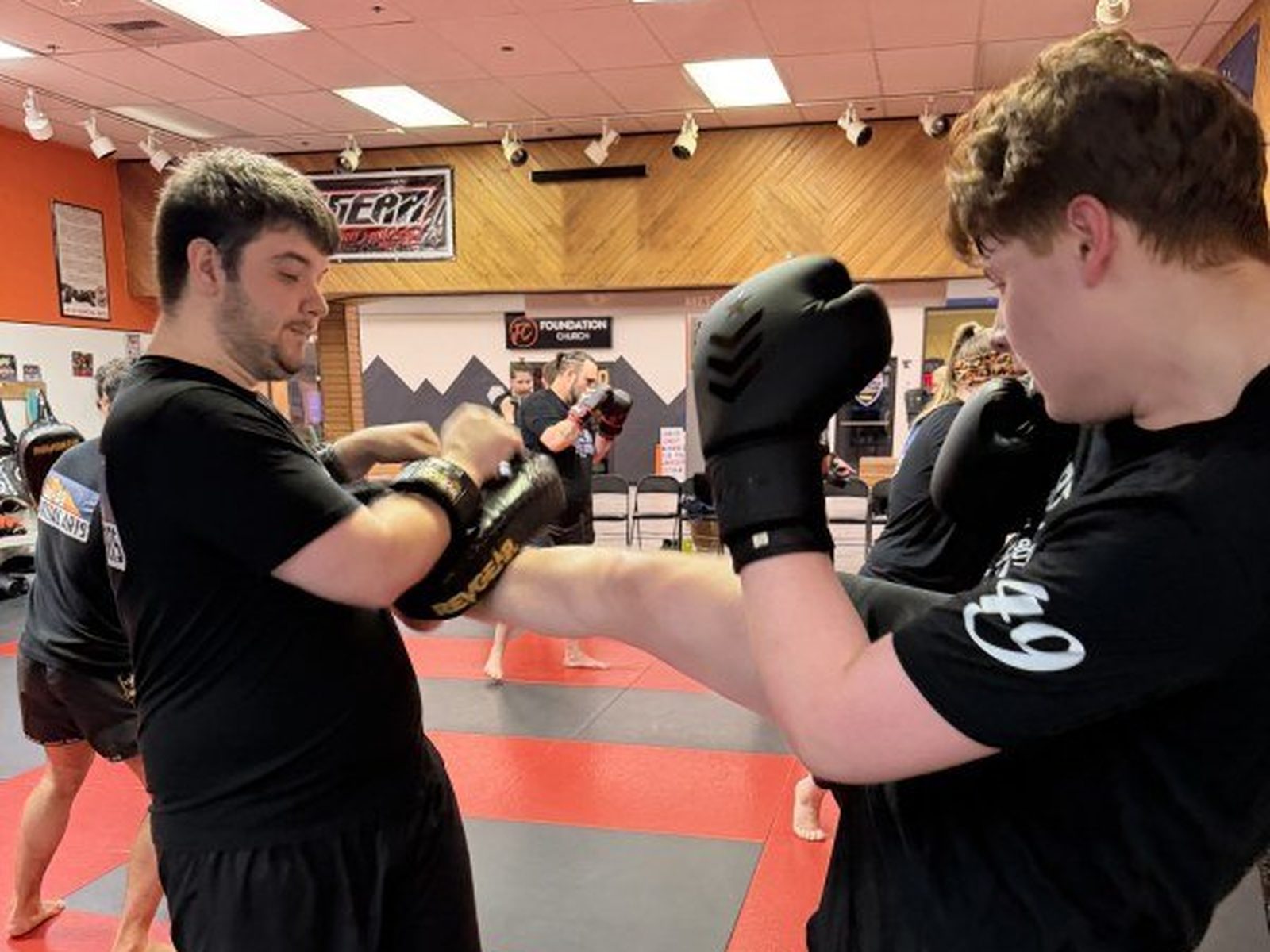
Kickboxing vs Muay Thai
Compare | Side by Side
Kickboxing vs Muay Thai: What's the Difference
Kickboxing is built on punches and kicks. Muay Thai uses those too, plus knees, elbows and the clinch, where you hold on and strike up close, which is why it's called the art of eight limbs. Kickboxing usually has fewer tools to learn at first, Muay Thai gives you more to work with up close, and AK-49 Martial Arts teaches both.
What you do in each
- 01
What you do in kickboxing
Kickboxing is punches and kicks, and rules vary from one style to another, with some allowing knees and a short clinch. You learn to put your hands and feet together in combinations and to move in and out of range. In most kickboxing the clinch gets broken up fast, so most of the work happens at punching and kicking distance. At AK-49 Martial Arts, Adult Kickboxing pulls from Muay Thai and Western boxing.
- 02
What you do in Muay Thai
Muay Thai uses your fists, elbows, knees and shins, which is where the name art of eight limbs comes from. You'll also use the teep, a push kick that keeps people off you. You learn the clinch, where you control your partner's head or arms up close to throw knees or sweep them off balance. Because the clinch is allowed, Muay Thai has a whole range up close that kickboxing mostly skips. Elbows and clinch work are drilled with control, with a partner and the coach watching.
- 03
How training feels
Kickboxing tends to move fast, with lots of combinations and movement. Muay Thai usually has heavier kicks, a steadier pace and more time in the clinch, so it's very physical. Both are done in rounds on pads and the bag, and both are hard workouts. Muay Thai has more to learn, which some people love and some find like a lot at first.
- 04
What they share
The two are close cousins. The jab, the cross, the round kick and checking kicks with your shin are in both. A lot of combinations work the same way in either one. Whichever you start with, almost everything carries over to the other.

The benefit of each
Kickboxing. Kickboxing is a great place to start striking. There are fewer tools to put together at first, so a basic game can come together a little sooner, and the fast pace makes it a strong cardio workout. You learn to move, keep your distance and put punches and kicks together. Everything you learn carries straight into Muay Thai if you add it later.
Muay Thai. Muay Thai gives you a complete striking game, from kicking range all the way in close. The clinch teaches you what to do when someone grabs hold of you, which kickboxing mostly doesn't cover. It builds full body strength and a lot of toughness. It's also a common striking base for people interested in MMA (mixed martial arts).
Things to look out for
Thinking they're the same thing
You figure Muay Thai is kickboxing with a different name, so it doesn't matter which class you take. The clinch, knees and elbows make Muay Thai feel different, especially up close.
The fix: Pick by what you want. If the clinch and elbows sound fun, try Muay Thai. If you'd like to start simpler, start with kickboxing.
Thinking Muay Thai is a brawl
You see Muay Thai fights online and expect class to be a fight. Class is pads, the bag and drills with a partner, and elbows and knees are drilled with control.
The fix: Come try a class. Sparring is optional, and new students get paired with patient partners.
Thinking you have to pick one forever
You worry that starting in kickboxing locks you out of Muay Thai, or the other way around. The two share most of the same punches and kicks.
The fix: Start with the one that sounds best to you. What you learn carries over, so adding the other later is a natural next step.
Thinking it's all about the big kick
You think Muay Thai is only about kicking hard, so you skip the hands and the clinch work. A kick with nothing in front of it is easy to see coming.
The fix: Give the punches, knees and clinch the same attention as your kicks. Put a punch or two in front of your kicks, the way the coach shows you.
Waiting to get in shape first
You put off your first class for weeks so you can get fit first. The weeks go by and you never start, and the shape you were waiting for is the shape the classes would have given you.
The fix: Come as you are and take a break when you need one. Grab some water, catch your breath and jump back in.
Frequently Asked Questions
What's the main difference between kickboxing and Muay Thai?+
Muay Thai allows elbows and the full clinch, and kickboxing mostly doesn't. Kickboxing is built on punches and kicks, with knees under some rules. In Muay Thai you can hold on up close and throw knees and elbows, so there's a whole range that kickboxing mostly skips.
Which is better for beginners?+
Both work for beginners. Kickboxing has fewer tools, so the basics usually come together a little faster. Muay Thai has more to learn, which some beginners find more interesting. Either way you start with the same stance, guard, punches and kicks.
Which is better for self defense?+
Both help. Muay Thai's clinch teaches you what to do when someone grabs you up close, and kickboxing teaches you to keep your distance and get away. Real self defense starts with awareness, and the physical side comes from training regularly over time.
Is Muay Thai harder on your body?+
It's very physical, with knees, elbows and lots of clinch work, and your shins take some getting used to. Clinch work is done with control, keeping your posture up and letting go when your partner needs to stop. Sparring is optional, and if you take a knock to the head you stop for the day and tell the coach. Go at your own pace, and tell the coach about any old injuries.
Can I train both?+
Yes. They share most of the same punches and kicks, so each one helps the other. Most beginners do best picking one as their base for the first couple of months, then adding a class a week of the other.
Where do kids start?+
Kids 7 and up start in Kids Kickboxing. They learn the stance, the guard, punches and kicks on pads and the bag with a partner. Sparring comes later, and kids who spar wear full sparring gear.
Are You Ready?