Am I Too Old for Kickboxing
Kickboxing | Questions
Am I Too Old to Start Kickboxing
Most adults aren't too old to start kickboxing. You train at your own pace, sparring is optional, and you build up from short efforts with a longer warm up and more recovery than a 20 year old needs. One small study of adults 50 to 85 who did 12 weeks of group kickboxing found better grip strength and walking speed.
How to start
- 01
Start slow
Start with what you're confident you can do, and ease in before you push the intensity. Short efforts of five or ten minutes at a time are a fine place to begin, and you build from there. Take a break when you need one, grab some water, and jump back in. If you have a heart, blood pressure or joint condition, check with your doctor about what's safe for you first, and tell your coach before class so they can adjust drills for you.
- 02
Warm up longer
Give yourself extra time to warm up before class, with easy movement that raises your heart rate and loosens your shoulders, hips and knees. Shadowboxing and dynamic stretches work well. A cold body in its 40s, 50s or 60s lets you know about it the next day. Keep your kicks low for the first weeks too. Kicking at knee and thigh height works the same balance and hips without straining a cold back or groin. Hit the pads and bag at half power for the first few weeks, with your hands wrapped and your wrists straight, so your wrists, elbows and shoulders can catch up. If balance is shaky, keep a hand near the wall or a partner for kicks until it settles.
- 03
Two or three classes, with rest between
Two or three classes a week is a good start, with at least one rest day between them. Avoid back to back days until the early soreness fades. Your body needs more recovery than it did at 25, and that's normal. Most people do fine starting this way, and you can adjust the number to how you feel.
- 04
Don't wait to get in shape
You don't have to be in shape to start. A few weeks of training is what gets you in better shape. Your first classes will feel awkward and tiring, and that's true for everybody at any age.
- 05
Train your own pace
Don't try to match the 22 year old next to you. Some people will be faster or stronger, and that's fine. You're there to get better than you were last week. Stop and tell your coach right away if you feel chest pain or pressure, dizziness, unusual shortness of breath, or a sharp pain in a joint. Normal muscle burn is fine. Those are not.
- 06
Skip sparring if you want
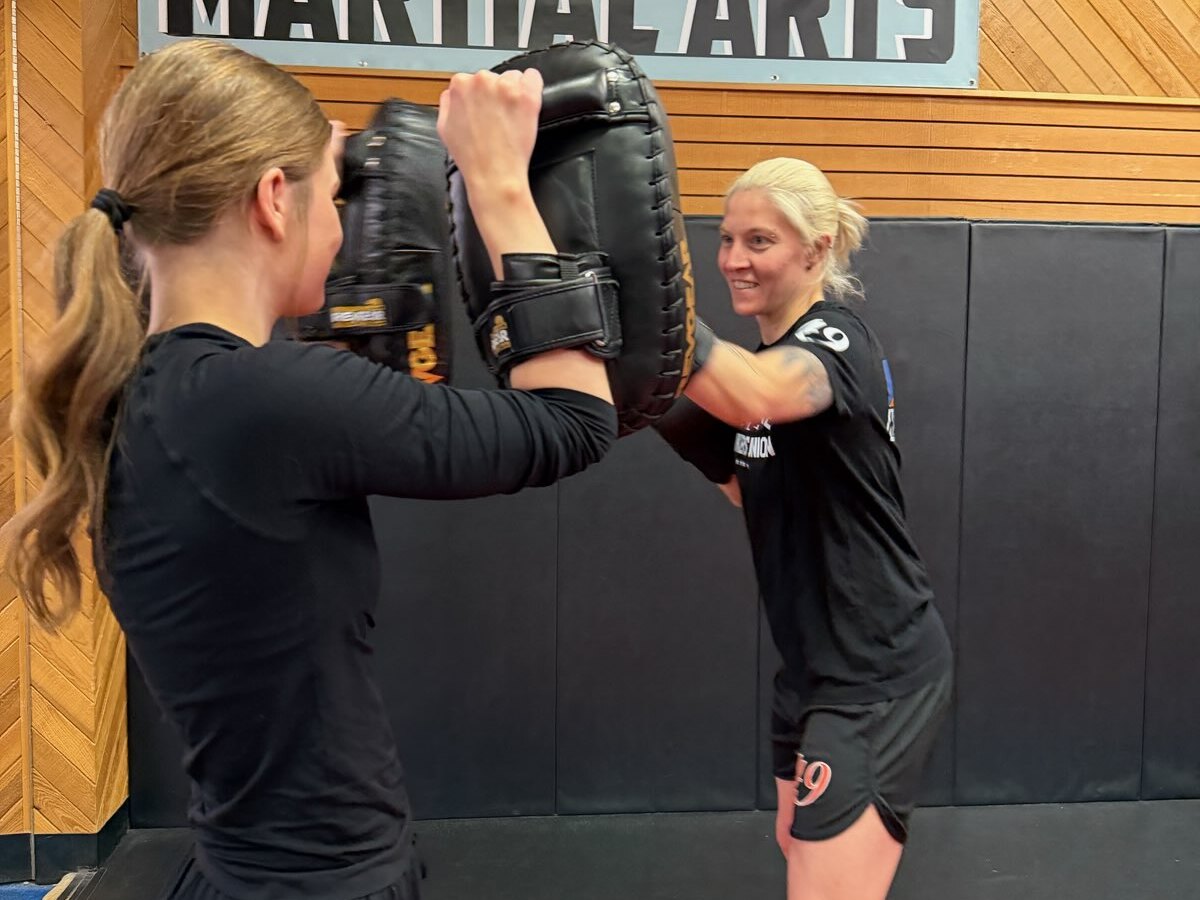
A first class is usually a warm up, then learning your stance and a couple of punches, then hitting pads with a partner at your own pace, with breaks whenever you need them. Sparring is completely optional. You can learn kickboxing and get in shape with pads, drills and bag work and never spar at all. If you want to try it later, it starts light.
- 07
Take recovery seriously
After class, cool down and stretch while you're still warm. Sleep, eat enough protein and drink water before, during and after training. If you already do a hard workout program, ease off it for the first few weeks while your body gets used to kickboxing.
What the research says
Group kickboxing at 50 to 85. In one small study of group kickboxing, adults 50 to 85 trained for 12 weeks. At the end they had better grip strength and walking speed, and less waist and belly fat. Their muscle mass stayed about the same, while their strength and walking speed went up. They were everyday adults living in their community. It's one study, so take it as a good sign rather than proof, but it fits what the health guidelines already say about staying active as you age.
What older adults need. The CDC says older adults need 150 minutes of moderate activity a week, two days of muscle strengthening, and activities that improve balance. A kickboxing class works your heart and lungs, your legs and core, and your balance every time you stand on one leg to kick. For people with ongoing health conditions, the guidelines say some activity is better than none. Two or three classes a week covers a lot of that.
Things to look out for
Waiting to get in shape first
You tell yourself you'll start once you've lost some weight or gotten fitter. Months go by and you never walk in.
The fix: Start now. Training is what gets you in shape, and the first classes are built for people who are new.
Doing too much too soon
You come every day the first week to make up for lost time. Most new people who do that get sore and burned out, and older bodies take longer to bounce back.
The fix: Two or three classes a week with a rest day between. Add a class later, once two feels easy.
Keeping up with younger people
You try to match the pace, the power or the high kicks of someone half your age. Your form falls apart and you finish the night hurting instead of better.
The fix: Train at your own pace and leave your ego at the door. Everyone else in the room was a beginner once too.
Skipping the warm up and cool down
You show up late, go straight into hard work, and leave right after. Stiff joints and sore muscles the next day are the result.
The fix: Get there early enough to warm up properly, and stretch after class while you're still warm.
Being hard on yourself
A combination doesn't click and you decide you're too old for this. Feeling slow and uncoordinated early is normal at every age.
The fix: Give it a few weeks of steady classes. With practice, the techniques start to click.
Stacking it on top of everything else
You keep your full running or lifting program and add kickboxing on top. Your body never gets a chance to recover from either.
The fix: For most people it helps to ease off other hard workouts for the first two to four weeks while your body gets used to kickboxing. Then bring them back slowly, based on how you're recovering.
Frequently Asked Questions
Is 50 too old to start kickboxing?+
Usually not. A small 12 week study of group kickboxing in adults 50 to 85 found gains in grip strength and walking speed. If you have a health condition, check with your doctor first. Then start slow, warm up well and go two or three times a week.
Is 60 too old to start kickboxing?+
Not by itself. The same study included adults up to 85. Health guidelines for older adults call for cardio, strength and balance work, and a kickboxing class works all three. Start with short efforts and build up.
Do I have to spar?+
No. Sparring is completely optional. You can learn real technique and get a hard workout from pads, drills and the heavy bag without ever sparring.
Do I need to be in shape first?+
No. A few weeks of training is what gets you in better shape. Go at your own pace, take breaks when you need them, and the fitness comes with showing up.
What if I'm slower than everyone else?+
That's fine, and it's normal when you start at any age. Nobody is keeping score on your first day. Everyone in the room was a beginner once, and the techniques click with steady practice.
Are You Ready?