
Kickboxing for Women
Kickboxing | Starting Out
Kickboxing for Women: What to Know Before You Start
Kickboxing is taught the same way to women and men: stance, footwork, punches, kicks and pad work, at the pace of the person training. Power comes from technique, your legs and your hips, so you don't need to be strong or in shape to start. You start wherever your own experience puts you.
What you'll learn
- 01
Your stance and guard
You start with a good athletic base: feet about shoulder width apart, front foot ahead, knees a little bent, weight in the middle. Your hands sit up by your cheeks with your elbows in close to your ribs. Everything else in kickboxing is built on that shape.
- 02
Footwork
You learn to move in your stance with small steps and keep your feet from crossing. Going forward the front foot moves first, going back the back foot moves first. Good footwork is what keeps you balanced and out of reach.
- 03
Punches from the face
Your first punches, the jab and cross, start at your face, go straight out and come straight back to your face. On the cross, your back heel turns out so your hip turns with the punch, and your chin stays tucked. Hooks and uppercuts come later and travel a curved path, but they start and finish at your face too. You land on the first two knuckles with your thumb closed and your wrist straight, and keep breathing steady. Hands get wrapped and gloved for any bag or pad work. The hand that isn't punching stays on your cheek.
- 04
Kicks that use your hips
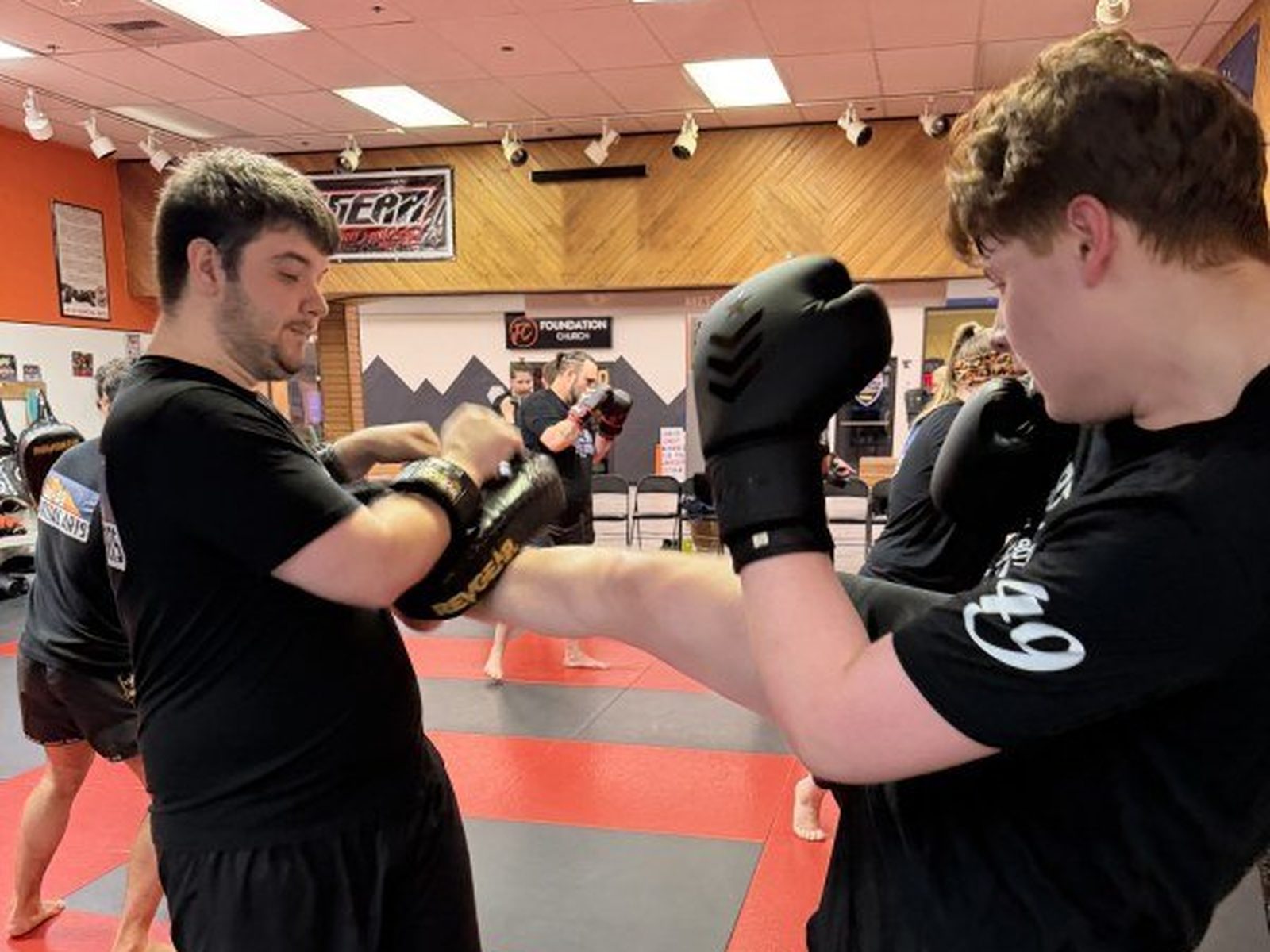
A good kick comes from turning your hips and your standing foot, not from swinging your leg hard. You step to the right distance, turn on the ball of your standing foot, land with the shin and bring the leg straight back to your stance so you stay balanced. That's why technique matters a lot more than strength. Clean kicks feel easy and land heavy, and they work your legs and core the whole time.
- 05
Pads and the bag
You hit pads while a partner holds, then switch and hold for them, and you work the heavy bag. Holding pads teaches you more than you'd think, because you watch every punch come at the pad. Hold them firm in front of your shoulder, not out at arm's length, and meet the strike a little instead of letting it slap your face. Your partner goes at a speed you're both comfortable with. Short combinations like a jab, a cross and a kick come early.
What to know before you start
Start where you are. You don't need to be in shape first, because a few weeks of training is what gets you in better shape. Two or three classes a week is a good start, and the people who do best are usually the ones who keep showing up. Go at your own pace and take a break when you need one. Warm up, drink water, and know that sore muscles are normal but sharp or joint pain means stop and tell your coach. Sparring is optional, and nobody is pushed into it.
What to wear, and if you're pregnant. Wear a shirt and shorts or leggings, whatever is comfortable. Fitted clothes and a supportive sports bra work better than baggy ones that catch on your punches, and members train in gear the gym provides. If you're pregnant, talk with your doctor first. Federal health guidance tells doctors to advise pregnant patients to avoid contact sports and anything where they could get hit in the belly, so partner drills and sparring are off the table. Your doctor can tell you if solo work like shadow boxing at an easy pace is okay for you.
Things to look out for
Waiting until you're in shape
A lot of people put off starting until they've lost weight or gotten fitter on their own. Months go by, and the thing that would have helped never starts.
The fix: Start now and pace yourself. The training is what gets you in shape, and nobody in class expects you to keep up with people who've trained for years.
Thinking you need to be strong to hit hard
It's easy to believe power comes from big arms. So you muscle every punch, tire out fast and the punches still feel weak.
The fix: Let your legs and hips do the work. Push off the back foot, turn the hip and keep the arms relaxed until the punch lands.
Stopping after the first couple of classes
The first classes are exciting, then work or family gets in the way and one missed week turns into a month. That's when most people quietly stop.
The fix: Pick the two nights a week you can actually keep, and treat them like an appointment.
Expecting a number on the scale
People come to a few classes, step on the scale and quit when it hasn't moved. Fitness changes come before scale changes.
The fix: Judge the first months by what you can do: more rounds, cleaner punches, less sore. What you eat and showing up week after week are where the scale change comes from.
Expecting self defense from a few classes
Kickboxing teaches real skills, but a few classes won't hold up under real stress. Feeling ready too early can put you in a worse spot.
The fix: Real self defense starts with awareness of your surroundings. The physical part comes from training regularly over months.
Wearing baggy clothes
Loose tops and wide shorts catch on your punches and kicks and keep riding up. You spend the round fixing your clothes instead of training.
The fix: Wear fitted workout clothes that stay put, and a supportive sports bra. Test them with a few squats and high knees before class.
Frequently Asked Questions
Is kickboxing good for women?+
Yes. It's taught the same way to women and men, and you train at your own pace. It builds fitness, coordination and confidence in what your body can do. In one small study of adults 50 to 85, most of them women, 12 weeks of group kickboxing improved grip strength and walking speed.
Do I need experience or to be in shape to start kickboxing?+
No. Beginners are welcome, and you start wherever your own experience puts you. If you trained years ago, you'll pick things back up as you go.
Do I have to spar?+
No. Sparring is optional at AK-49 Martial Arts, and nobody is pushed into it. Classes are pads, the bag and drills with a partner, and plenty of people train just for the fitness and the skill.
What should I wear to my first kickboxing class?+
A shirt and shorts or leggings, whatever is comfortable, and a supportive sports bra. Fitted clothes work better than baggy ones. Bring water, and members train in gear the gym provides.
Can you do kickboxing while pregnant?+
Talk with your doctor first. Federal guidance tells doctors to advise pregnant patients to avoid contact sports and anything where they could get hit in the belly. Your doctor can tell you what's safe for you.
Are You Ready?