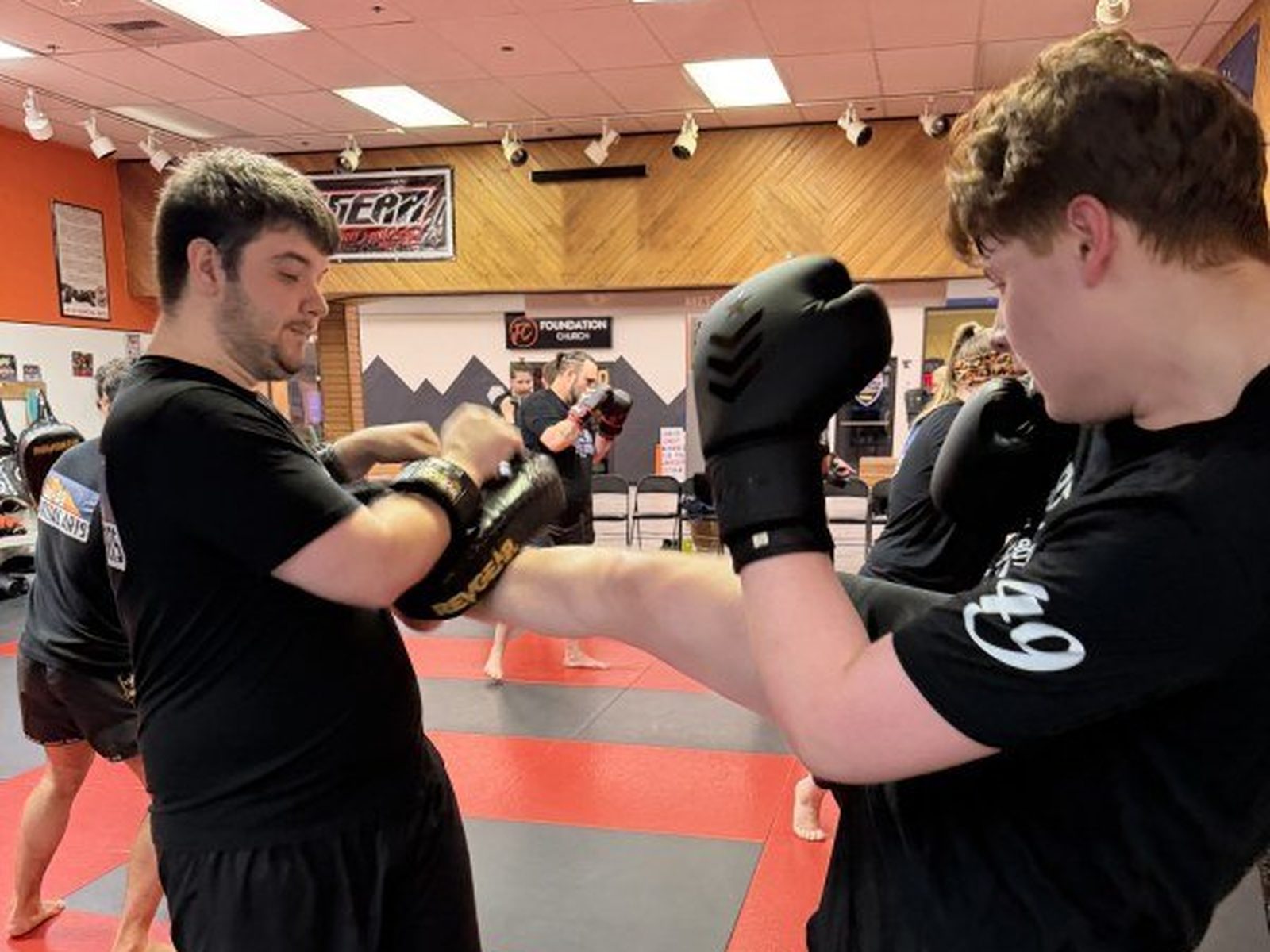
Kickboxing Gear for Beginners
Kickboxing | Starting Out
Kickboxing Gear for Beginners: What Each Piece Is For
The basic kickboxing kit is hand wraps, gloves, a mouthguard and shin guards, and each one protects something different. You don't need any of it for your first class. At AK-49 Martial Arts, members train in gear the gym provides, so this page is about what each piece does and how it should fit.
What each piece is for
- 01
Hand wraps
Wraps go on your hands under your gloves. They hold the knuckles together, support your wrist and thumb and keep the back of your hand stable when you hit. A standard wrap is about 4.5 meters long, around 180 inches, which is enough to cover the wrist, thumb, knuckles and between the fingers. They should feel snug when you make a fist, never numb. The usual order is a loop over the thumb, a few turns around the wrist, then around the knuckles, between the fingers, and finish back at the wrist. Your coach will show you on your first day of bag work.
- 02
Bag gloves
Bag gloves are a little lighter than sparring gloves, so you feel your knuckles land on the bag and pads. That feedback tells you whether you're landing on the first two knuckles with a straight wrist. Pick a pair with real padding over the knuckles, around 14 to 16 ounces for most adults, because thin gloves on a heavy bag are hard on a beginner's hands.
- 03
Sparring gloves
Most gyms have new adults spar in 16 ounce gloves, and bigger people sometimes go heavier, so follow your gym's rule. The extra padding protects your own hands and your partner's head. Smaller gloves come later, once you have the experience and control for them, and the very small ones are for competition.
- 04
Mouthguard
The American Dental Association recommends mouthguards for boxing and martial arts. A custom guard from a dentist fits best. A boil and bite guard is softened in hot water and shaped to your teeth at home, and a poor shaping job gives a poor fit. A stock guard is the least effective. Whichever you use, it should cover your top teeth, stay put without you biting down and have no sharp edges.
- 05
Shin guards
Shin guards are for kicking drills with a partner and for sparring. Partner kicks at the beginner level always happen with pads on. Good ones are thick padding that covers the whole shin and the top of the foot, not a thin sleeve. They should be strapped snug enough that they don't spin around when you kick.
- 06
What you wear
Wear a shirt and shorts, whatever is comfortable, with nothing that catches. Fitted clothes work better than baggy ones, and shorts with zippers, buttons or hard pockets can scratch a partner.

When you'll need it
Your first class. You don't need to bring anything. Wear a shirt and shorts, whatever is comfortable, and bring water. Members train in gear the gym provides. Try class first, and find out what you like before you think about gear.
Partner work and training on your own. Shin guards and a mouthguard matter most once you're kicking a partner or sparring, and sparring is optional. Men usually add a groin cup for sparring and partner kicking drills. If you want gear of your own, or you're training on your own somewhere else, ask your coach for options to pick from.
Things to look out for
Buying gear before your first class
People show up with a full bag of new gear before they've tried a single class. Sometimes it's the wrong size or the wrong kind for how the gym trains, and it sits in a closet.
The fix: Come in a shirt and shorts. Members train in gear the gym provides, and you can ask about your own gear once you know you like it.
Sparring in small gloves too soon
Small gloves feel fast and light, so beginners want them. With less padding, your hands and your partner's head take more of every punch, and a new person doesn't have the control for that yet.
The fix: Stay in 16 ounce gloves until you have the experience and control for smaller ones. Lighter gloves are fine for bag and pad work.
A loose mouthguard
A stock guard or a badly shaped boil and bite falls out of place, so you keep biting it to hold it in. You can't breathe well, and it doesn't protect much when it isn't seated.
The fix: Use a guard that's shaped to your teeth. A boil and bite you shape carefully, or a custom guard from a dentist, fits a lot better than a stock one.
Kicking a partner bare shin
Kicking shin to shin with no padding before your legs are used to it is rough on both of you. It also makes you afraid to kick, and you start pulling your kicks.
The fix: Drill with shin guards on. Your legs get used to contact slowly, over months of bag work and partner drills.
Wrapping too tight or too loose
Too tight, and your fingers go numb or white. Too loose, and the wrap slides around inside the glove and doesn't support your wrist or knuckles.
The fix: Wrap with your fingers spread so it tightens when you make a fist. When you're done, make a fist: it should feel snug and supported, with normal color in your fingers.
Leaving gear wet in your bag
Gloves, wraps and shin guards soak up sweat. Zipped up in a bag, they stay damp and start to smell.
The fix: Take everything out when you get home. Let gloves and shin guards air dry open, wipe them down now and then, and wash your wraps. Never share a mouthguard, and when you use gym gloves or shin guards, wear your own wraps and wipe the gear down after.
Frequently Asked Questions
What gear do I need for my first kickboxing class?+
None. Wear a shirt and shorts, whatever is comfortable, and bring water. Members train in gear the gym provides.
What size gloves should a beginner use?+
16 ounce gloves for sparring is the usual starting point, though your gym may set its own rule. For bag and pad work, a lighter, well padded glove lets you feel your knuckles land. The small gloves you see in fights are for competition.
What kind of mouthguard is best?+
A custom guard from a dentist fits best. A boil and bite guard works if you shape it well. Stock guards are the least effective, because they aren't shaped to your teeth.
Do you need shin guards for kickboxing?+
For kicking drills with a partner and for sparring, yes. Your shins toughen up slowly from bag work, and partner kicks stay padded.
How long should hand wraps be?+
A standard wrap is about 4.5 meters, around 180 inches. That's long enough to cover your wrist, thumb, knuckles and between your fingers. Shorter wraps run out before they support everything.
Are You Ready?