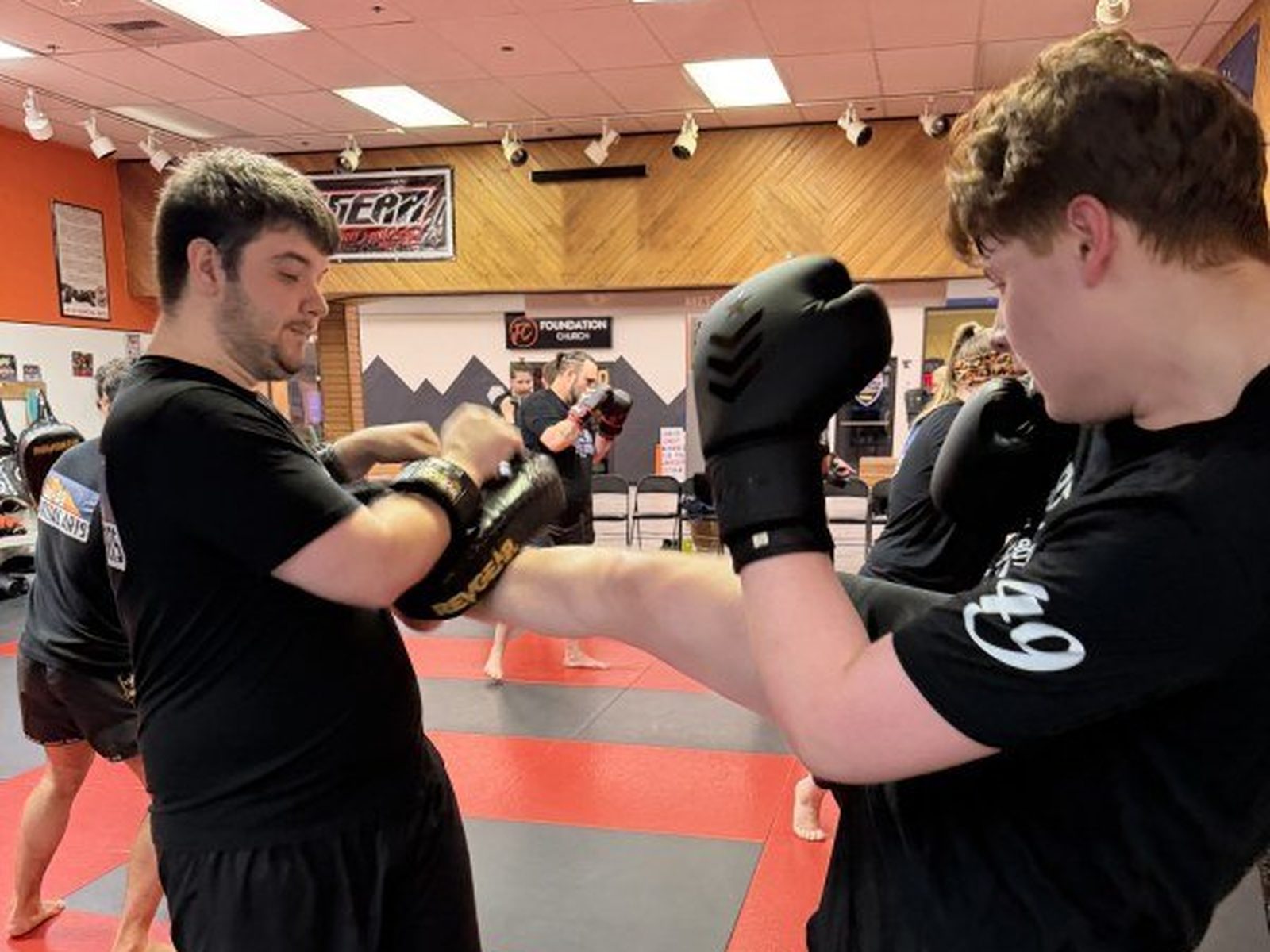
Punch to Kick Combos for Beginners
Kickboxing | Combos
Punch to Kick Combos for Beginners in Kickboxing
A punch to kick combo uses one or two punches to bring the other person's hands up and their attention high, then finishes with a kick while they're busy covering their head. Start with short combos of two to four strikes, keep a hand by your face when you kick, and get back to your stance or step out as soon as the kick lands.
How to build your combos
- 01
Start from your stance
Every combo starts from a good athletic base with your hands up at your face and your elbows in. If your stance falls apart on the punches, the kick has nothing to push off. Check that your feet are set and your guard is up before you throw the first punch.
- 02
Jab, cross, lead leg body kick
Throw the jab and the cross back to the face, then kick to the body with your front leg. The cross turns your hips one way, and the lead kick comes back the other way, a lot like a lead hook after the cross. Their hands come up for the punches, which leaves the ribs open. Go slow at first so you stay balanced, turn on the ball of your standing foot, land with the shin and bring the leg straight back to your stance.
- 03
Double jab, low kick
Two jabs, then the back leg kicks low to the meaty outside of the thigh, above the knee and below the hip. Stay off the knee, and with a partner kick only the pad or shield they're holding. The jabs close the distance and keep their eyes on your hands, so the kick comes from somewhere they aren't looking. Step in a little with the jabs so the kick lands with your shin, not your foot.
- 04
Teep, jab, cross
Teep with either leg, whichever feels better to you, then follow with a jab and a cross. Pull the kicking foot back into your stance and let the punches go out as soon as your feet are set. The teep pushes them back, and the punches catch them as they come back in.
- 05
Keep a hand at your face
When you kick, the arm on the kicking side can swing down to help you turn, but the other hand stays at your face. Some coaches bring the kicking side arm up instead of down; either way, one hand guards your chin. Your head is open for the whole kick if both hands drop.
- 06
Eyes up, then get out
Look at their chest or eyes the whole time, never down at the leg you're about to kick. When the kick lands, put it straight back down into your stance or step out on an angle. If you stand in front of them after the kick, you're easy to hit back.

When to throw them
When they cover up. Punches to the head make people bring their hands up and lean back. That's the moment a kick to the body or legs gets in, because their arms are busy up top. On the pads, your partner will usually show you this by covering up after your jab and cross. Kick right after the last punch, while their hands are still high.
When your punches fall short. If your jab and cross don't reach because they stepped back, they're now at kicking distance. Legs reach farther than arms, so a kick finishes what the punches started. This is why a combo that ends in a kick works so well against people who back away from your hands. Keep the punches honest so they still have to react to them.
Things to look out for
Throwing a naked kick
A kick thrown on its own from out in the open is easy to see coming. They have time to block it, check it or step away, and you're left standing on one leg. Do it over and over and people start waiting for it.
The fix: Show a hand first. Even one jab makes them think about their head, which helps hide the kick. Cue: hands first, kick last, while you're learning, and change which punches you use so it doesn't turn into a pattern.
Dropping both hands on the kick
Beginners often throw both arms down to help them spin, and their chin is left open the whole time the leg is out. In sparring that's when a counter punch lands. It also becomes a habit that's hard to break later.
The fix: Let the kicking side arm swing if you need it, and keep the other glove at your cheek. Cue: one hand always touches your face.
Looking down at the target
You glance at the leg or the body before you kick. That tells them exactly what's coming, and you can't see their hands while you're looking down. It also tips your head forward and off balance.
The fix: Keep your eyes on their chest or eyes and let your shin find the target. Cue: chin down, eyes up, the same as when you punch.
Making the combo too long
New students string six or seven strikes together and the last ones are slow and sloppy. Your stance falls apart, your hands drop and you run out of air. Long combos also keep you in range the longest.
The fix: Stick to two to four strikes while you're learning. Make each one clean, then get out. Cue: short and sharp, then reset.
The same pattern every time
If it's always jab, cross, kick, people figure it out after a few times and get ready for the kick. Even on the bag, doing only one pattern makes your body lazy about the setup.
The fix: Change the number of punches before the kick, and change which kick ends it. One punch, then two, then three. Cue: they shouldn't be able to count it.
Standing there after the kick
The kick lands and you hang on one leg or slowly put it back. You're off balance and right in front of them, so it's the easiest moment for them to hit you back.
The fix: Snap the leg back down into your stance or step out on an angle right away. Cue: kick lands, feet set, hands up.
Holding your breath
Beginners tense up and stop breathing through the whole combo. You get tired fast, and by the second or third combo your kicks are weak and your hands are low.
The fix: Breathe normally and keep it steady the whole round. Let a breath out on your power shots. Cue: never hold it.
Drills you can practice
Drill 01
Three starter combos in the mirror
3 rounds of 2 minutes with 1 minute rest, slow and in front of a mirror if you have one, with plenty of clear space around you. Round one, jab, cross, lead leg body kick. Round two, double jab, low kick. Round three, teep, jab, cross, switching the teeping leg each time. Check that one hand is at your face on every kick and that you land back in your stance.
Drill 02
Punch count ladder
4 rounds of 2 minutes with 1 minute rest, in the air or on a bag. If you use a bag, wear wraps and gloves and kick with your shin, light at first, building power over weeks as your shins get used to it. Throw one punch and a kick, then two punches and a kick, then three punches and a kick, then start over. Rounds three and four, change which kick finishes. Keep your eyes up and your breathing steady.
Drill 03
Combo, exit, reset
3 rounds of 3 minutes with 1 minute rest. Throw one combo, step out on an angle, pause for two seconds with your hands tight, then throw the next. Never stand still after the kick. By round three, do it at a steady pace without your form getting sloppy.
Frequently Asked Questions
What is a good first kickboxing combo?+
Jab, cross, then a kick. It's short, it uses the punches you learn first, and the punches do the work of bringing their hands up. Once that feels good, try double jab, low kick and teep, jab, cross.
Why do punches come before the kick?+
Punches are faster and easier to land, and people react to them by covering their head. A kick thrown on its own is easy to see. Thrown right after two punches, it's much harder to read because their hands and eyes are still up high.
Which leg do I kick with after the cross?+
The lead leg works well to the body after a jab and cross. Your cross turns your hips one way, and the kick comes back the other way, the same way a lead hook follows the cross. Your coach will show you how to keep the kick tight so you don't lose your balance.
Should every combo end with a kick?+
No. If every combo ends on a kick, people learn to wait for it. Learn kick to punch too, like a teep then jab and cross, so they can't guess what's next.
How many strikes should a beginner combo have?+
Two to four. Short combos are easier to throw clean, and they keep you in range for less time. Long strings usually get sloppy at the end, which is when you get hit.
Are You Ready?