
Punching vs Kicking vs Kneeing
Kickboxing | Range and Choices
Punching vs Kicking vs Kneeing in Kickboxing: When to Use Each
Throw the weapon that reaches from where you're standing. The exact distances change with your height, your stance and the kick, but as a rule kicks and the teep reach the farthest, punches work once you're close enough that you can both hit, and knees need you right up close because the leg is bent. Use your punches to walk into knee range, and a kick or teep to get back out to distance.
Which weapon at which range
- 01
Far away: kicks and the teep
At long range, your legs are the only thing that reaches, along with a long jab. The teep and the round kick let you hit them while you're still out of their punching range. Being out of punching range doesn't mean you're out of kicking range, for you or for them.
- 02
Use the teep when they walk in
The lead teep is a defending kick. Lean a little onto your back leg, and when they step forward, bring the knee up and push the ball of your foot into their stomach. It stops them and buys you space so you can choose what happens next.
- 03
In the middle: punches
Once you're close enough that you can both punch, your jab, cross and hooks go to work. You can still kick from here, but you're also in range to get hit, so throw your combo and get out. Keep your hands up and your elbows in the whole time.
- 04
Up close: knees
A knee uses a bent leg, so it only reaches when you're about an arm's length away or closer. Close range is also where hooks, uppercuts and body shots land. Drive the knee straight up and through, with your hips going forward and your upper body leaning back a little for balance. Keep your chin tucked and your head up instead of dropping it toward them, and keep a hand at your face or on their shoulder. Knees and the clinch aren't allowed in every kickboxing rule set, so check the rules for your class.
- 05
Measure with your hand
Before you throw a big kick, find out how far away they are with a jab or a reaching hand. If the jab lands, a kick will usually reach too. If you're too far for anything, take a step in before you throw, or don't throw at all.
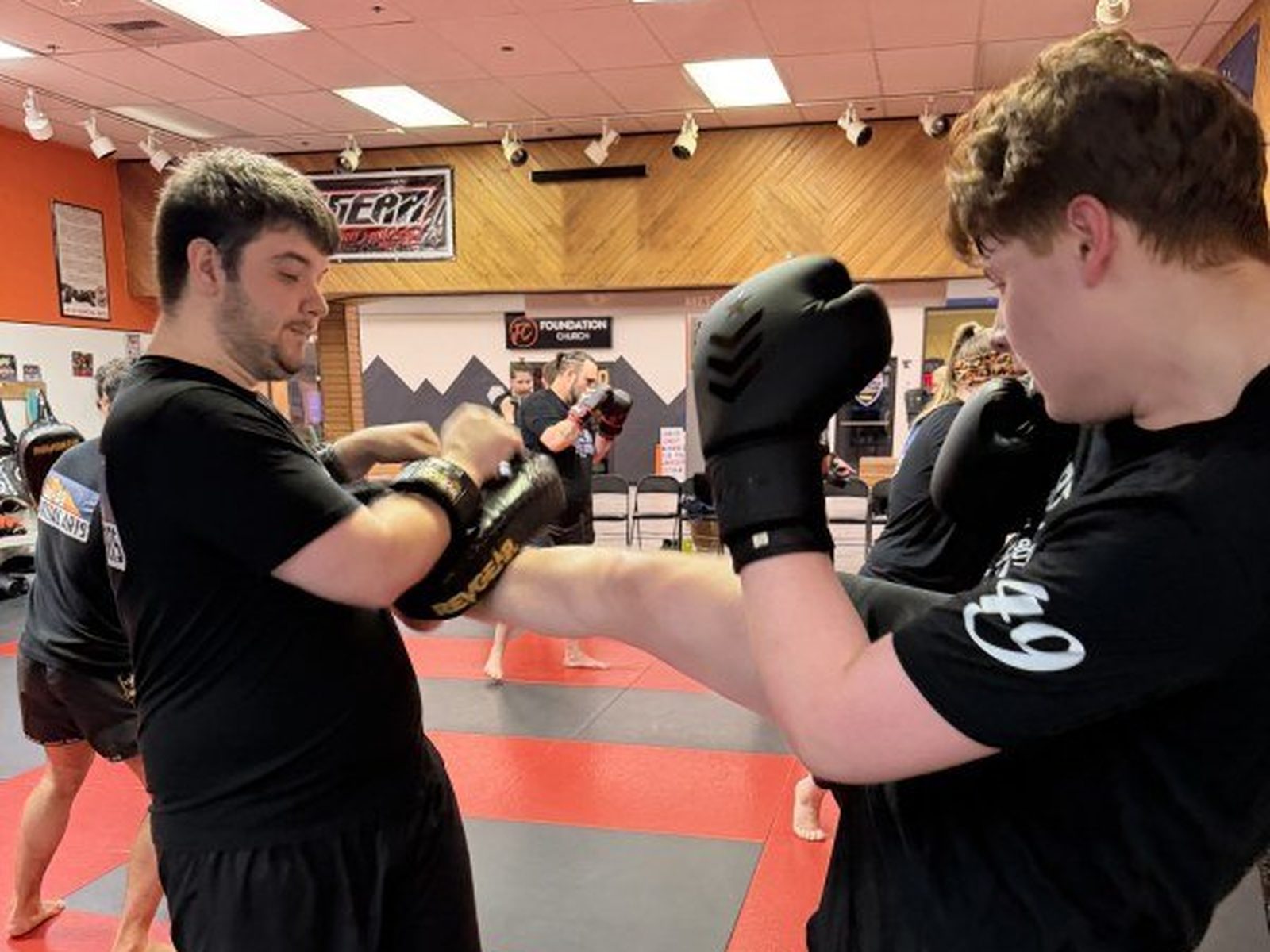
Moving between them
They back away from your punches. When someone pulls back from your hands but doesn't get far, they're often right at kicking distance. Throw your jab and cross, and as they lean or step back, kick before they can get all the way out. A body kick or low kick catches them while their weight is going backward. This is one of the easiest ways for a beginner to land a kick on the pads or in light sparring.
They come forward at you. Someone pressing in on you is walking into your knee. A big round kick is hard to throw when they're right on top of you, so bring the knee up instead. Your punches help too, because a hook can pull their guard to the side and open up the middle for the knee, but don't count on it every time, and keep your hands up as you step in. If you don't want them close, teep them back out.
Things to look out for
Big kicks when they're on top of you
They jam you with forward pressure and you try a big round kick or head kick anyway. There's no room for it, so it gets smothered or caught, and you're on one leg in front of them.
The fix: When they're close, throw knees, hooks and uppercuts. Save the round kick for when there's space. Cue: no room, use the knee.
Kicking from too far away
You throw a high kick from way outside and it falls short. You're off balance, you've shown them your kick, and they get a free shot as you put your leg down.
The fix: Measure with a jab or a reaching hand first. If the hand can't touch them, step in before you kick. Cue: hand first, then kick.
Reaching for the knee
You try to knee from too far and lean your whole upper body forward to reach. The knee has no power, your head is out in front, and you're slow to get back to your stance.
The fix: Get closer with your punches, then throw the knee from close. Hips go forward and your shoulders lean back a little. Cue: punch your way in, then knee.
Walking straight in with your hands down
Beginners step right down the middle to get to knee range with their hands low. That's the moment you walk into a punch, and it happens the same way every time.
The fix: Keep your hands up and elbows in as you step in, and get in behind a punch, like a hook or a double jab. Cue: punches carry you in.
Hanging out in the middle
You stand at the distance where you can both punch and wait for something to happen. That's the range where you get hit the most, and you get tired trading shots.
The fix: Step in, hit and step back out, or go all the way in to knee range. Don't stand still where you can both punch. Cue: in, hit, out.
Using one weapon only
You only punch, or you only kick. After a few times the other person knows what's coming and gets ready for it.
The fix: Mix them. Punches into a kick, punches into a knee, a kick to get back out. Cue: change what you finish with.
Drills you can practice
Drill 01
Three range shadow rounds
3 rounds of 3 minutes with 1 minute rest. In each round, spend the first minute at long range (teeps, round kicks, long jabs), the second minute at middle range (jab, cross, hooks), and the last minute close (hooks, uppercuts, knees). Keep your hands up and elbows in no matter which range you're in.
Drill 02
Punch, they back off, kick
3 rounds of 2 minutes with 1 minute rest, in the air or on a bag. Throw a jab and cross, take a small step back like they just backed away from you, then throw a body kick or low kick. Get back to your stance after every kick. If you use a bag, wear wraps and gloves and kick with your shin.
Drill 03
Hooks into the knee
4 rounds of 2 minutes with 1 minute rest, on a bag or in the air. Throw a lead hook and a rear hook, then a knee with the back leg, then teep or step back out. Keep one hand at your face during the knee; on a bag, the other hand can rest on the bag for balance. Feel how the hooks walk you close enough for the knee, and keep your breathing steady. With a partner, knees and kicks go only into the pad or shield they hold, at the pace your coach sets.
Frequently Asked Questions
Should I punch, kick or knee in kickboxing?+
It mostly depends on how far away they are. Kicks and the teep usually reach the farthest, punches work in the middle, and knees need you close. Pick the weapon that reaches from where you're standing.
Why do knees need you so close?+
A knee uses a bent leg, so it doesn't reach as far as a kick. You need to be about an arm's length away or closer to land a good one. Your punches are what get you there.
What should I throw when they back away?+
A kick. When someone backs away from your hands, they're backing into kicking range. Throw your punches and kick as they pull away.
What should I throw when they rush in?+
A knee, or a teep to push them back out. A big round kick is hard to throw when someone is on top of you. Keep your hands up so you don't eat a punch on the way.
Are knees allowed in kickboxing sparring?+
It depends on the rules for that round, so ask your coach what's allowed before you spar. You'll drill knees on the pads and the bag either way. Sparring is optional at AK-49 Martial Arts, and nobody is pushed into it.
Are You Ready?