Round Kick
Kickboxing | Kicks
How to Throw a Round Kick in Kickboxing
The round kick swings your shin around into the target with your whole body turning behind it, and in kickboxing you usually hit with the shin instead of the foot. Start from a good athletic base with your hands up, step out onto the ball of your front foot, turn the hip over as that foot pivots, then put the leg straight back down in your stance.
- 01
Good athletic base
Feet about shoulder width apart, front toes pointing forward, knees a little bent and your weight in the middle. From here you can lift a leg to block a kick or step into your own. You should feel light enough to pick up either foot without falling over.
- 02
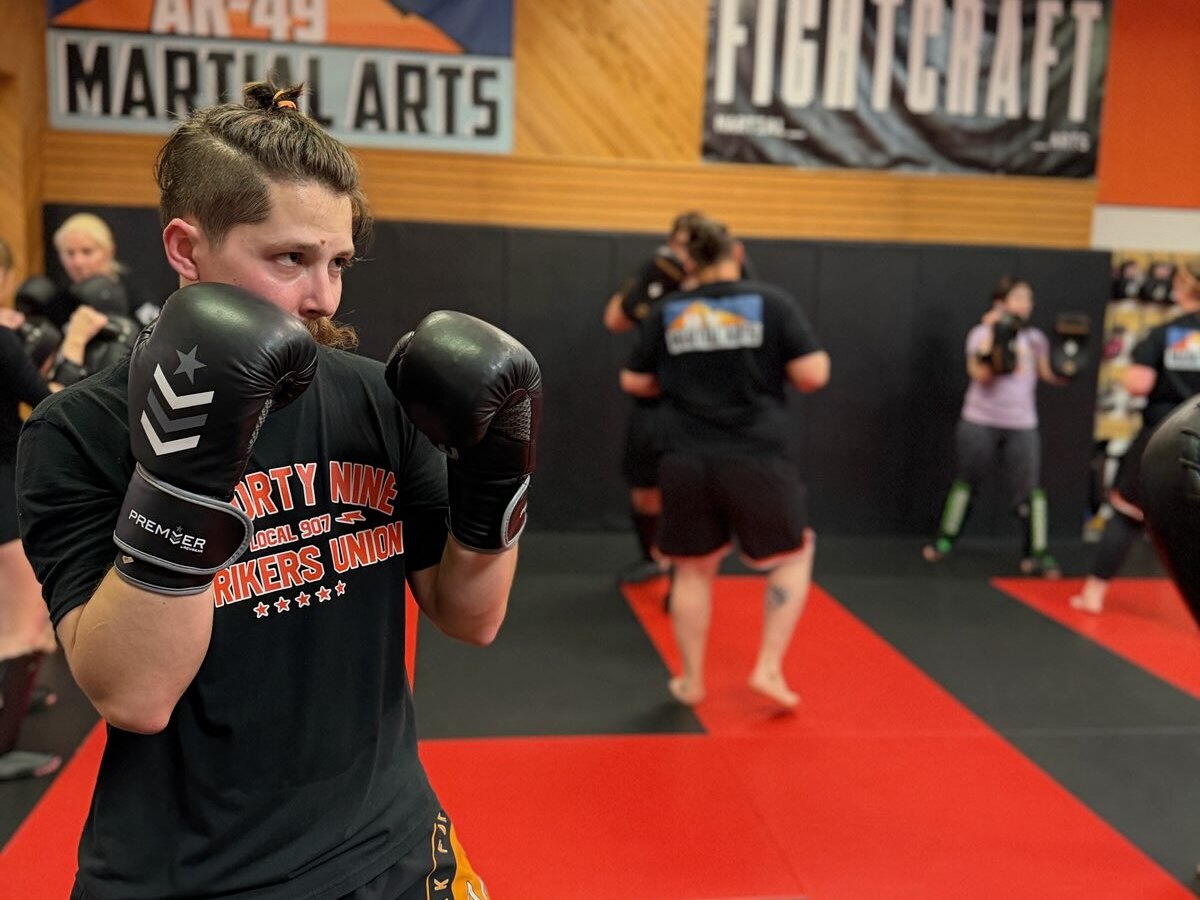
Hands up, elbows in
Both fists sit at your cheeks with your chin tucked a little and your elbows in close to your ribs. The hand on the side you're not kicking with stays glued to your face for the whole kick. Some coaches let the kicking side arm swing down to help the hips turn, and if you do that, it comes right back up the moment your foot lands.
- 03
Step out first
For a back leg kick, step your front foot forward and a little outside the center line. The step lengthens your stance and carries your weight into the kick, and stepping slightly out helps your hip open. You can kick without a step when you're already at the right distance, but beginners learn the step first, because it makes the hip turn easier to feel.
- 04
Stay on the ball of the foot and pivot
Push off your back foot and stay up on the ball of your front foot through the kick, heel lifted. Let that foot turn about 90 degrees or a little more as the kick goes so your hip can turn over. If the heel drops flat early or the foot stays pointing forward, the hip gets stuck and you lose your balance.
- 05
Turn the hip over
Pull the shoulder on your kicking side back as the hip turns, and let the shin swing around through the target. Square shoulders stop the turn, and the kick becomes a leg swing with nothing behind it. It should feel like a baseball swing, with the whole body turning together.
- 06
Land with the shin
Hit with your shin, the lower half just above the ankle up toward the middle, because the foot is full of small bones that get hurt easily. Keep a slight bend in the knee as it lands, which keeps the knee from snapping straight and makes the leg easier to bring back. Keep your head up over your hips instead of leaning way back.
- 07
Back to your stance
Bring the leg back down the way it came and land in your stance, feet under you and hands on your face. Don't spin all the way around or let the foot crash down wherever it falls. Keep breathing steady and let a breath out as the kick lands, so you don't tense up and hold your breath.
When to use it
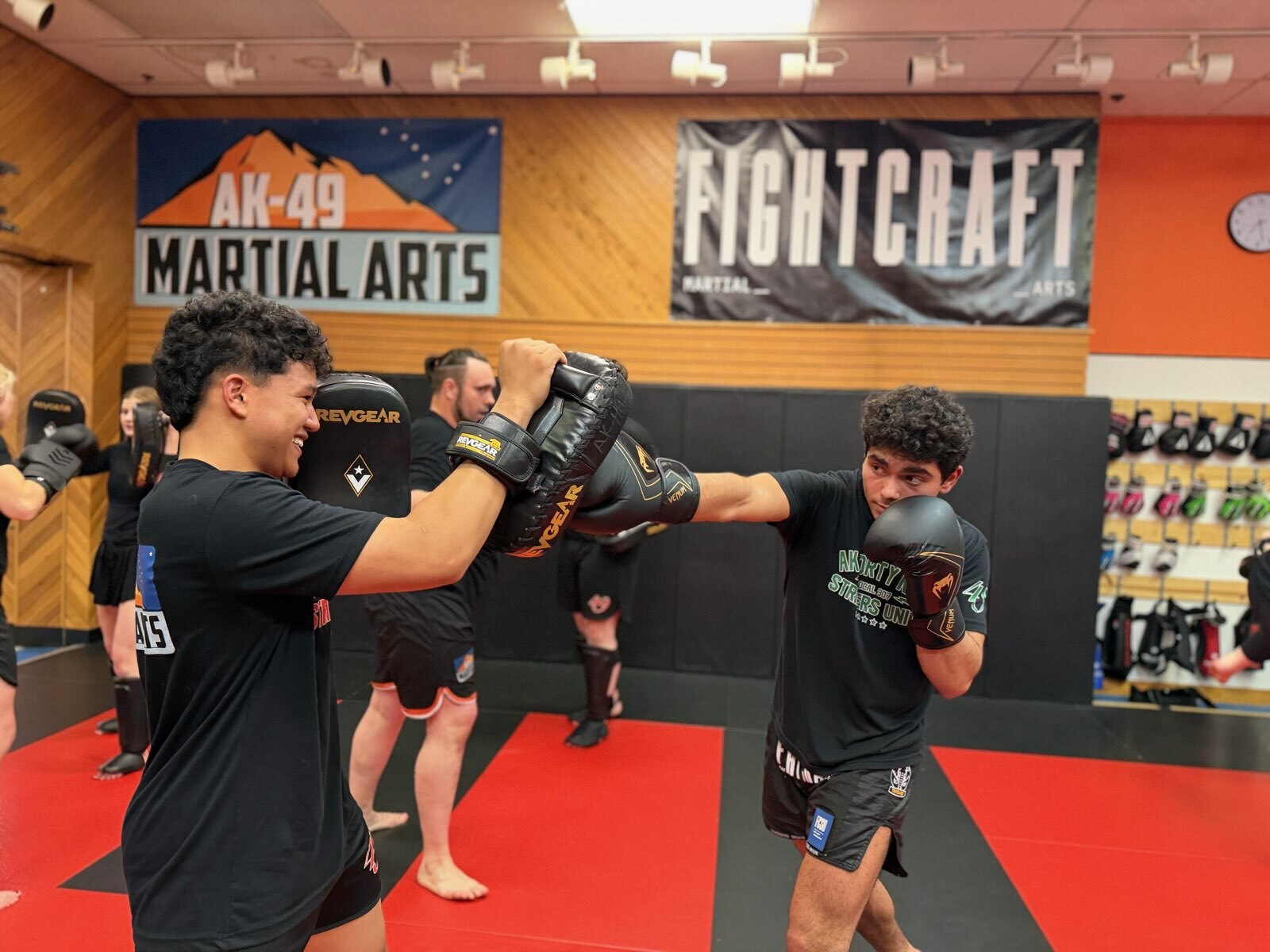
Right after your jab. The simplest way to throw a round kick is right after a jab. The jab keeps their eyes and hands busy up top, and the small step you take with it puts your front foot where the kick needs it. Jab, then kick to the body with your back leg, and come back to your stance. A kick thrown with no punch in front of it is easy to see coming and easy to counter.
To start your punches. The kick doesn't have to be the last thing you throw. Kick to the body, put the foot down in your stance, and punch right off that landing with a left hook or a cross. Practicing kick to punch from your first weeks teaches you to bring the kick back fast, because you can't punch until your foot is down.
Things to look out for
Kicking from a standstill
You throw the kick straight from your stance with no step. The leg swings on its own, the kick is slow and light, and your hip has to force a turn it isn't set up for.
The fix: While you're learning, step out with the front foot on power kicks and push off the back foot as you go. Think step, then kick, until it blends into one move.
Dropping the front heel
Your front heel lands flat in the middle of the kick. The hip stops turning, you fall out of your stance, and you have to shuffle your feet before you can do anything else.
The fix: Stay up on the ball of your front foot from the step until the kick is back down. Do slow kicks and check that the heel stays lifted while the hip turns.
Not pivoting, square shoulders
The front foot keeps pointing forward and the shoulders stay square to the target. The hip never turns over, so the kick has no body weight in it and lands like a slap.
The fix: Let the front foot turn about 90 degrees and pull the kicking side shoulder back as you kick. You should finish the kick turned side on to the target.
Overstepping and leaning back
The step lands too close, so you lean back to make room for the leg. Your chin goes up and out, you're off balance, and the kick lands with less weight behind it.
The fix: Step so your front knee is over your front foot, not past it, and keep your head over your hips. Trust the step you took and kick from there.
Dropping both hands
Both hands fly down or out to the sides as you kick. Your head is wide open for the whole kick, and a punch thrown back at you lands before your foot is down.
The fix: Keep the hand on the other side glued to your face every kick. If the kicking side arm swings down for balance, get it back up as soon as you land. Watch your hands in a mirror, not your foot.
Spinning all the way around
After the kick you keep turning until your back faces the target. You can't defend from there, you're off balance, and it shows the kick is out of control.
The fix: Practice kick and return, bringing the leg back the way it came. Spinning through is one way to finish a kick, but it shouldn't happen every time.
Hitting with the foot
The top of the foot or the toes land instead of the shin. It stings, it doesn't do much to the target, and the small bones in the foot can get hurt.
The fix: Aim the shin at the target and turn the hip over so the shin gets there first. If the foot keeps landing first, step a little deeper before you kick.
What to Practice at Home
Drill 01
Kick, land, recenter
3 rounds of 2 minutes with 1 minute rest, walking down the room or in place. Throw a light rear round kick at body height, land in control, rock your weight back to the middle, and go again. Round one, go slow and just find your balance, with your hands up. Round two, add a little speed and land each kick back in your stance. Round three, switch stances and kick with the other leg.
Drill 02
Tape line step drill
Put a strip of tape on the floor running straight out from your front foot. Do 3 sets of 10 slow kicks per leg with a 1 minute rest between sets. On each one, step just outside the line, stay on the ball of the foot, pivot, kick, and land back where you started. If your foot lands somewhere new, the kick wasn't under control.
Drill 03
Bag or shadow rounds
4 rounds of 2 minutes with 1 minute rest, on a heavy bag if you have one or in the air if you don't. Round one, jab then round kick to the body. Round two, round kick then left hook, putting the foot down before you punch. Round three, single kicks focused on bringing the leg straight back. Round four, the same work from your other stance. Start light on the bag and add power only once the form holds up, over weeks rather than days. Kicking a partner happens with shin guards and pads, at a speed your coach sets.
Frequently Asked Questions
Do you kick with your shin or your foot?+
Your shin. The shin is the hard part of the leg, and the foot has a lot of small bones that get hurt easily. If your foot keeps landing first, you're usually a little too far away or the hip isn't turning over.
How much should I pivot on a round kick?+
About 90 degrees or a little more on your front foot for a full power kick to the body, and more for higher kicks. Turning much past that makes it hard to get back to your stance. For a quicker kick that sets something up, you can pivot less.
Should my kicking leg be straight?+
Keep a slight bend in the knee as the kick lands instead of snapping it straight. The power comes from your hip turning, and a soft knee protects the joint and makes it easier to bring the leg back.
My hips are tight. Can I still learn the round kick?+
Yes. Most beginners start by kicking the body or even lower, and that's fine. Kick at the height your hips allow with good form, and the height comes with time and stretching.
What do I do with my arms when I kick?+
The hand on the other side stays on your face the whole time. Coaches teach the kicking side arm two ways: it stays up by your face, or it swings down past your hip to help the turn. Either way, both hands are back at your face as soon as your foot lands.
Are You Ready?