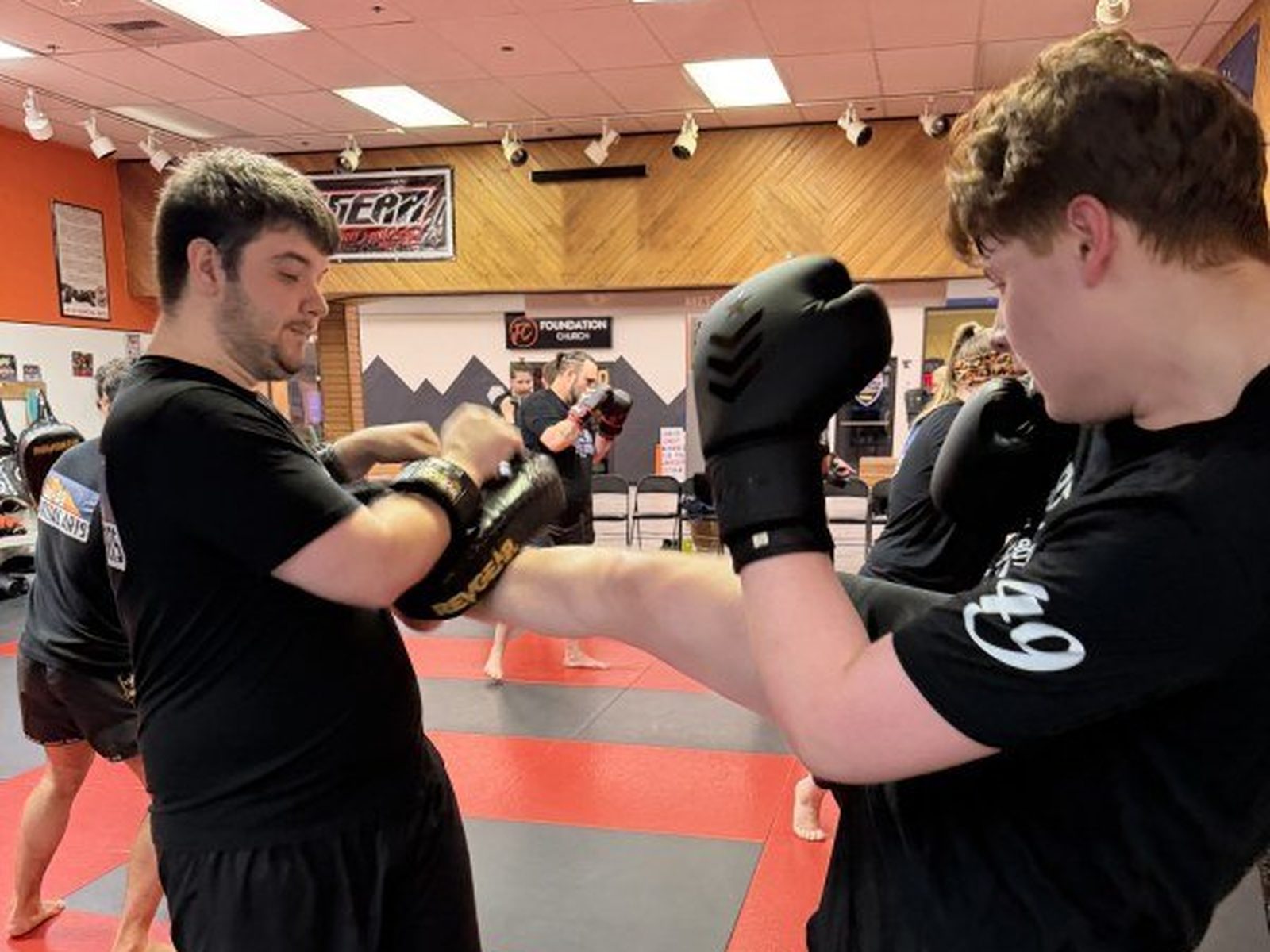
Shadowboxing Footwork and Defense
Kickboxing | Shadow Boxing
How to Shadowbox With Footwork and Defense
Shadowboxing with footwork and defense means moving in every direction without crossing your feet, moving your head as you step, and defending the punches and kicks you picture coming back at you. Keep a good athletic base with your hands up and elbows in, throw every counter from the face and bring it back to the face. After every block, slip or pull, get your balance and guard back, answer with a punch, and move.
- 01
Good athletic base
Feet about shoulder width apart, front foot ahead with the toes pointing forward, back foot turned out a little, knees a little bent and your weight in the middle. Stay in that base as you move, light on the balls of your feet, so you can lift a leg to check a kick at any moment. Your stance should look the same after ten steps as it did before the first one.
- 02
Hands up, elbows in
Both fists sit up by your cheeks with your chin tucked a little, and your elbows stay in close to your ribs. That high guard is what you block with, so it stays up while you step, slip and roll. Moving your feet is when beginners let their hands drift down, so watch for it.
- 03
Punch from the face
Every counter you throw starts at your face and goes straight out. Once you're balanced after a slip, roll, pull or drop, come out of it with a one two, which is a good default answer while you're learning. If your balance or distance feels wrong, cover up and step out instead. Keep breathing steady so you don't hold your breath through the round.
- 04
Back to the face
Each punch comes straight back to your face, and after every block or slip your guard is back up before the next move. Picture them throwing back the moment you punch.
- 05
Step without crossing your feet
Lead with the foot closest to where you're going, then bring the other foot the same distance so you land back in your stance. Your feet never cross and never come together. Crossed feet leave you weak in your stance and open to a low kick.
- 06
Work around a cone
Set a cone, a shoe or a water bottle on the floor as your opponent. Step in and out, circle it both ways, shuffle at angles and step back away from it. Having a target keeps you at a real distance instead of drifting around the room.
- 07
Move your head with your feet
Slip your head to the side of straight punches and bend your knees to roll under hooks, moving your head as you step. If you're both orthodox, a common start is slipping a little to your right against their jab and a little to your left against their cross, and rolling the same way the hook is traveling. Keep every move small and fast, and get your guard back each time. Get low with your legs, not by bending at the waist, roll only as low as the hook needs, and don't push your head forward, where knees and uppercuts land.
- 08
Block, parry and check
Block hooks by bringing the glove tight to the side of your head with the elbow in, parry straight punches with a short tap that doesn't cross the middle of your face, and lift your leg to check kicks, toes up, with the shin turned out a little toward the kick. Start with the lead leg check, and add the rear leg check for kicks to your other side once your coach shows it. Mix these in with the head movement so you practice all of your defense. Set the foot back down into your stance after every check.
- 09
Back to your stance
After every defense and every counter, settle back into your stance with your hands on your face before you move again. Then pivot on the ball of your front foot or step off at an angle, or step back out of range. Building that habit alone makes it easier to do when a partner throws at you.
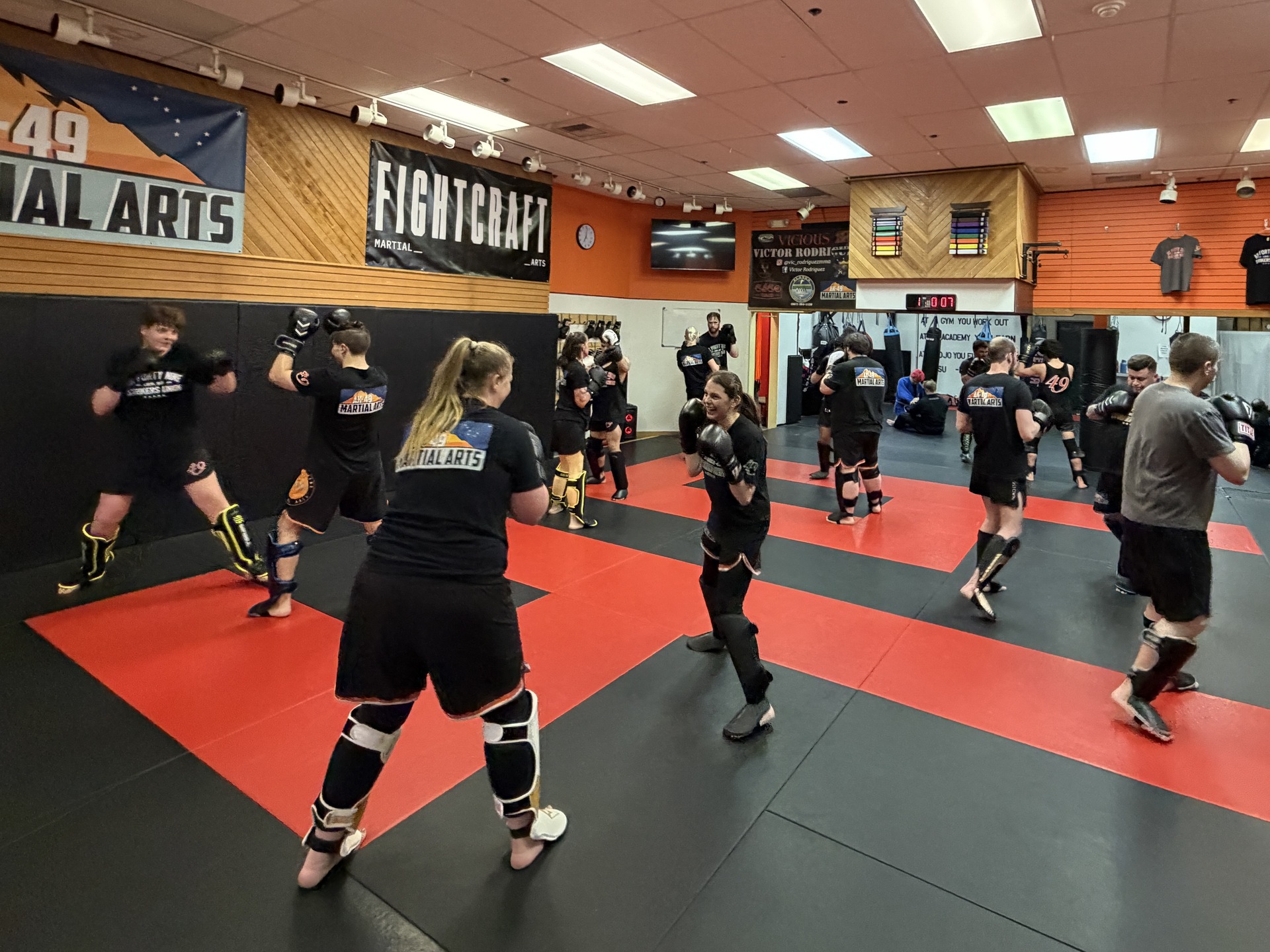
When to use it
As your warm up. A few rounds of footwork and defense shadowboxing gets your feet moving and your eyes up before you hit anything. It's a good way to start a bag session, a home workout or your own warm up before class. You go into the rest of training already thinking about defense. Start slow and let your body loosen up.
To build habits for pads and partners. Picture one kind of opponent each round. Against someone who kicks a lot, check and counter; against someone walking you down, work your exits and circle both ways. Doing it alone first means the moves are already there when a partner throws at you on the pads. It also shows you which direction you always forget to move.
Things to look out for
Offense only
You throw punch after punch and never picture anything coming back. It feels like a good workout, but you're building a habit of standing in front of people with no defense.
The fix: After every combination, defend something: a slip, a block or a check. Picture their punch coming the moment yours comes back.
Feet crossing or coming together
When you move sideways or circle, one foot steps over or right next to the other. You lose your base for a moment, and that's exactly when a push or a low kick takes you off your feet.
The fix: Always move the foot closest to where you're going first. Watch your feet in a mirror for one slow round and keep the stance the same width the whole time.
Bending at the waist
You duck or roll by folding forward at the waist. Your head ends up out over your front foot, low and easy to hit with a knee or an uppercut, and you can't see.
The fix: Bend your knees to get lower and keep your back fairly upright. Your eyes should stay on your imaginary opponent the whole time.
Big head movements
You slip or roll way too far, like you're dodging a car. It's slow, it wears you out, and it pulls you out of position to punch back.
The fix: Move your head just enough to get it off the line, a few inches. Keep your hands and feet moving together, small and fast.
Blocking and then waiting
You defend and then stand there, waiting for the next imaginary punch. In a real exchange that pause gives them a free second to throw again.
The fix: Get your balance and guard back, then answer, even if it's just a jab. If you don't have a shot, move instead of standing still.
Dropping and staying there
You drop or pull back to avoid a punch and then stay low or leaned back. You're stuck there and can't punch from that spot.
The fix: When you drop or pull, keep your weight ready to push back up and forward. Come out of it with a one two.
Only moving one way
You always circle to the same side because it feels natural. Anyone who sees it can cut you off, and your footwork gets predictable.
The fix: Circle both directions in every round. If one way feels awkward, spend more time going that way.
Drills you can practice
Drill 01
Cone footwork
3 rounds of 2 minutes with 1 minute rest. Round one, feet only: step in and out, circle the cone both ways and step back, with your hands up and your stance the same width. Round two, add a jab and cross every few steps, then step out. Round three, change direction every 3 or 4 steps.
Drill 02
Defense ladder
4 rounds of 2 minutes with 1 minute rest, in front of a mirror if you can. Round one, slip imagined jabs and crosses and answer each with a one two. Round two, roll under imagined hooks by bending your knees. Round three, block and check, toes up on every check. Round four, mix all of it with footwork.
Drill 03
Picture the opponent
3 rounds of 3 minutes with 1 minute rest, a different opponent each round. Round one, someone who kicks a lot, so check and counter. Round two, someone walking you down, so work your exits and circle. Round three, someone backing away, so step in with your jab and cut them off. Go at about half speed and stay smooth.
Frequently Asked Questions
How do I practice defense when I shadowbox?+
Picture their punches and kicks coming back at you after every combination. Slip or block the punches, check the kicks with your toes up, and throw something back right away. Then get your guard back and move.
How do I add footwork to shadowboxing?+
Set a cone or a shoe on the floor and work around it with your feet never crossing: in and out, circling both ways, angles and stepping back. Move the foot closest to where you're going first. Keep your stance the same width the whole time.
Should I move my head when I shadowbox?+
Yes. Move it as you step, keep it small and fast, and get your guard back every time. Bend your knees to go under hooks instead of bending at the waist.
How many rounds should I do?+
Three or four rounds of 2 or 3 minutes, with a minute of rest, is plenty to start. Give each round one focus, like footwork, slips or checks. Quality matters more than how many rounds you get through.
Should I go fast?+
Not at first. Move at a pace where you can keep your stance, your guard and your balance right. Speed comes once the movements feel natural, and fast sloppy footwork just builds habits you'll have to fix later.
Are You Ready?