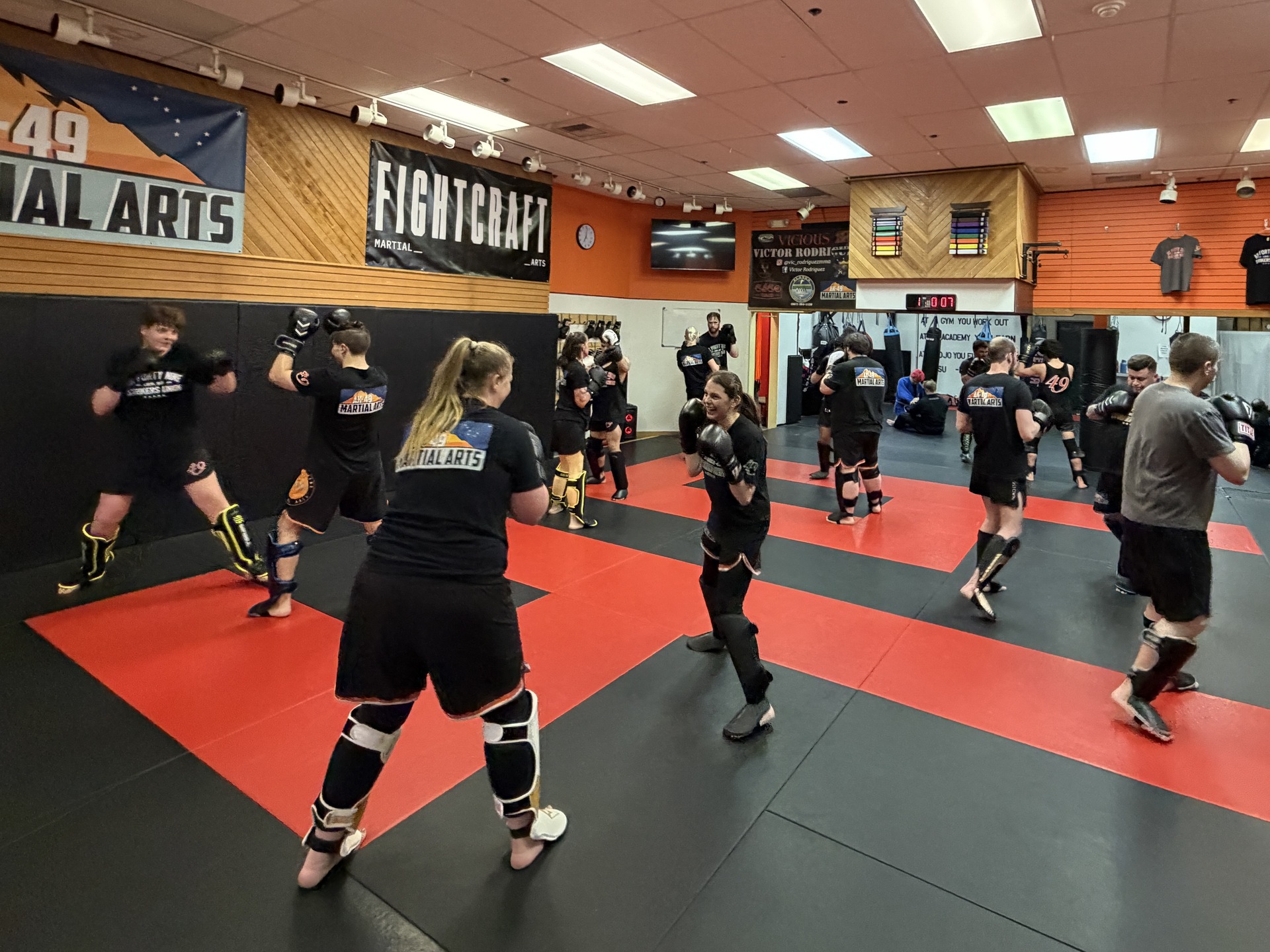
Shadowboxing for Beginners
Kickboxing | Shadow Boxing
How to Shadowbox as a Beginner
Shadowboxing is throwing your punches and kicks in the air and moving like someone is in front of you. As a beginner, start in a good athletic base with your hands up and elbows in, move around without crossing your feet, then add a jab and cross that go out from your face and come right back to it. Go slow, picture an opponent, and get back to your stance after everything you throw.
How to start
- 01
Get in your stance
Feet about shoulder width apart, step your back foot back, and keep a little space between your heels so they're not on one line. Most right handed people put the left foot forward and most lefties the right, but go with whichever side feels balanced. Knees a little bent, fists relaxed up by your cheeks, elbows in by your ribs and chin tucked. This is the position you come back to after every single thing you throw.
- 02
Move before you punch
Step forward, back and side to side without your feet ever crossing or coming together. The foot closest to where you're going moves first, and the other one follows the same distance. Spend a whole round just moving like this before you throw anything.
- 03
Add the jab and cross
Once the steps feel solid, take a few steps and throw a jab and a cross. Each punch goes straight out from your face, reaches until the arm is nearly straight with a soft elbow, and comes straight back to your face. On the cross, turn your back heel out and let your back hip turn with the punch, so your body throws it instead of just your arm. The other hand stays home at your cheek the whole time.
- 04
Come back to your stance
After every punch or combo, get your feet set and your hands back up. Getting back into position matters just as much as the punch. If you finish a combo and your feet are crossed or your hands are at your chest, slow down until they aren't.
- 05
Go slow, then get faster
Keep it slow and clean at first, like you're showing someone how it's done. Speed comes once the movement is smooth, and power follows that. When you add kicks, keep them low and slow at first: turn on the ball of your standing foot, let the hip turn over, and bring the leg straight back to your stance before anything else. Don't throw every punch at full power into the air, because with nothing to hit, your arm snaps out and your form falls apart.
- 06
Picture someone in front of you
Imagine an opponent your size standing in front of you and aim each punch at a spot on them, like their chin or their chest. Keep your eyes up at their chest height, not on the floor. If it helps, set a cone or a shoe on the floor and move around it.
- 07
Breathe and stay loose
Breathe normally and keep it steady, in and out the whole round. Let a breath out on your power shots. Between punches, keep your shoulders and arms loose, and only tighten up as each punch lands. Holding your breath and staying tense is what makes beginners tired after one round.
When to do it
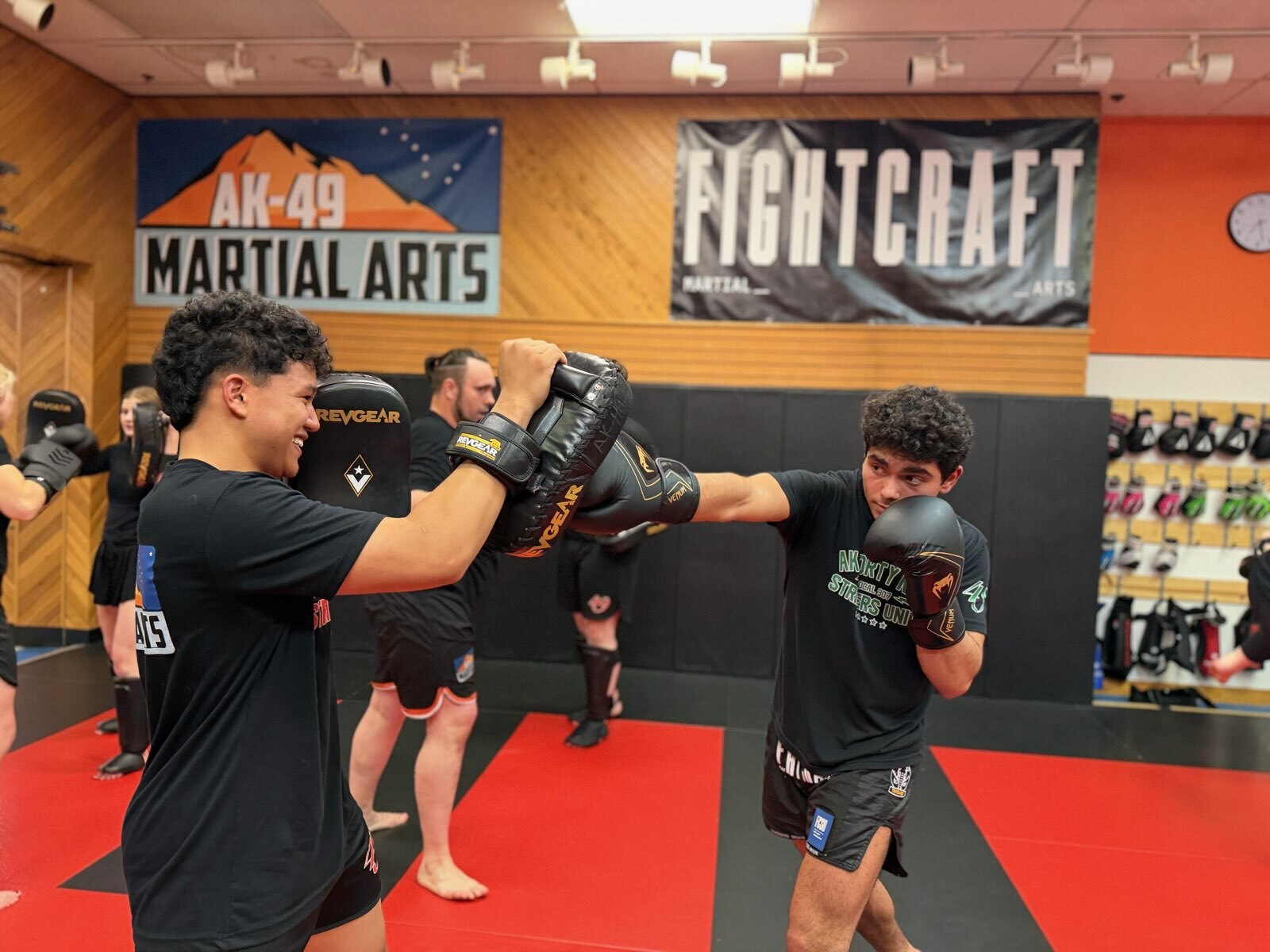
Before class or a workout. Even five minutes of stance, stepping and a few easy punches before class gets your feet and hands working together. It warms up your shoulders and legs and reminds your body what good form feels like. You'll notice your footwork is sharper when the pads come out.
At home, on your own. When you can't make class and don't have a bag, shadowboxing is how you keep training. You don't need any gear or much space, just enough clear room to take a few steps each way without hitting furniture. Warm up with a few easy minutes of moving first, and stop if something hurts sharply. Practicing what you learned in class a couple of times between sessions helps it stick.
Things to look out for
Crossing your feet
Your feet cross or come together as you move, especially going sideways. In that moment you have no balance, a push or a kick knocks you over, and you can't punch with any power.
The fix: Lead with the foot closest to where you're going and let the other follow. Take small steps. Cue: feet never touch.
Standing square
Your shoulders and hips face straight forward like you're standing in line. Your chin and body are wide open, and your heels end up side by side with no balance front to back.
The fix: Turn your front side a little toward your target and keep space between your heels. Cue: front shoulder forward, chin behind it.
Dropping your hands as you tire
In round two or three, your hands slide down to your chest because your shoulders are tired. In a real exchange that's when you get hit, and the habit you build in the air is the one you'll have in sparring.
The fix: Bring your hands back to your face after every punch, even when you slow down. If they won't stay up, go slower instead of dropping them. Cue: gloves touch your head.
Looking at the floor
You watch your feet or your hands instead of where your opponent would be. Your head tips forward and you can't see anything coming at you.
The fix: Keep your eyes up at chest height on your imaginary opponent, chin tucked. Check your feet in a mirror instead of looking down. Cue: chin down, eyes up.
Throwing with no plan
You throw random punches as fast as you can with nothing in mind. It looks busy, but you're not practicing anything, and sloppy reps build sloppy habits.
The fix: Give each round one job, like footwork only, or the jab and cross, or a combo and an exit. Picture who you're fighting. Cue: one job per round.
Offense only
You punch and punch and never defend, as if the other person never hits back. When you get to pads or sparring, you forget to cover up after your combos.
The fix: After a few combos, add a block or a slip, then punch again. Or finish each combo by stepping out at an angle. Cue: hit, then defend or move.
Holding your breath
You tense up and stop breathing while you throw. You get tired fast, your shoulders tighten and your punches slow down.
The fix: Keep breathing normally and stay loose between punches. Cue: never hold it.
Drills you can practice
Drill 01
Footwork only
3 rounds of 2 minutes with 1 minute rest, no punches. Step forward, back, left and right in small steps, landing in your stance every time. Round one, slow and checking your feet in a mirror. Round two, call out a direction in your head and move that way. Round three, move around a cone or shoe on the floor without your feet crossing.
Drill 02
Jab and cross in the mirror
3 rounds of 2 minutes with 1 minute rest. Round one, slow single jabs, checking that the back hand stays on your cheek. Round two, jab and cross, breathing steady and bringing both back to your face. Round three, take a step, throw the jab and cross, then step out to the side and reset.
Drill 03
Full shadow rounds
3 rounds of 3 minutes with 1 minute rest, once the first two drills feel easy. Round one, clean punches and kicks from your stance, nothing fast. Round two, after every combo add a block or a slip. Round three, picture someone pressing forward at you and practice moving, punching and stepping out at an angle.
Frequently Asked Questions
How do beginners shadowbox?+
Start in your stance with your hands up and elbows in, and move around without crossing your feet. Then add a jab and cross, bringing each punch back to your face, and get back to your stance after everything you throw. Go slow and picture an opponent in front of you.
How long should I shadowbox?+
Start with 3 rounds of 2 minutes with a minute of rest between. As it gets easier, move up to 3 minute rounds. Even five minutes before class helps.
Should I shadowbox in front of a mirror?+
A mirror is great when you're starting, because you can check your stance, your guard and whether your hands come back. Don't stare at it the whole time, though. Use it to check, then look up at your imaginary opponent again.
Can I kick when I shadowbox?+
Yes. Kicks and knees can be practiced in the air too, and in kickboxing you should. Keep them slow and controlled at first and come back to your stance after each one.
Do I need a bag or gloves to shadowbox?+
No. Shadowboxing needs nothing but a little space. It's the easiest way to keep training at home, and it builds the form you'll use on the bag and pads later.
Are You Ready?