
Is MMA Good for Self Defense
Mixed Martial Arts | Questions
Is MMA Good for Self Defense?
MMA (mixed martial arts) skills help if a situation turns physical, because they cover striking, the clinch, takedowns and the ground, and you practice them against a partner who's resisting. Real self defense starts earlier, with awareness of your surroundings and staying out of bad situations. Once it's physical, the skills only hold up after regular training over time, so one class won't get you there.
How MMA helps
- 01
Awareness comes first
Real self defense is knowing what's around you, and what you do and don't do to stay out of bad situations. Keep your head up and your phone away when you're walking, and trust it when something feels wrong. If someone starts getting aggressive, keep your distance, hold your open hands up in front of you, and talk in a calm, firm voice while you move toward an exit or other people. Spotting trouble early and leaving doesn't take any physical skill at all.
- 02
Striking keeps your distance
Kickboxing and Muay Thai teach you to keep your hands up, protect your head and see a strike coming. You learn how far away is safe and how to move your feet to keep that space. Against a wild looping punch, which is one of the most common attacks, keeping your hands high and stepping back or in close to smother it are things you drill over and over. That space is what gives you room to get away.
- 03
Staying on your feet
A lot of trouble starts with a grab, a shove or someone trying to drag you down. Clinch work and takedown defense teach you to keep your balance, control their arms and stay standing. An underhook, your arm under their armpit, lets you steer someone and keep them off you. A sprawl, dropping your hips and kicking your legs back, stops someone from tackling you. Against a headlock, the first move is to turn your chin toward their body and get a hand up between their arm and your neck so you can breathe. Against a bear hug, from the front or behind, drop your hips low and wide so you're hard to lift, then work your hands free. You practice those in class. As long as you're on your feet, getting away is still an option.
- 04
Staying calm on the ground
If you do end up on the ground, jiu jitsu teaches you to stay calm when someone grabs you, pins you or pulls you down. You learn to protect your head, keep your elbows tight to your body and get back to your feet with the technical stand up: post one hand behind you, plant the opposite foot, lift your hips and swing your other leg back under you while your free hand guards your face. Outside the gym, the ground is somewhere you get up from as fast as you can.
- 05
Training against resistance
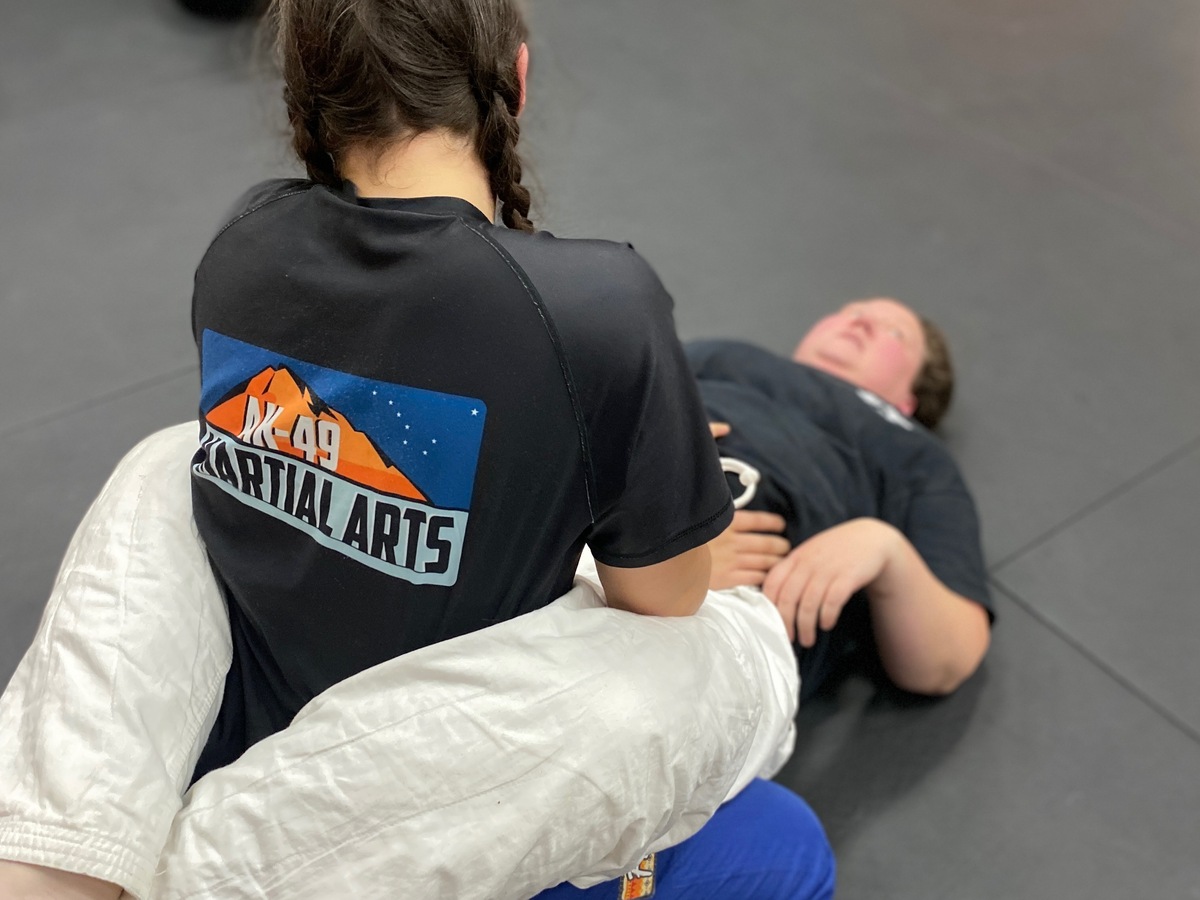
In class you drill a move, then try it on a partner who pushes back, a little at first and more as you're ready, with the coach setting the level. That's how you find out what works for you. It also gets you used to someone pushing on you, so you can keep breathing and thinking when it's real.
Why it takes time
Skills break down under stress. Skills break down under real stress, and regular training under pressure helps cut down how much. When adrenaline hits, your heart races, your hands shake, your vision narrows and it gets hard to think. The moves that still show up are the ones you've repeated many times against a resisting partner. That takes months of regular training, and one class won't get you there.
Know the limits. MMA is trained one on one, unarmed, on a mat, with rules and a coach watching. A real situation can have a weapon, a second person, a wall or concrete under you. Against any of those, distance and getting away are the better answers. Use what you know to make space, then leave and get help as soon as you can. The law generally expects you to use only the force you need to get safe, and the details vary by state, so the safest plan is to stop as soon as you can get away.
Things to look out for
Treating training as a replacement for awareness
You train hard and start to feel like you can handle anything, so you stop paying attention to where you are. A hit you never saw coming is hard to stop, no matter what you know.
The fix: Keep the basics: head up, phone away when you're walking, notice what looks out of place. Paying attention and leaving early come first.
Thinking one class makes you ready
You take a class or a one night seminar and feel prepared. Under real stress, a move you've done a handful of times won't show up, and false confidence can put you somewhere worse.
The fix: Plan on training regularly for months. Skills hold up once you've repeated them against a resisting partner until they happen without thinking.
Fighting to win
Sport habits say keep going until you finish the exchange or the round. Outside the gym, every second you stay in it is another chance to get hurt, and you can't see who else is around.
The fix: Your goal is to get home safe. Use your skills to make enough space to get away, then go somewhere safe and get help.
Going to the ground on purpose
In class, taking someone down or pulling them into your guard is normal. On a parking lot, your back on the pavement with someone free to punch or kick, or a friend of theirs walking up, is a bad spot.
The fix: Treat the ground as somewhere you end up, never somewhere you choose to go. If you're down, protect your head, keep your elbows tight and work to get up.
Grabbing hold when you could leave
Once you know how to grapple, it's tempting to close the distance and tie someone up. If they have a weapon or a friend, getting close puts you right next to the thing that can hurt you most.
The fix: If you can walk away or put distance between you, do that first. Head toward people, light and an exit, then call for help.
Training only one side
You only punch, or only grapple. The first time someone takes you somewhere you never trained, like pinned on your back or getting punched in the face, you don't know what to do.
The fix: Train some of both over time. Striking helps you keep distance and protect your head, and grappling helps when someone grabs you or you end up down.
Frequently Asked Questions
Is MMA good for self defense?+
The skills help if it turns physical, because they cover standing, the clinch and the ground, and you practice them against people who resist. Awareness and staying out of bad situations come first. MMA also has limits, like weapons and more than one person, where getting away is the answer.
Is MMA or BJJ better for self defense?+
Both help in different ways. Jiu jitsu keeps you calm when someone grabs you or pulls you down, and teaches you how to get back up. Striking teaches you to keep your distance and protect your head so you can get away. Training some of both gives you the most complete answer.
How long until I can defend myself?+
There's no honest number of classes. The skills come from training regularly until they hold up under stress, and that takes months. What you can do from day one is pay attention to your surroundings and leave early when something feels wrong.
What if there's more than one person or a weapon?+
MMA is trained one on one and unarmed. Tying up with one person leaves you open to a second, and getting close to a weapon is the worst place to be. Awareness, distance and getting away to a safe place with people around are the answers there.
Do I have to spar for it to work?+
Sparring is optional at AK-49 Martial Arts. What makes skills hold up is practicing against a partner who resists, and that starts with controlled drills where your partner pushes back a little. Most people add light sparring once they're ready, and you choose when that is.
Are You Ready?