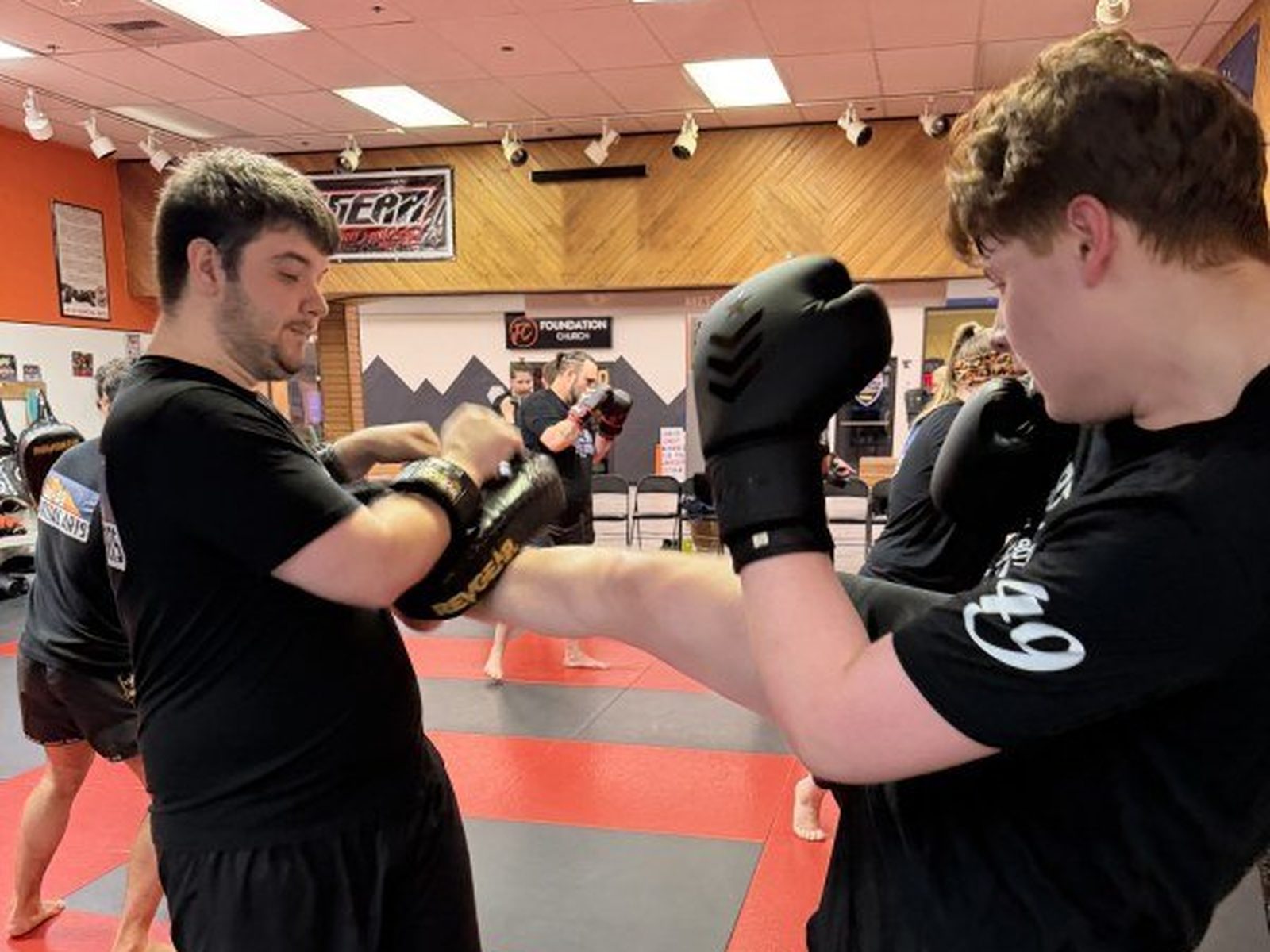
Body Kick
Muay Thai | Round Kick
How to Throw a Muay Thai Body Kick
The body kick swings your shin into the ribs or the arm, with your hips turning over behind it. From a good athletic base with your hands up and elbows in, step out, come up on the ball of your standing foot, turn your hip over and land with the shin, never the foot. Then put the leg down in control and get back to your stance.
- 01
Good athletic base
Stand in your Muay Thai stance: feet about shoulder width apart, knees a little bent and your weight in the middle, not sitting on the front foot. You'll be on one leg for a moment, so the balance has to be there before you kick. You should feel like you could lift either leg without tipping.
- 02
Hands up, elbows in
Both fists start at your face with your elbows in close to your ribs. When you kick, the hand on your kicking side can swing down and back past your hip to help you turn and balance, moving at the same moment the hip turns, while the other hand stays glued to your face. If both hands drop, a punch comes right over the top of your kick.
- 03
Step out
For the rear leg kick, step your front foot a little out to the side and lengthen your stance before you kick. For the lead leg kick, first bring your feet together with a quick small switch or a step of the back foot up toward the front, then kick with the same hip turn. That opens your hips and gives the kick room to travel. Kicking from a short, square stance leaves you with only the hip and a weak, forced kick.
- 04
Up on the ball of your foot
As you kick, push up off your calf onto the ball of your standing foot and let that foot turn so your heel points toward your partner. This is what lets the hip turn all the way over. Flat footed, the kick stops halfway and you get stuck.
- 05
Turn the hip over and land the shin
Turn your hip over and swing the leg through the target like you're cutting through it, so the shin lands across the ribs or the arm. Keep a slight bend in the knee as it lands, so your whole body is behind it. Aim to land with the shin and not the foot, because the foot is full of small bones.
- 06
Stay tall, eyes up
Keep your shoulders over your hips instead of leaning far back, and keep your eyes on your partner, not on your own leg. Leaning way back costs you power and leaves you off balance if they come forward. Keep breathing steady and let a breath out as the shin lands.
- 07
Back to your stance
After the kick, put the leg back down in control, landing in your stance with your hands back on your face. Don't let the kick drag you into a spin or a stumble. Then punch again or move. If they lift a shin to check it or grab the leg, get the foot back down and your hands up first; the counters come later in class.

When to use it
After your punches. Punches pull the guard up, and that opens the body. Throw a jab and a cross, then kick the body with your lead leg, or jab and then kick with the rear leg. While their hands come up to block your punches, your shin goes underneath to the ribs. Get your hands back to your face as soon as the kick lands.
When they cover up tight. Some people keep their arms pinned to their body and wait to punch. Kick the arm. Landing the shin on their arm over and over wears it down and makes it harder for them to punch with that side. If they lift their elbows to protect the arm, the ribs open up underneath.
Things to look out for
Kicking with the foot
The top of the foot or the toes hit the target instead of the shin. It's weaker, and the small bones in your foot take the hit, which hurts and can injure you.
The fix: Turn the hip over far enough that the shin lands across the target. Think of the target being a little closer than it is, and aim to hit it with the middle of your shin.
Dropping both hands
Both hands fall to your waist as you kick. Your head is wide open while you stand on one leg, and a punch comes straight over the top of the kick.
The fix: Only the kicking side arm swings. The other hand stays on your face the whole time. In the mirror, check that one glove never leaves your cheek.
Flat on your standing foot
Your standing heel stays glued to the floor. The hip can't turn over, so the kick comes up short and slaps instead of cutting through, and you can't get back to your stance fast.
The fix: Push up off your calf onto the ball of your foot as you kick. Feel the heel turn toward your partner as the hip comes over.
Leaning way back
You throw your shoulders back to get the leg up. Your weight goes away from the kick, it loses power, and you're off balance if they walk forward.
The fix: Stay tall with your shoulders over your hips. Lean only as much as you need to keep balance, and keep your eyes on your partner.
No step, short stance
You kick straight from your stance with no step out. All the power has to come from the hip, so the kick is slow and weak, and it often lands on the elbow.
The fix: Step your front foot a little out to the side and lengthen your stance first. Feel your hips open up before the leg swings.
Holding your breath
You tense everything and stop breathing while you kick. A round of kicks leaves you gassed, and the kick gets stiff and slow.
The fix: Breathe normally the whole time, in and out without stopping. Stay loose until the kick connects.
Not getting back
The kick lands and you spin around, stumble forward or leave the leg hanging. You're out of position and easy to hit or push over.
The fix: Put the foot down in control, right back into your stance with your hands up. Landing back in your stance is part of the kick.
What to Practice at Home
Drill 01
Slow kicks in the mirror
3 sets of 8 slow rear leg body kicks on each side with 1 minute rest. Hold a wall or chair with your lead hand if you need balance at first. Check three things each rep: you stepped out, you're up on the ball of your standing foot, and your hip turned over so the shin, not the foot, is facing the target. Put the foot back down into your stance every time.
Drill 02
Shadow box punches into the kick
3 rounds of 2 minutes with 1 minute rest. Round one, jab then rear body kick. Round two, jab, cross, then lead leg body kick. Round three, mix both, and keep your breathing steady the whole round. Your non kicking hand stays on your face, and you're back in your stance before the next combo.
Drill 03
Bag kicks
If you have a heavy bag, do 4 rounds of 1 minute with 1 minute rest, kicking at rib height. Round one, single kicks at a steady pace, landing with the shin. Round two, jab then kick. Rounds three and four, switch to the other leg. Kicking pads held by a partner in class are the best start, and on a bag, wear shin guards if the bag is hard, warm up your hips first, and keep every kick clean even if that means slowing down. Shins toughen up slowly over months of regular training, so add kicks a little at a time and back off if the shin is sore to the touch.
Frequently Asked Questions
Should I kick with my shin or my foot?+
Your shin. The shin is one solid bone and the foot is lots of small ones that can get hurt. Turning your hip all the way over is what brings the shin into the target. If your foot keeps landing, you're too far away or your hip isn't turning enough.
Where should a body kick land?+
Across the ribs on either side, or on the arm. Try not to land on the point of their elbow or their hip bone, which hurts your shin more than it hurts them. Kicking the arm wears it down and makes it harder for them to punch with it. Aim at the middle of the body, not high on the shoulder or low on the hip.
Which leg should I kick with?+
Learn both. The rear leg kick has more power because it travels farther. The lead leg kick is closer and comes fast after a jab and a cross. You can switch your feet to throw it with power, or step in when they back away.
Do I swing my arm when I kick?+
The arm on your kicking side can swing down and back to help you turn and keep your balance. The other hand stays up on your face. Don't let both hands drop, because that's when a punch lands over your kick.
What is a 45 kick?+
It's a body kick that comes up at about a 45 degree angle with less turning of your foot. It comes under someone's elbows when they hold their guard high, and your hands stay tighter, so it's easy to punch after it. Learn the normal round kick to the body first, then your coach will show you this one.
Are You Ready?