
Knees From the Clinch
Muay Thai | Clinch
How to Throw Knees From the Muay Thai Clinch
Knees from the clinch land when you control your partner first and knee second. From a good athletic base with your hands up and elbows in, get close behind your punches, keep your hips in and your posture tall, grab the head or the head and an arm, and pull or turn them off balance before you drive the knee to the body. Then put the foot down in control and either knee again or get back to your stance.
- 01
Good athletic base
In the clinch your stance changes. Square your hips toward your partner, open your feet a little wider than shoulder width and keep your knees slightly bent. A narrow or sideways stance is easy to push and turn, and you'll be standing on one leg every time you knee.
- 02
Hands up, elbows in
Go in with your hands up at your face and your elbows close to your body. You get to the clinch behind punches, like two hooks or an uppercut, never by walking in with your hands down. Once you grab, keep your forearms inside theirs in front of your chest, so you control their head and their elbows can't come through.
- 03
Keep your posture
Bring your hips in close to theirs, keep your chest up and lift your shoulders. If your hips drift back, they can pull your head down and knee you. Tall posture also makes it hard for them to move you around.
- 04
Control before you knee
Get two points of control, like the back of their head with one hand and the inside of their elbow with the other, or both hands stacked high on the back of the head with your elbows squeezed in toward each other, which many coaches call the plum. With their head held, it's hard for them to punch you. If you throw knees with no control, you're on one leg with nothing holding them, and you're open.
- 05
Break their balance
Pull their head down a little toward the knee as it comes up, or turn them by stepping one foot out and pivoting. Their posture breaks, their weight shifts, and they can't defend the knee as well. Stay relaxed and use angles instead of yanking with your arms.
- 06
Drive the knee
Come up on the ball of your standing foot, tuck your heel toward your butt and push your hips forward through the target. Aim at the ribs and the stomach, never the groin. Lean back just a touch so your hips can drive all the way through. Straight knees go up the middle, and short diagonal knees come in from the side around their elbow to the ribs. The quick small ones soften them up, and a power knee comes once they're off balance.
- 07
Back to your stance
Put the foot down in control, right under you, keeping your posture and your grip. Breathe steadily the whole time, and let a breath out on your hardest knees. Then knee again, or push off their shoulders, let go with your hands coming straight back up to your face and step back out to your stance.
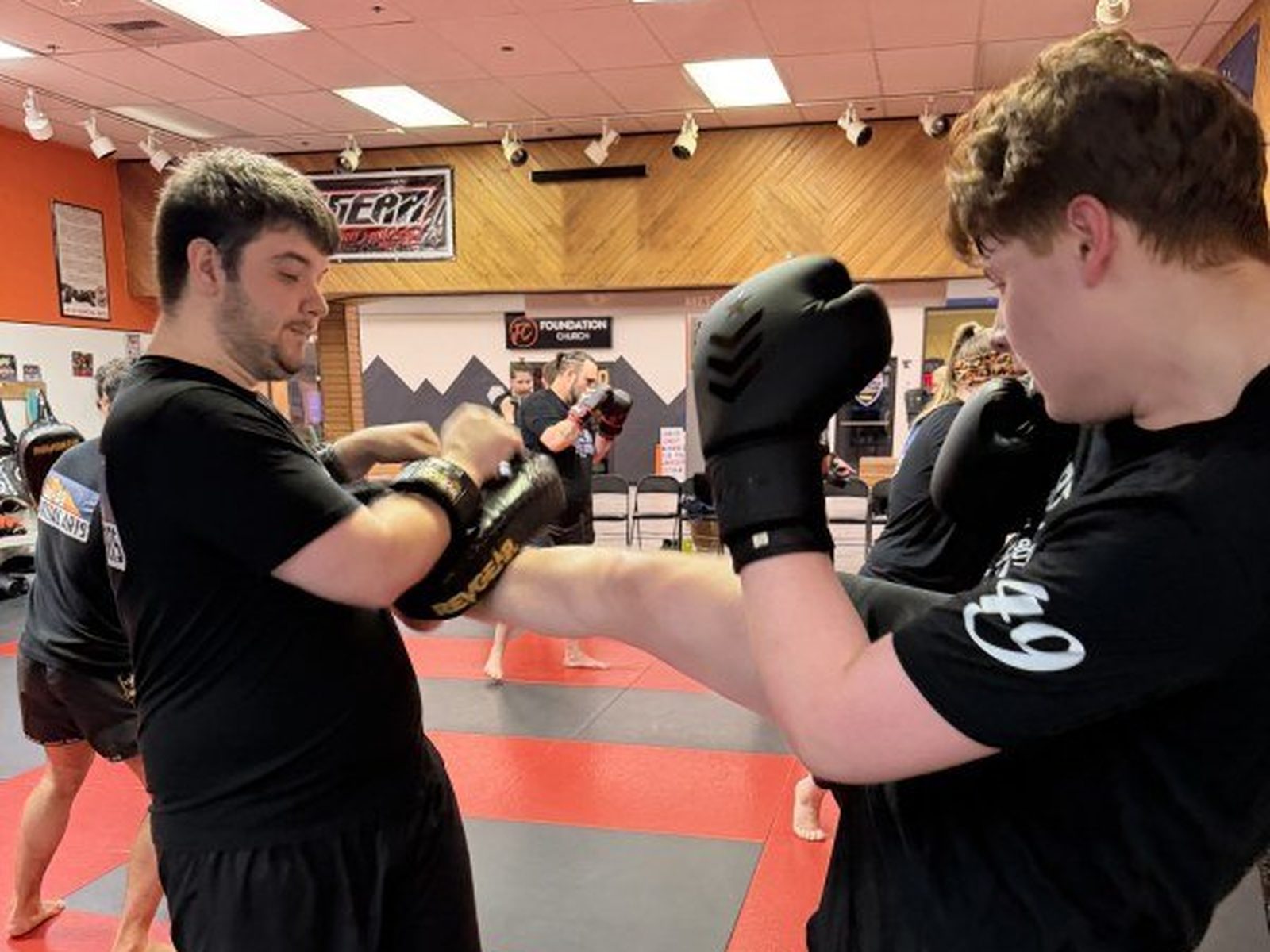
When to use it
After your punches bring you close. Punches get you into clinch range. Throw two hooks, or an uppercut, then grab the head and pull them into the knee. While they're covering up from the punches, they aren't ready for the grab. It's one of the first clinch combinations you'll drill on pads and with a partner.
When someone crowds you. Sometimes you end up chest to chest because someone keeps walking forward or throws too many punches and falls in. Instead of backing up and getting hit, keep your posture, get your grips and knee. In class this is drilled slowly first, and your coach sets how hard you knee your partner.
Things to look out for
Kneeing with no control
You throw knees before you've got the head or an arm. They can punch, push you off balance or knee you back while you're standing on one leg.
The fix: Grab first, knee second. Make sure you have two points of control before the first knee goes.
Hips back, head down
Your hips drift away and you bend over at the waist. They pull your head down, and now you're the one getting kneed.
The fix: Hips in close to theirs, chest up, shoulders up. Feel your hips almost touching theirs.
Blocking knees with your hands
When they knee you, you drop your hands to block. Your head is open, and they knee or elbow you in the face.
The fix: Keep your grips, bring your hips in and lift your chest and shoulders so they can't fold you over. Hold your position until you can turn them or knee back.
Narrow stance
Your feet are close together or one in front of the other, like your normal fighting stance. One pull or turn and you're off balance.
The fix: Square your hips and open your feet a little wider than shoulder width. Stay light on the balls of your feet.
Muscling it
You squeeze and yank with your arms the whole time. You tire out fast and your partner can feel every move coming.
The fix: Stay relaxed with your shoulders loose until you need them. Use steps and turns to move them, and save your strength for the knee.
Holding your breath
You tense up and stop breathing in the clinch. A round of clinching wipes you out in a minute.
The fix: Keep breathing normally, in and out without stopping. If you notice you're holding your breath, slow down for a second.
Knees to the wrong place
The knee comes up low or loose and lands near the groin or the legs. It's a foul in a fight and it hurts your partner in class.
The fix: Tuck your heel and aim at the ribs and the stomach. Look where you want the knee to go.
Drills you can practice
Drill 01
Slow mirror knees
3 sets of 10 slow knees on each leg with 30 seconds rest, with your hands held up like you're holding a head. Check each rep: hips forward, up on the ball of the standing foot, heel tucked, chest up. Put the foot down in control into your clinch stance every time.
Drill 02
Shadow clinch
3 rounds of 2 minutes with 1 minute rest. Throw two hooks, reach up and grab an imaginary head, then throw three knees, alternating legs. Every few reps, step one foot out and pivot like you're turning someone, then knee. Keep your breathing steady and stay tall.
Drill 03
Bag clinch knees
If you have a heavy bag, do 3 rounds of 1 minute with 1 minute rest. Wrap your arms around the top of the bag like a clinch, hips in close and chest up. Throw knees into the middle of the bag, alternating legs, and step and turn the bag every few knees. Keep each knee clean and controlled instead of fast.
Frequently Asked Questions
How do you knee in the clinch?+
Get control of the head, or the head and an arm, first. Keep your hips in and your chest up, pull or turn them a little off balance, then come up on the ball of your standing foot and drive the knee with your hips. Put the foot down in control and go again.
Where should I aim clinch knees?+
The ribs and the stomach. Knees to the groin are a foul in Muay Thai. Knees to the head come much later, and only with your coach.
Why control the head before kneeing?+
With their head held, it's hard for them to punch you or knee you back. Without control, you're standing on one leg with nothing stopping them.
How hard do you knee in class?+
The clinch has a training version and a fighting version. In class it's drilled with a partner, slowly at first, and your coach sets how hard the knees go. Mouthguards go in, men wear a cup, and you let go right away when your partner taps or says stop. Go easy on the neck when you pull, since cranking a head down can strain it. Pads and the bag are where you knee with power.
Is the clinch hard for beginners?+
It feels strange at first, and most beginners are tense and tired in there. Start with posture, then grips, then knees. A common first drill is a light round where you and a partner just swim for inside position with no knees. If you're the one getting kneed, put your forearm across their collarbone or hips, turn your hips and work your hands back inside instead of reaching down to block.
Are You Ready?