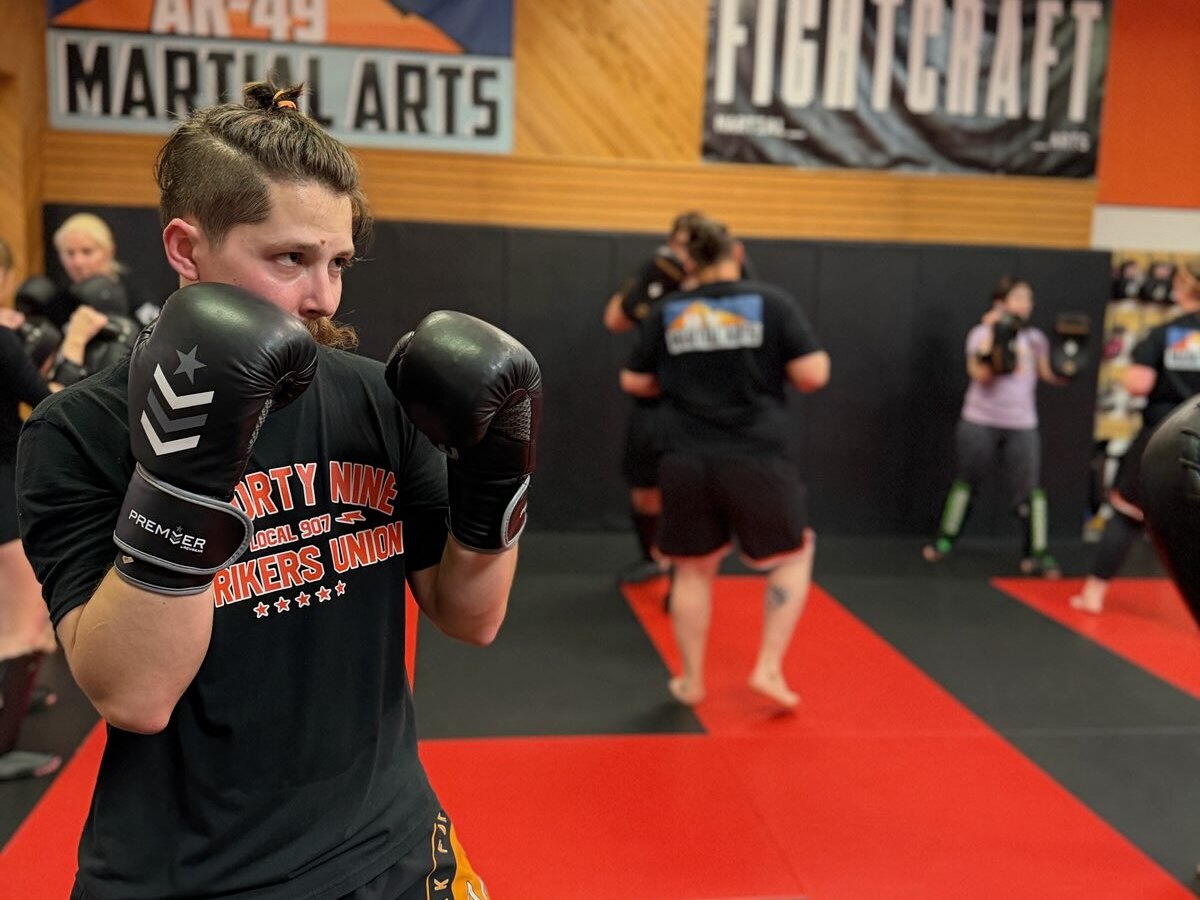
Muay Thai for Women
Muay Thai | Starting Out
Muay Thai for Women: What to Know
Muay Thai for women is the same art taught to the same standard: stance, guard, punches, kicks, knees, elbows and the clinch, learned one piece at a time. People train for the workout, the skill and the confidence, and lots train for years without ever stepping into a ring. You start wherever your own experience puts you, you set the pace, and sparring is optional.
What you train
- 01
A good base and a guard
Everyone starts with a good athletic base: feet about shoulder width apart, one foot back, knees a little bent. Then your guard: hands up touching your head, elbows in, chin down a little. After every strike you come back to that same stance with your hands home.
- 02
Punches and kicks
You learn the jab and cross first, thrown from your face and brought straight back. Then the round kick, which lands with your shin and gets its power from turning your hips while you come up on the ball of your standing foot and let that heel turn toward the target. Kicks work your legs and hips, and punches work your shoulders and core.
- 03
Knees, elbows and the clinch
Once the basics feel steady, you add knees, elbows and the clinch, where you control your partner up close. The clinch works your grip and your whole upper body, and if someone grabs you, knowing it gives you more options. Defense is taught along the way too, like blocking punches with your guard and checking a low kick by lifting your shin with the toes up. Clinch, knee and elbow work with a partner starts light and slow.
- 04
Holding pads
You'll hold pads for your partner as much as you hit them. It's part of learning, because you see the strike up close and feel what a good one is. The coach runs the drills and pairs people up, so you don't have to go find a partner on your own.
- 05
Training with men
Classes are mixed, and men and women train together at every level. Drills are controlled, and when sparring does come in, partners are matched sensibly. Tell the coach what you're comfortable with, and they'll pair you with someone patient.

What helps you start
Go at your own pace. The class adjusts to you. Take a break when you need one and jump back in. Building a steady habit, even one or two classes a week to start, does more than going hard every day for two weeks and burning out. Don't compare yourself to people who've trained for years, because they started where you are.
Speak up and ask. Tell the coach it's your first class, what you're comfortable with, and about any old injuries so they can help you work around them. Ask questions when something doesn't make sense. If you come alone, introduce yourself to someone, because it makes the first class a lot easier.
Things to look out for
Waiting until you're in shape
A lot of people put off their first class until they feel fit enough. Months go by and the right time never shows up.
The fix: Start now. You don't get in shape so you can start Muay Thai. You start Muay Thai, and a few weeks of training gets you in better shape.
Comparing yourself to the advanced students
You watch someone who's trained for years throw a perfect kick and feel like you'll never get there. It's easy to get discouraged in the first month.
The fix: Compare yourself to where you were last month. Look for small wins, like your guard staying up for a whole round or your kick landing on the shin.
Doing too much too soon
Excited new students train every day right away. They're sore and worn down within two weeks and stop coming.
The fix: Start with one to three classes a week and build from there. Consistency over months is what changes things.
Keeping quiet about what you need
You don't want to be a bother, so you don't mention an old injury, or that a partner is going harder than you'd like. Then class feels worse than it should.
The fix: Tell your partner or the coach. Asking a partner to go lighter is normal in every good gym, and a good partner will be glad you said it.
Expecting self defense from a few classes
Some people expect a handful of classes to prepare them for a real fight. It won't, and false confidence can put you in a worse spot.
The fix: Real self defense starts with awareness of your surroundings and staying out of bad situations. The physical part comes from training regularly over time and learning to stay calm under pressure.
Frequently Asked Questions
Is Muay Thai good for women?+
Yes. It's a hard, full body workout and a real skill, and you train at your own pace. Kicks work your legs and hips, punches work your shoulders and core, and the clinch works your grip and upper body. Sparring is optional.
Do I need experience to start Muay Thai?+
No. Beginners are welcome, and you start wherever your own experience puts you. The first classes cover stance, guard, footwork and the basic punches and kicks. Tell the coach it's your first class so they can pair you with a patient partner.
Will I have to spar with men?+
Sparring isn't part of starting out, and at AK-49 Martial Arts it's completely optional. Drills are controlled, and when people do spar, partners are matched by size, experience and comfort. You can always tell the coach what you're comfortable with.
What should I wear to my first Muay Thai class?+
A shirt and shorts, whatever is comfortable to kick and move in. A fitted top works well, since baggy shirts get in the way, along with a supportive sports bra and long hair tied back. Any gear you need for class is provided, so you don't need to buy anything first. If you spar later, a mouthguard is required, and some women add a chest protector.
Can you train Muay Thai without fighting?+
Yes. Lots of people train for years and never step into a ring. They come for the workout, the skill, the confidence and the people. That's a perfectly good reason to be there.
Are You Ready?