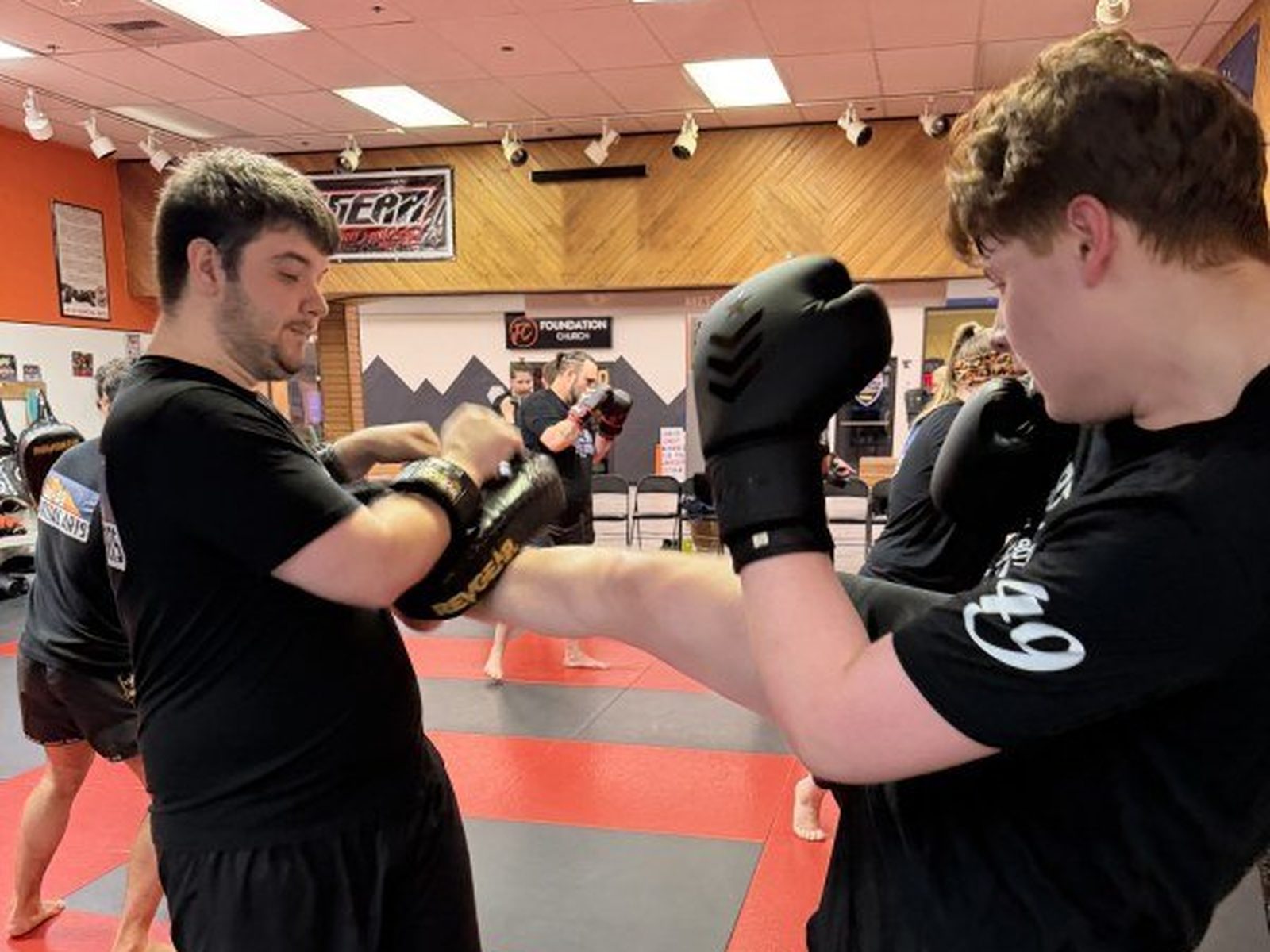
Muay Thai Stance
Muay Thai | Stance and Guard
How to Stand in Muay Thai
The Muay Thai stance is how you stand ready to punch, kick, knee, elbow and clinch. It's a good athletic base that's a little more square than a kickboxing stance, with your hips facing the other person, weight in the middle, hands up and elbows in. Standing square lets you teep and block kicks with either leg, and the trade off is that straight punches have more to hit, so your hands stay on your face.
- 01
Good athletic base
Stand with your feet about shoulder width apart, then step one foot back a normal step: the right foot if you're orthodox, the left if you're southpaw. Point your front foot forward and turn your back foot out a little, somewhere around 45 degrees. Bend your knees a little, keep each knee pointing the same way as its toes, and let your back heel come up slightly so you're ready to push off. It's the same ready position you'd use in any sport, and it should feel springy, like a push wouldn't knock you over.
- 02
Hands up, elbows in
Both fists come up to your head, touching it, with your chin down a little and your eyes looking through your gloves. Your elbows stay in, pointing down in front of your ribs. This guard covers your head and your body at the same time, and it's where your hands live for the whole round.
- 03
Hips a little square
Turn your hips so they face the other person more than they would in a boxing or kickboxing stance. Standing more square is what lets you teep with either leg and lift either leg to block a kick. That block is called a check: lift the knee, turn it a little out, toes up, so your shin meets their kick. Don't turn sideways like a boxer, because then your back leg is stuck behind you and slow to use.
- 04
Heels off a line
Leave room side to side between your feet, enough that a ball could roll between them. If your heels are on one line, like standing on a tightrope, a light push tips you over and you lose power. You should feel steady even when someone nudges you from the side.
- 05
Weight in the middle
Keep your weight even between both feet, with your head over your hips. Lean onto the front foot and that leg gets stuck to the floor and becomes an easy target for leg kicks. Sit too far back and your punches lose their power. Test it by lifting your front knee: it should come right up without you shifting first.
- 06
Not too wide, not too narrow
Too wide and you're slow to shift your weight, so a kick lands before you can lift your leg to block it. Too narrow and you wobble, and your back hand feels like you're falling into it. Start around shoulder width and adjust until you can move, block and strike without resetting your feet.
- 07
Back to your stance
Every strike starts from your stance and ends in it. After every punch, kick, knee, step or block, come right back to the same base with your hands on your face. If you finish a kick with your feet tangled and your hands down, you're open until you fix it.

When to use it
Everywhere. You're in your stance when you punch, kick, knee, elbow, clinch and defend. Every strike you learn starts from it, and it's what keeps you balanced while you throw. If your stance is off, everything you throw from it will feel off too.
After every strike. The moment a strike is done, you come back to your stance. That's how you stay ready for what comes back at you and ready to throw again. New students often finish a kick with their feet tangled and their hands down, so landing back in your stance is something you practice from your first class.
Things to look out for
Heels on one line
The back foot steps straight behind the front foot, like you're standing on a tightrope. You wobble side to side, a small push knocks you off balance, and your punches and kicks lose their power.
The fix: Leave room for a ball to roll between your feet. Look down once when you set your stance to check it, then bring your eyes right back up.
Standing too wide
Your feet spread way apart to feel solid. It takes too long to shift your weight, so you can't lift your leg in time to block a kick, and your legs become an easy target for calf kicks.
The fix: Bring your feet back to about shoulder width. Pick up your front knee from your stance; if you have to shuffle your feet first, you're too wide.
Too much weight on the front foot
You lean forward onto your front leg. That leg gets heavy and stuck, it's an easy target for leg kicks, and your head ends up out front where it's easy to hit.
The fix: Keep your weight in the middle and your head over your hips. You should be able to lift the front knee right away without leaning back first.
Straight legs
You stand tall with your knees straight, the way you'd stand in line at the store. You're stiff, slow to kick, easy to push around, and you have nothing loaded to strike with.
The fix: Soften your knees and think of your legs as springs. You should feel ready to push off in any direction, without sinking so low that you can't step.
Hands drifting off your head
Your hands slide down to your chest or out in front of your face, usually when you get tired. Your head is open, and when you do get hit, your own gloves get knocked into your face.
The fix: Keep your fists touching your head with your elbows in and your shoulders relaxed, forearms covering the sides of your face. Every time you reset your stance, touch your gloves to your head before you do anything else.
Crossing your feet when you move
Your feet cross or come together as you step, often when you move to the side. For that moment you can't strike, you can't block, and a push or a kick tips you over.
The fix: Step with the foot closest to where you're going first, then bring the other one after it. Take small steps and keep your stance the same size the whole time.
Holding your breath
You tense up in your stance and stop breathing, waiting for something to happen. You get tired fast, your shoulders tighten, and you're slow to react.
The fix: Stay loose in your stance and keep breathing steadily. Let a breath out on your power shots, and only tighten up at the moment a strike lands or a block takes the hit.
What to Practice at Home
Drill 01
Mirror stance check
3 rounds of 2 minutes with 1 minute rest, in front of a mirror if you have one. Stand with your feet together, step back into your stance and check feet, knees, hips, hands and chin, then step out and do it again. Round one, go slow and check every piece. Rounds two and three, get into your stance fast, then check it, until it looks the same every time.
Drill 02
Rock and lift
3 sets of 10 lifts on each leg, with 30 seconds rest between sets. From your stance, rock your weight forward and back a few times, settle in the middle, then pick your front knee up like you're blocking a kick and put it back down. Do the same with the back knee. If you have to lean before a leg can lift, your weight was too far over it. With a partner, have them give light pushes on your shoulders from the front and the side while you hold your stance and breathe.
Drill 03
Step and freeze
3 rounds of 2 minutes with 1 minute rest. Move around the room with small steps: front foot first going forward, back foot first going back, and the foot closest to where you're going first when you move sideways. Every few steps, stop and check that your stance is the same size it started and your hands are on your head. Round three, throw a jab or a teep every time you stop, then come back to your stance.
Frequently Asked Questions
Is the Muay Thai stance square?+
It's more square than a boxing or kickboxing stance, with your hips facing the other person. That lets you teep and block kicks with either leg. It isn't fully square with your feet side by side, though. One foot is still back, and your heels stay off a line.
How is the Muay Thai stance different from kickboxing?+
Kickboxing stances turn the lead side forward a little more and are often a bit smaller. A traditional Muay Thai stance stands more square because kicks, teeps, knees and the clinch are a bigger part of the fight. The trade off is that a square stance is more open to straight punches, so keep your hands on your face.
How wide should my feet be in Muay Thai?+
Start around shoulder width with one foot stepped back and room between your heels. Too wide and you can't lift your leg in time to block, and your legs are easy to kick. Too narrow and you lose your balance. Your coach will adjust it to fit your body.
Where should my weight be?+
In the middle, even between both feet, with your head over your hips. Your front leg should feel light enough to lift right away to block a kick or throw a teep. As you get better you'll learn to shift your weight for certain strikes, but the middle is home.
Should I bounce on my toes like a boxer?+
No. Muay Thai fighters usually move with a calmer, more planted rhythm, staying ready to lift a leg and block. Your back heel can come up a little so you can push off, but you don't need to bounce all the time. Bouncing tires you out and makes it harder to block kicks.
Are You Ready?