
Using the Teep to Control Distance
Muay Thai | Teep
How to Use the Teep to Control Distance
You use the teep to control distance by kicking straight into their stomach or hips with the ball of your foot right as they step toward you, so they stop at kicking range instead of getting close enough to punch. Stay in a good athletic base with your hands up and elbows in, lift the knee first, push your hip through and bring the foot straight back to your stance. Timing matters more than power, so the teep has to land as they step in.
Never teep your training partner in the face.
How to use it
- 01
Good athletic base
Feet about shoulder width apart, one foot back, knees a little bent and your weight in the middle. The square Muay Thai stance is what makes a quick teep possible with either leg. If your weight is stuck on your front foot, you can't lift it fast enough to stop someone coming in.
- 02
Hands up, elbows in
Both fists stay up by your face, close to your head, and your elbows stay in while you teep. They're stepping in to punch you, so the teep only has to be late once for your face to pay for it. Keep the hands home even though your leg is doing the work.
- 03
Knee up first
Lift the knee up toward your chest before you kick, with your toes pulled back so the ball of the foot points at them. Lifting the knee first makes the kick straight and fast, and the same knee lift also works as a block. It should feel like stepping up onto a high stair.
- 04
Push the hip through
Push the foot straight out and drive your hip forward behind it, coming up a little on the ball of your standing foot and letting it turn slightly. Land with the ball of your foot on their stomach or hips. A small lean back to balance the kick is normal, but keep your head roughly over your stance instead of leaning way back. Think of it as a fast push with a snap at the end: the hip drives through, then the foot comes right back.
- 05
Time it as they step in
Watch their front foot and their chest, and teep the moment they start to step toward you. Your leg is longer than their arm, so a teep on time lands before their punch can reach. Late is the problem: once they're already close, the teep jams up and pushes you back onto your heels.
- 06
Use both legs
Learn to teep with your front leg and your back leg. The front leg is quicker and good for stopping someone who keeps walking in, and the back leg travels farther and hits harder when you need to move them back. Mixing both keeps them from timing one leg.
- 07
Back to your stance
Bring the foot straight back and set it down in your stance with your hands on your face. A leg left hanging out gets caught or countered. Once you're back in your stance, you're ready to teep again, kick or throw your hands.
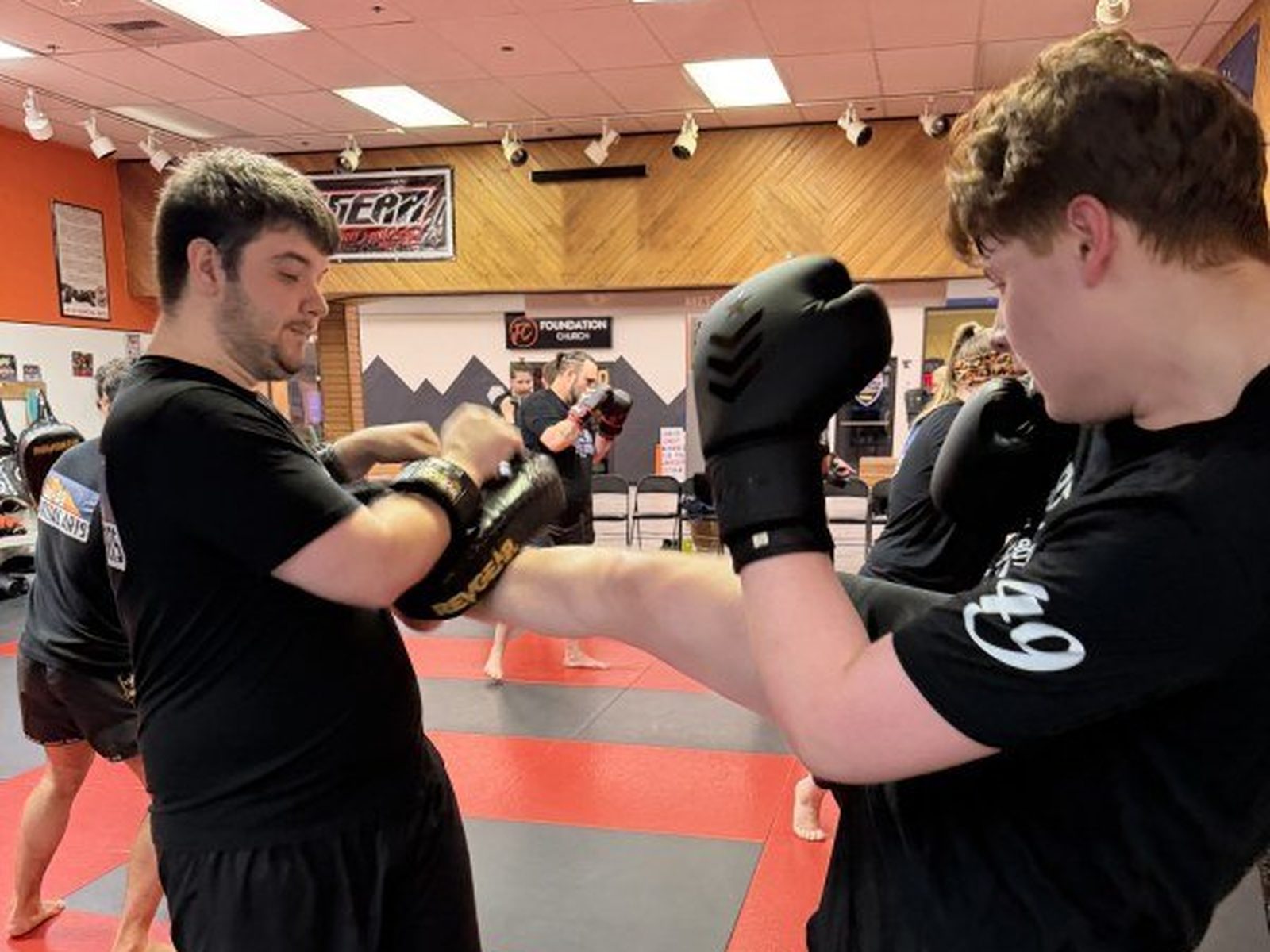
Why it works
When they keep walking in. Some people just walk forward at you to get close and throw punches. A teep to the stomach every time they step in stops them and puts them back where your kicks reach and their hands don't. You don't have to hurt them with it, just stop the step. Then reset your stance and get ready for the next one. If they start catching it or brushing it aside, that usually means the teep is too slow or too easy to read, so snap it back faster and mix in other kicks.
To keep them guessing with your kicks. If all you throw are round kicks, people start to time them and walk right in on you. Mixing teeps in with your round kicks means they don't know which kick is coming, so it's harder for them to rush you. A teep followed by a round kick, or a round kick followed by a teep, is a good place to start. Keep your hands on your face for every kick.
Things to look out for
Teeping late
You wait until they're already on top of you, then try to teep. Your knee jams into them, you get pushed back onto your heels, and they punch you while you're off balance.
The fix: Throw it as they start the step, not after they've arrived. Watch their front foot and chest, and practice on a swinging bag so you get the feel for meeting something coming toward you.
Pushing instead of kicking
You put your foot on them and shove, slowly, like pushing a door. They feel it coming, they can grab the leg, and they walk right through it.
The fix: Lift the knee and pop the foot out fast, hitting with the ball of the foot. The hip still drives through, but it happens quickly, then the foot comes back. Feel the snap of the hip, then the pull back.
Dropping your hands
Both hands drop or swing down as your leg comes up. They're stepping in to punch, so a dropped hand plus a late teep means a punch straight to your face.
The fix: Keep both fists up by your face the whole kick. Practice slow teeps in a mirror and watch your hands, not your foot.
Leaning way back
You throw your upper body backward to get the leg out. You lose balance, the kick has no push, and if they slip it you can fall over.
The fix: Keep your head over your stance and let your hips go forward. You should feel your hip push the kick forward.
Leaving the leg out
The foot lands and stays there, or you put it down slowly out in front of you. It's easy for them to catch, and you're stuck on one leg while they counter.
The fix: Bring the foot straight back the way it went out and land in your stance. Think of touching a hot stove.
Teeping from too far
You throw the teep before they're in range, so it falls short in the air. You've shown them the kick, and you're off balance as they step in.
The fix: Let them come to you. Learn your range on the bag: the teep should land with your leg nearly straight.
Only using one leg
You teep with the same leg every time. They figure out the timing quickly and start catching it or stepping around it.
The fix: Practice both legs evenly at home. Count your reps so the weaker leg gets the same work as your good one.
What to Practice at Home
Drill 01
Shadow teeps
3 rounds of 2 minutes with 1 minute rest. Round one, slow front leg teeps: knee up, toes back, push the hip through, back to your stance, hands on your head the whole time. Round two, the same with the back leg. Round three, alternate legs and picture someone stepping in each time you kick.
Drill 02
Teep the swinging bag
If you have a heavy bag, 3 rounds of 2 minutes with 1 minute rest. Pull your toes back hard so you land on the ball of the foot, never the toes, and keep a soft bend in the knee as it lands so a short or awkward teep doesn't jar the joint. Push the bag away, then teep it as it swings back toward you, like someone stepping in, and keep going even when you miss. Round three, mix in a round kick every few teeps. At the gym, your coach runs teep timing on pads and with a partner, and that's where the real timing comes from.
Drill 03
Balance holds
3 sets of 8 slow teeps on each leg, with 30 seconds rest. Lift the knee, push the foot out, hold it out for a slow count of two, then pull it back and set it down in your stance. Keep both hands on your head and your head over your stance. This builds the balance to teep without falling backward. Once the teep feels solid, your coach will add fakes, teeping as you step back, and what to do when a partner catches it.
Frequently Asked Questions
How do you use the teep to keep distance?+
Throw it as they step in, landing with the ball of your foot on their stomach or hips, and bring it straight back. It stops them at kicking range, where your kicks reach and their hands don't. Mix it with round kicks so they can't time it.
When should I throw the teep?+
As they step toward you. Watch their front foot and chest and kick as the step starts. A late teep jams up and pushes you onto your heels. Practicing on a swinging bag is a good way to build the timing.
Front leg or back leg teep?+
Both. The front leg teep is quicker and great for stopping someone walking in, and the back leg teep has more push. Learn both, and use both, so they can't predict which leg is coming.
Where should I aim the teep?+
Start with the stomach and the hips, because they're big, close and easy to hit. A teep there stops the step and knocks them off rhythm. Your coach will show you other targets once the basic teep is solid. With a partner, keep the contact light, aim at the belly, and stay off the knees, the groin and the face.
Is the teep only a defensive kick?+
No. It's mostly used to keep people away, but it also sets up your knees and round kicks. Once someone is worried about the teep, they hesitate when they step in, and that gives you time to attack.
Are You Ready?