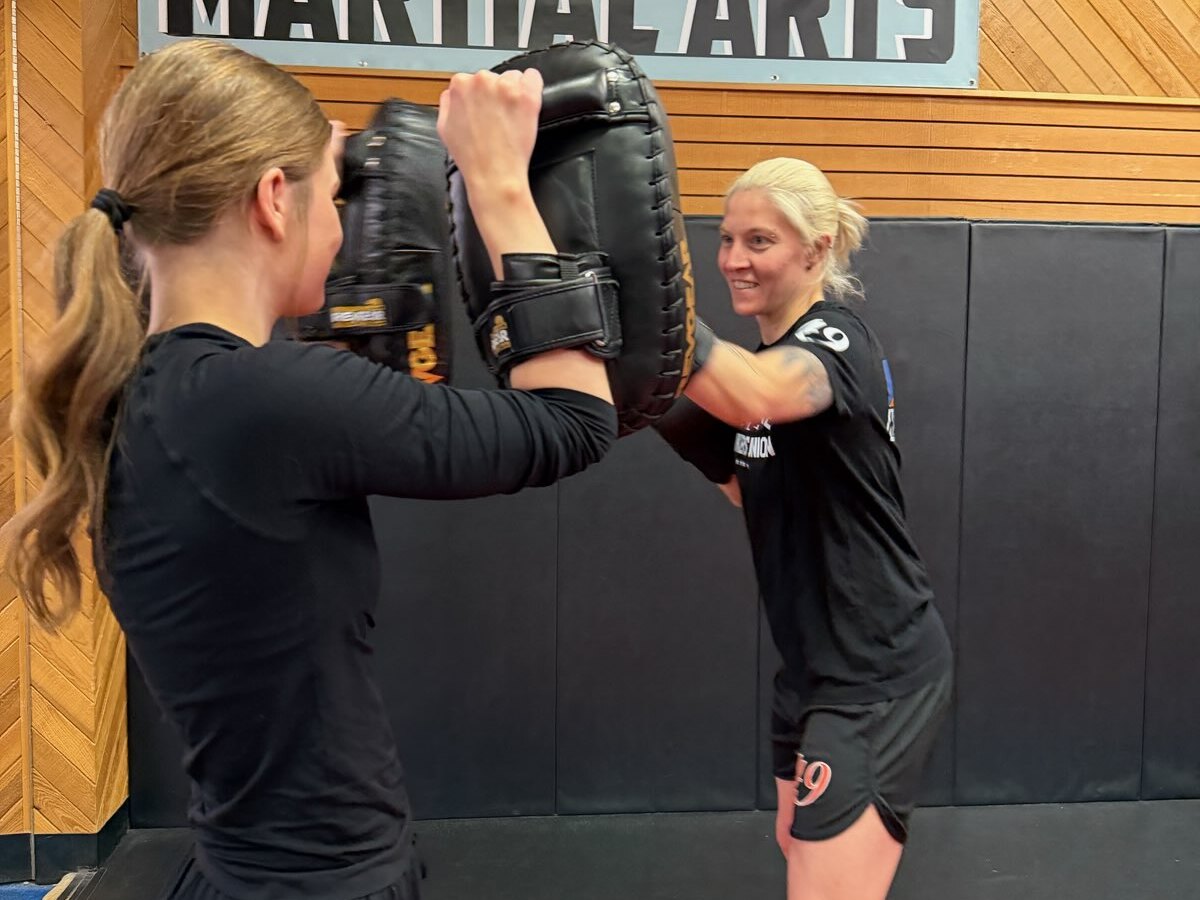
Before Your First Spar
Boxing | Sparring
What to Know Before Your First Boxing Spar
Talk to your coach, wear a mouthguard and 16 ounce gloves, and agree with your partner to keep it light and controlled. Open with simple straight punches from distance, keep your eyes on your partner, breathe, and bring every punch back to your face. Your first spar is practice, so the goal is to learn something, and the pace only goes up as you get comfortable.
How to get ready
- 01
Talk to your coach first
Your coach decides when you're ready and who you go with. Tell them it's your first time so they can pair you with a patient partner who keeps it light. Most people spar once they've trained a while and their basics hold up with someone moving in front of them.
- 02
Gear up
Wear a mouthguard every round, and 16 ounce gloves so there's more padding for your hands and your partner's head. Wrap your hands under the gloves the same as for the bag, and men should wear a cup. Women can wear a chest protector if they want one, and shin guards go on for any round with kicks. Your coach will tell you if headgear is needed. Skip sparring if you're sick, hurt, or still have any symptoms from a head knock.
- 03
Agree on the pace
Before the bell, agree with your partner how hard you'll both go. Light and controlled is where everyone starts, about a quarter of your power or less, with touches instead of real punches for the first rounds. The coach pairs you with someone close to your size and with more experience who knows how to keep it light. Agree on how to stop, too, like stepping back and touching gloves or just saying stop. Matching effort keeps it a training round, and if your partner speeds up, say so or tell the coach.
- 04
Pick one thing to work on
Go in with a small plan, like keeping your hands home or landing a clean jab. You're testing what you've drilled on the pads and the bag. Trying to win the round is how beginners get sloppy.
- 05
Open with the jab
First spars are usually short, a few rounds of 2 minutes with rest between, and you can stop any time. Sparring starts at distance, so feel your partner out with simple straight punches, a jab or Two Hands. Keep combinations short, two or three punches, then move. Punch from the face and get right back to the face, because now someone is punching back.
- 06
Eyes up, keep breathing
Watch your partner's chest and shoulders so you see punches start. Don't turn away, close your eyes or slip so far that you lose sight of them. Breathe normally and keep it steady while you punch and defend, because holding your breath empties your tank fast.
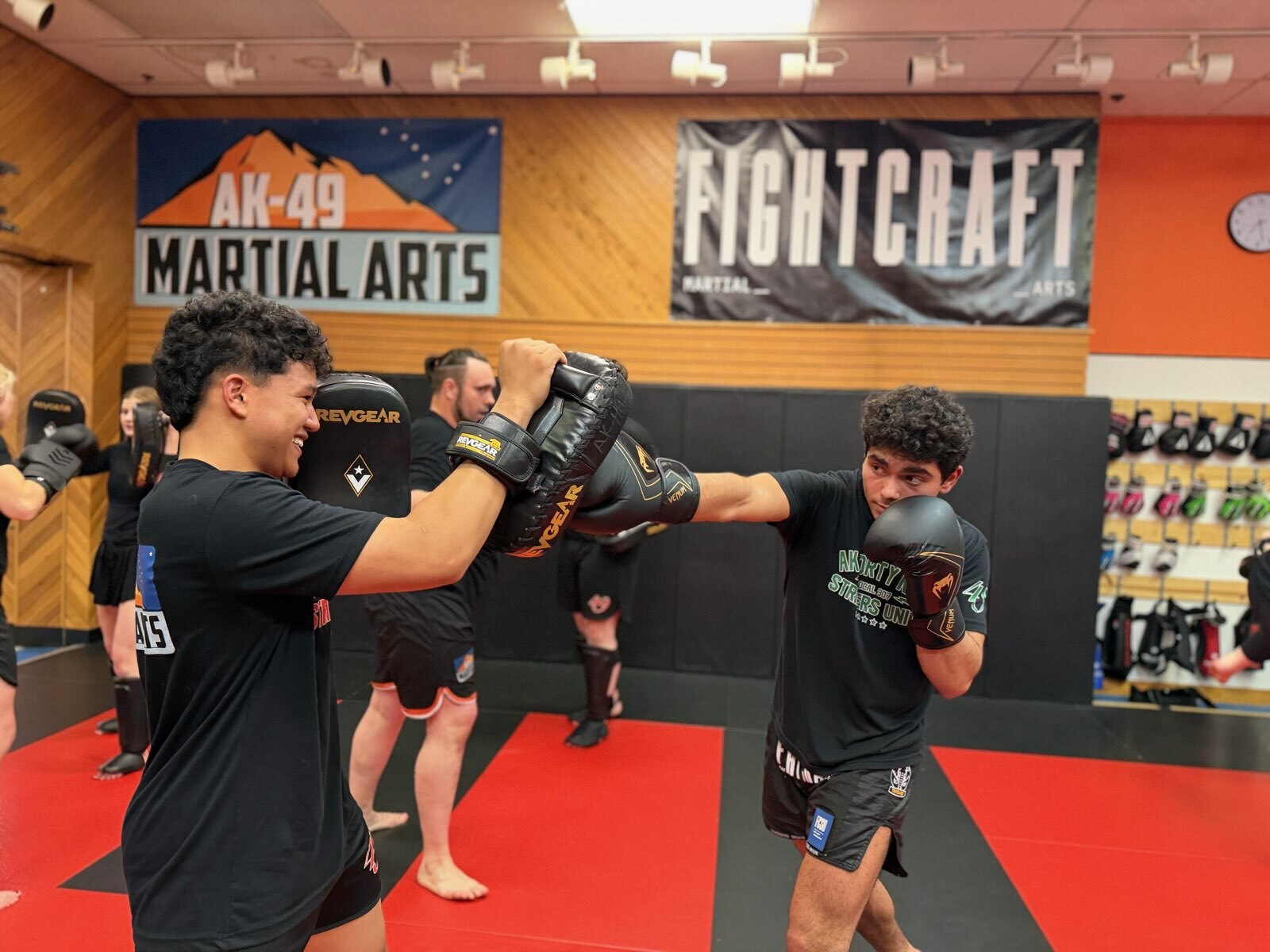
Good to know
It's your choice. Sparring is completely optional at AK-49 Martial Arts. You can train for years on the pads, the bag and in drills without it. If you decide you want to try, tell the coach and they'll set it up at a pace that fits you. Nobody is pushed into it.
It feels different from the bag. Someone is hitting back, and the round feels nothing like hitting the bag. It's normal to feel nervous, tense up and get tired faster than in any other round. It gets easier each time as you relax and start to see more. The first round is about getting used to the feeling.
Things to look out for
Going too hard
You treat it like a fight and throw everything hard. Your partner matches you, it turns into a brawl, and neither of you learns anything.
The fix: Stay at the pace you agreed on, and if a punch lands harder than you meant, ease off. Control is the skill you're practicing.
Tensing up and holding your breath
Nerves make you stiff and you stop breathing. You're gassed halfway through the round and your punches slow down.
The fix: Keep breathing normally the whole round, and let a breath out with your power shots. Drop your shoulders between exchanges and stay loose until a punch lands.
Leaving your hands out
You throw and leave the hand out, or let it drop on the way back. On the bag nothing comes back. In sparring, that open spot is exactly where the counter lands.
The fix: Every punch goes back to the face. Hands up, elbows in, chin down, even when you're tired.
Turning away or closing your eyes
When punches come you look down, turn your head or shut your eyes. You can't see the next punch, and that's usually the one that lands.
The fix: Keep your eyes on their chest and shoulders with your chin tucked. If you cover up, keep looking out through your gloves.
Throwing long combinations
You throw six or seven punches in a row. Your feet stop, your balance goes, and you're wide open at the end of it.
The fix: Throw two or three punches, then move or defend. Keep your feet under you the whole time.
Standing still after you punch
You finish your combination and stay right in front of your partner, in the same spot. That's the easiest target in the room.
The fix: After your last punch, step out or step to the side. Hit, then move, every time.
Drills you can practice
Drill 01
Clean shadow rounds
3 rounds of 2 minutes with 1 minute rest, picturing a partner in front of you. Round one, jab only from distance, back to the face every time. Round two, Two Hands with a step out or to the side after each one. Round three, mix in two and three punch combinations and keep your hands up while you move. How you look shadow boxing is how you'll look sparring.
Drill 02
Defense shadow rounds
3 rounds of 2 minutes with 1 minute rest. Picture a jab coming and cover up, slip or step back, then answer with Two Hands. Keep your eyes forward the whole time, at the height of a partner's chest, and don't turn your head away on the slips. In class, before open sparring, you may do partner rounds like jab only or one punch at a time, where one person attacks slowly and the other defends.
Drill 03
Breathing rounds
2 rounds of 3 minutes with 1 minute rest, at a pace you could keep going at. Breathe steady the whole round, in and out without stopping. If you catch yourself holding your breath, slow down until it comes back.
Frequently Asked Questions
What do I need for my first sparring session?+
A mouthguard that fits you, 16 ounce gloves, hand wraps and a cup for men, plus headgear if your coach asks for it. Come rested and skip the big meal right before. Drink water between rounds, and clean your gloves and mouthguard afterward. Ask your coach what to bring before your first round.
How hard should I go in my first spar?+
Light. Agree on a pace with your partner before the round, and start slower than you think you need to. You pick it up over weeks as you get comfortable, never in the first round.
When am I ready to spar?+
When your coach says so. Your stance, guard and straight punches should hold up with someone moving in front of you, and you should be able to block a jab without closing your eyes. Most people train a good while before their first round.
Do I have to spar at AK-49 Martial Arts?+
No. Sparring is completely optional. You can learn the punches, the footwork and the defense on the pads and the bag. If you want to try it later, the coach will set it up with a patient partner.
What if my partner goes too hard?+
Stop and say so, or tell the coach. If you take a hard shot to the head, feel dazed, get a headache, or your vision goes blurry, stop for the day and tell the coach right away. No contact until you're cleared, and get checked by a doctor if you have a headache, vomiting, confusion or symptoms that get worse. A good partner keeps to the pace you agreed on, and the coach watches the rounds and pairs people carefully. Nobody at AK-49 Martial Arts expects you to take more than you're ready for.
Are You Ready?