
Light Sparring
Boxing | Sparring
What Is Light Sparring in Boxing
Light sparring is controlled practice with a partner where you both work offense and defense at low power, and the goal is to learn. You agree on how light to go before the round starts, and you both stick to it. Coaches build up to it with one for one trades and offense against defense drills before free boxing.
How coaches build up to it
- 01
Drill first
Don't spar cold. Warm up, then you drill the punches and the defense first, then do sparring drills with rules, and only then go to free sparring. Each step adds a little more freedom, so you're never thrown in the deep end.
- 02
Gear up
Wrap your hands, then wear a mouthguard, bigger sparring gloves (16 ounce is the usual pick when you're new, though your coach may size them to your weight) and headgear if your coach asks for it. Men wear a cup, and kickboxing or Muay Thai sparring adds shin guards. The extra padding protects you and your partner while you both learn control. Never spar without a mouthguard.
- 03
Agree on the pace
Before the round, tell your partner you're new and agree on how light you'll go. Light means a touch, a clean punch that lands without trying to hurt, about a quarter of your power or less. When you're new, head punches are just touches, or you can agree to work the body only, and body shots stay just as light. Agree on a stop word, like stop or time, and either of you can use it any time. If either of you starts to speed up or hit harder, the other one says so and you bring it back down.
- 04
One for one
You throw one punch, your partner throws one, and each of you defends with a block, parry, slip or step back. It's slow on purpose. You see each punch coming, so you learn to keep your hands up and your eyes open while something comes at you.
- 05
Offense against defense
One partner throws one punch at a time and the other only defends. Then it goes live, then you switch roles. Later the defender fires back every three or four punches, which keeps the attacker from dropping their hands.
- 06
Boxing rounds
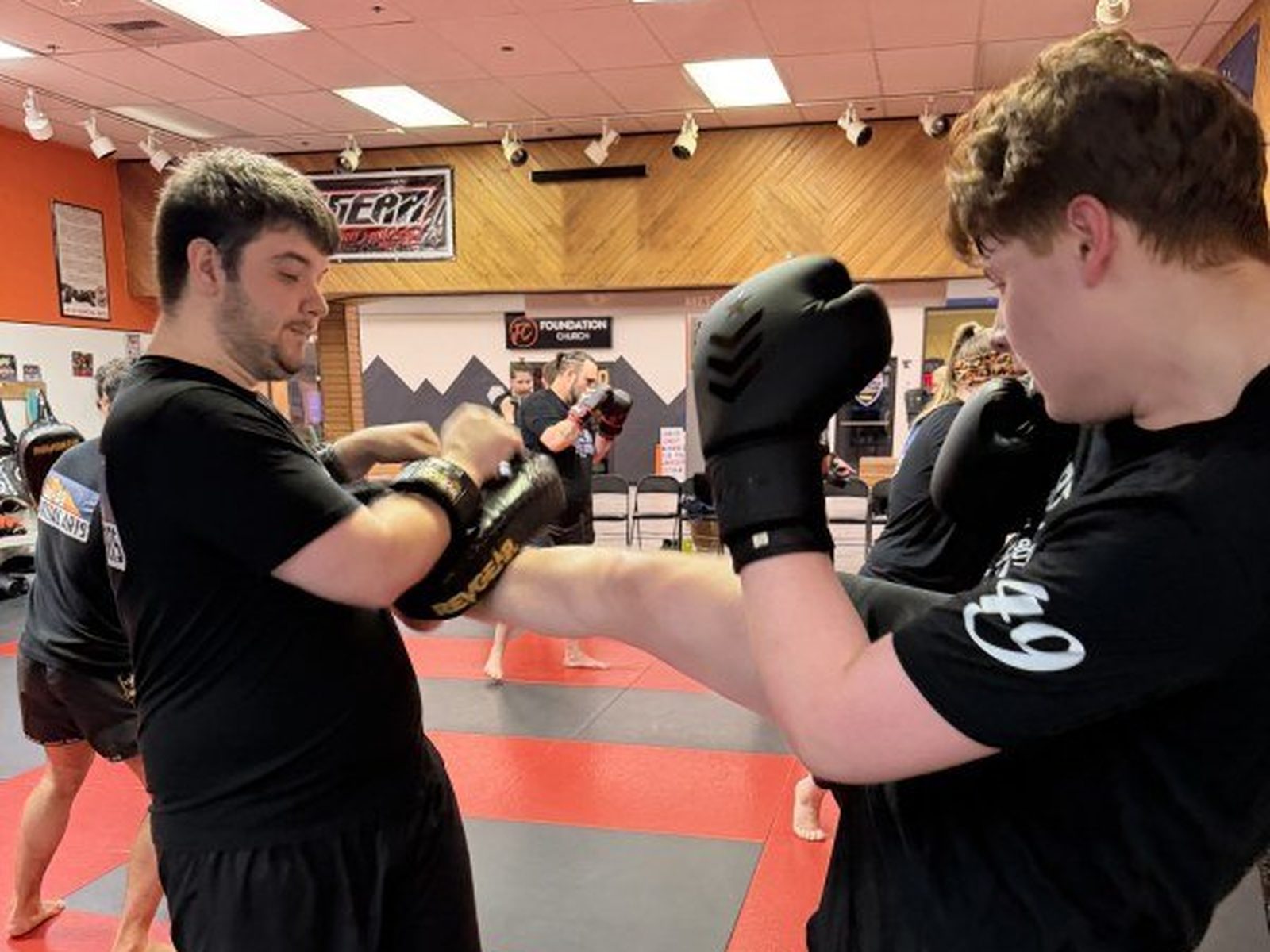
Then you box light rounds, often two or three minutes with a minute of rest, and only a few rounds when you're new, with a coach watching who can stop the round at any time. You move, defend and attack head and body. Keep your hands up, elbows in and your weight in a good athletic base. Every punch goes out from your face and comes straight back to your face, same as on the pads.
What helps most
Pick one thing to work on. Go into each round with one goal, like using your jab more, keeping your back hand on your face, or stepping back out after every combination. That's easier to think about than everything at once. Let the round be about that one thing and let everything else go. After the round, ask yourself or your coach how it went.
Breathe and reset. When things get busy, step back out of range or off to an angle instead of straight back, breathe and reset your guard. Nobody expects you to be in a fight the whole time. If you feel overwhelmed, step out and tell your partner or the coach. That's normal early on, and it gets better every time you do it.
Things to look out for
Trying to win the round
You start hunting for the big shot and forget about defense. Your partner speeds up to match you, light turns into hard, and neither of you learns much.
The fix: Think of it as a drill you both win by getting better. Land a clean touch, then defend. If you catch yourself loading up, take a breath and drop the power back down.
Turning away and closing your eyes
When a punch comes, beginners often blink, turn their head and look at the floor. You can't see the next punch, and turning your back is the worst place to be.
The fix: Keep your chin down and eyes on your partner's chest and shoulders. One for one drills at slow speed are the best way to get used to punches coming at you without flinching.
Dropping your hands
Once you get tired or start punching, your hands slide down to your chest. Every jab your partner throws lands, and you start to feel picked apart.
The fix: Bring every punch back to your face, and check your guard between every exchange. Think hands up, elbows in, all round.
Holding your breath
Nerves make you tense up and stop breathing. You gas out in the first minute and your punches turn stiff and slow.
The fix: Keep breathing normally the whole round, in and out while you move. Stay loose in your shoulders and only tighten up as a punch lands.
Throwing nonstop
Some beginners throw combination after combination and never defend. You leave yourself open and run out of gas fast.
The fix: Throw a short combination, then defend or move out. Punch, then get out of the way, is the rhythm to aim for.
Skipping the build up
Jumping straight into free sparring before you've done the drills means too much is coming at you at once. It feels like chaos, and that's when people get hurt or quit.
The fix: Drill, then one for one and offense against defense, then free sparring. Let the coach tell you when you're ready for the next step.
Frequently Asked Questions
What is light sparring?+
Controlled rounds with a partner where you both work offense and defense at low power. Punches land as light touches. The goal is to practice timing, defense and staying calm, and nobody is trying to win.
How hard should light sparring be?+
Light enough that you can both keep working and learning the whole round. Agree on it with your partner before you start. If it starts to creep up, say so and bring it back down.
What gear do I need for sparring?+
A mouthguard, bigger sparring gloves, usually 16 ounce when you're new, and headgear if your coach asks for it. Never spar without a mouthguard. Members get gear sorted out with the gym after they sign up.
What should I do if my partner goes too hard?+
Step back and ask them to bring it down. Don't try to match them, that's how light sparring turns into a fight. If it keeps happening, tell your coach. And if you take a shot to the head that leaves you dazed, dizzy or with a headache, stop right away, tell the coach and sit out the rest of the day. Stay out of sparring until you're cleared, and see a doctor if the headache gets worse or you have vomiting or confusion.
Do I have to spar?+
No. Sparring is completely optional at AK-49 Martial Arts. You can learn a lot on pads, bags and partner drills without ever sparring. Most people eventually want to try a light round, but nobody is pushed.
Are You Ready?