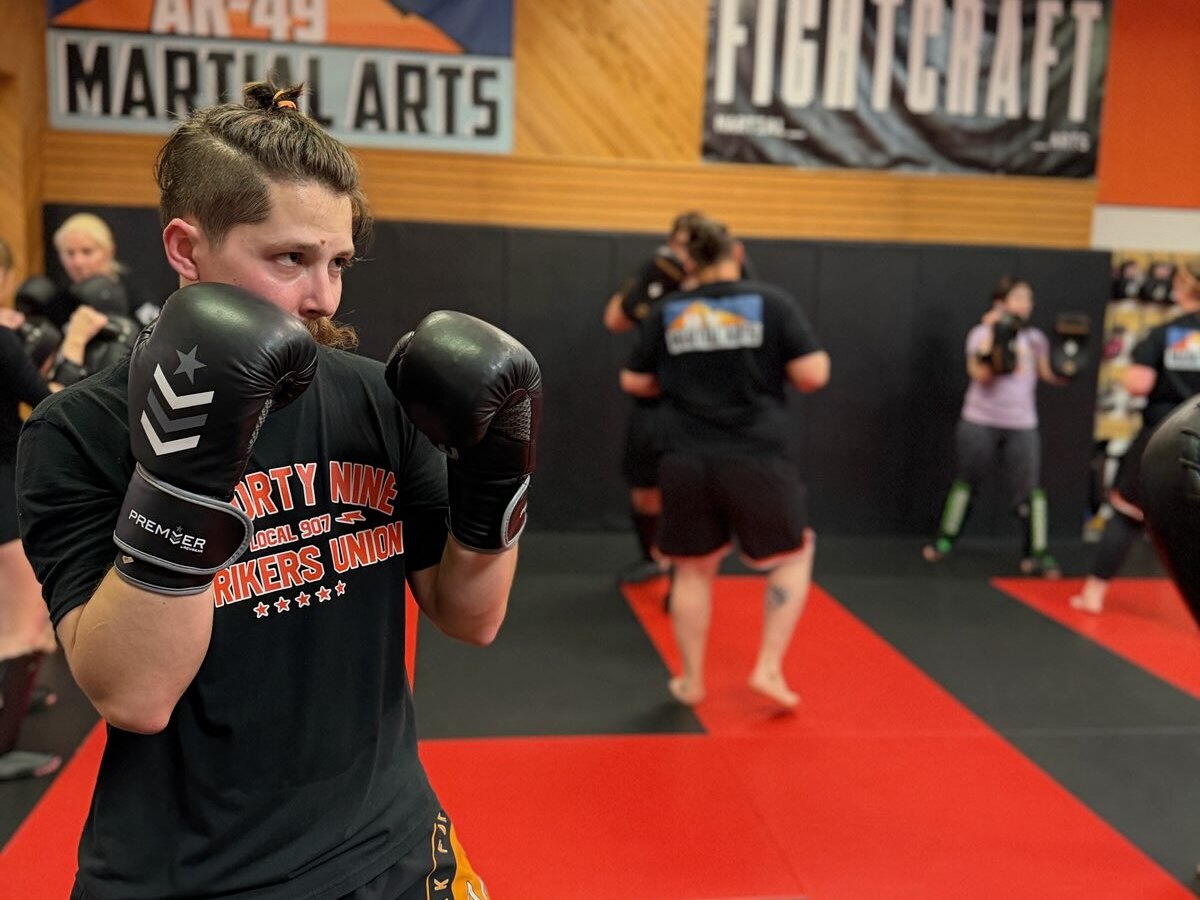
Block
Boxing | Defense
How to Block Punches in Boxing
Blocking means taking the punch on your gloves, forearms or elbows instead of your face or ribs. Keep your gloves pressed to your head for punches up high and drop your elbow to your side for body shots. Stay tight, move your arms as little as you can, and go right back to your guard.
- 01
Good athletic base
Feet about shoulder width apart, lead foot ahead, knees a little bent and your weight in the middle. When a punch lands on your arms, a solid base takes the force instead of letting it push you back. If punches knock you around, sit a little lower in your stance.
- 02
Hands up, elbows in
Both fists sit up by your face, at your cheeks, with your chin tucked and your elbows in close to your ribs. Every block starts from this guard, so your arms only move a short way. Keep your eyes open and on the other person, looking over your gloves, with your mouth closed on your mouthguard.
- 03
Straight punches: gloves to your forehead
For a jab or cross to the face, bring both gloves up so they press against your forehead, with your forearms in front of your face and your elbows still in. The gloves have to touch your head, or the punch knocks them back into you. Your body is more open while both arms are up, so bring them back down to your guard as soon as the punch is gone.
- 04
Hooks: glove tight to your head
For a hook, press that side's glove tight to the side of your head, on the hard part, with your elbow up and in front of you. Your glove and forearm cover your ear and temple, and your elbow and shoulder sit in front of your jaw. Keep your wrist straight and firm so it doesn't fold when the punch lands. If your head still rattles, your glove isn't tight enough.
- 05
Body shots: elbow down
For a punch to the body, drop that elbow down onto your side and bend your knees a little so your arm covers your ribs. Keep that glove up near your face while you do it. Then bring the arm right back up, because low arms leave your head open. For an uppercut coming up the middle, keep your elbows tight in front of you and catch it on your gloves or forearms in front of your chin, chin tucked behind them.
- 06
Move as little as you can
Move your arm only as far as it takes to cover the spot the punch is going to. Every big motion opens a gap somewhere else. It should feel like you're staying tight and letting the punch come to you. Breathe out a little as the punch lands, and stay loose between punches.
- 07
Back to your stance
As soon as the punch lands, your hands go back to your cheeks and your feet stay set in your stance. Throw something back when you can, so you aren't just standing there taking punches. Then you're ready for the next one.

When to use it
When the punch is already on you. Blocking is the first defense most beginners learn, because it's simple and it's there when you're too late to do anything else. If a punch is coming and you can't move your head or step away in time, your guard catches it. In class you'll start with your partner throwing slow, light single punches, one side at a time, with mouthguards in, so you learn where each block goes. Later you'll mix it with parries and moving your head.
Before you punch back. A block puts you right in range to answer. When a punch lands on your arm, the other person is close and their hand is away from their face for a moment. Once you're balanced and can see them, throw a short punch or two back, then get your hands back up. Blocking a body hook with your elbow, for example, often leaves that same hand close and ready for a short punch back.
Things to look out for
Gloves floating off your head
Your gloves sit an inch or two in front of your face instead of touching it. When a punch lands, it knocks your own glove into your head, so you still feel the shot.
The fix: Press the gloves against your head every time you block. Picture them glued to the hard part of your head.
Loose wrist on the hook
Your wrist is loose when the hook lands, so it bends back and the glove slips off your head. It takes some of the punch on a weak spot, and your head still gets shaken.
The fix: Keep the wrist straight and firm and let the glove and forearm take the punch. It should feel like your whole arm is tight from the hand to the elbow.
Reaching out to block
Your arm goes out to meet the punch instead of staying close. It opens a gap the other person can hit through, and a fake will pull your arm right out of place.
The fix: Stay tight and let the punch come to you. Your gloves stay on your head and your elbows stay in.
Elbows flaring out
Your elbows drift away from your ribs, especially when you get tired. Your body is open, and a body shot lands right under your arm.
The fix: Keep your elbows in close and drop the elbow down to block anything to the body. Check it in the mirror when you shadow box.
Closing your eyes or looking down
You duck your face behind your gloves and lose sight of the other person. You can't see the next punch coming, and the one you don't see hurts the most.
The fix: Keep your chin down and your eyes up, looking over your gloves. Slow drills help, because the flinch fades once you trust your guard.
Standing tall and stiff
You stand straight up with your knees locked. Every punch you block pushes you backward and off balance.
The fix: Bend your knees and sit into your stance a little. Let your legs take the force so your feet stay under you.
Blocking and never punching back
You cover up and wait for the other person to stop. They get free shots, and blocking all day still wears you down.
The fix: Answer a block with a punch of your own or a step out of range, then get your hands back up. Start with one punch back and build from there.
What to Practice at Home
Drill 01
Mirror blocks
3 rounds of 2 minutes with 1 minute rest, in front of a mirror. Round one, block a jab and cross you picture coming at your face, with gloves pressed to your forehead. Round two, block hooks on each side, checking the glove stays tight and the wrist stays straight. Round three, mix in body blocks, dropping the elbow and bending your knees, and come back to your guard every time.
Drill 02
Block and answer
3 rounds of 2 minutes of shadow boxing with 1 minute rest. Call out a punch in your head, block it, then throw two punches back and come back to your guard. Go slow in round one, pick it up in round two, and in round three move your feet a step between each one.
Drill 03
Guard hold
Stand in your stance with your guard up for 3 sets of 1 minute, resting 30 seconds between. Keep your gloves at your cheeks, chin tucked and elbows in close to your ribs, and breathe normally the whole time. Holding it when your arms get tired is what keeps your hands up late in a round.
Frequently Asked Questions
Where should my hands be to block a hook?+
Tight against the side of your head, on the hard part, with your elbow up and your wrist straight and firm. The glove has to touch your head, or the hook knocks it into you. Keep your other hand on your face while you block.
How do you block body shots?+
Drop the elbow on that side down onto your ribs and bend your knees a little so your arm covers your body. Keep that glove up near your face. Bring the arm right back to your guard after, because your head is open while the elbow is low.
Does blocking still hurt?+
A little, especially at first. If you feel it a lot, your gloves probably aren't touching your head, or you're standing tall and stiff. Pressing your gloves tight to your head and bending your knees both help take the sting out.
Is blocking enough on its own?+
No. Blocking is a great first defense, but if all you do is block, you just keep getting hit. Mix it with parries, moving your head and footwork, and punch back when you can. Your coach will add those in once your guard is solid.
Should I block or parry a jab?+
Both work. A block is simpler and is there even when you react late. A parry knocks the jab off line and keeps you at a longer distance. Most beginners start with blocking, then add the parry.
Are You Ready?