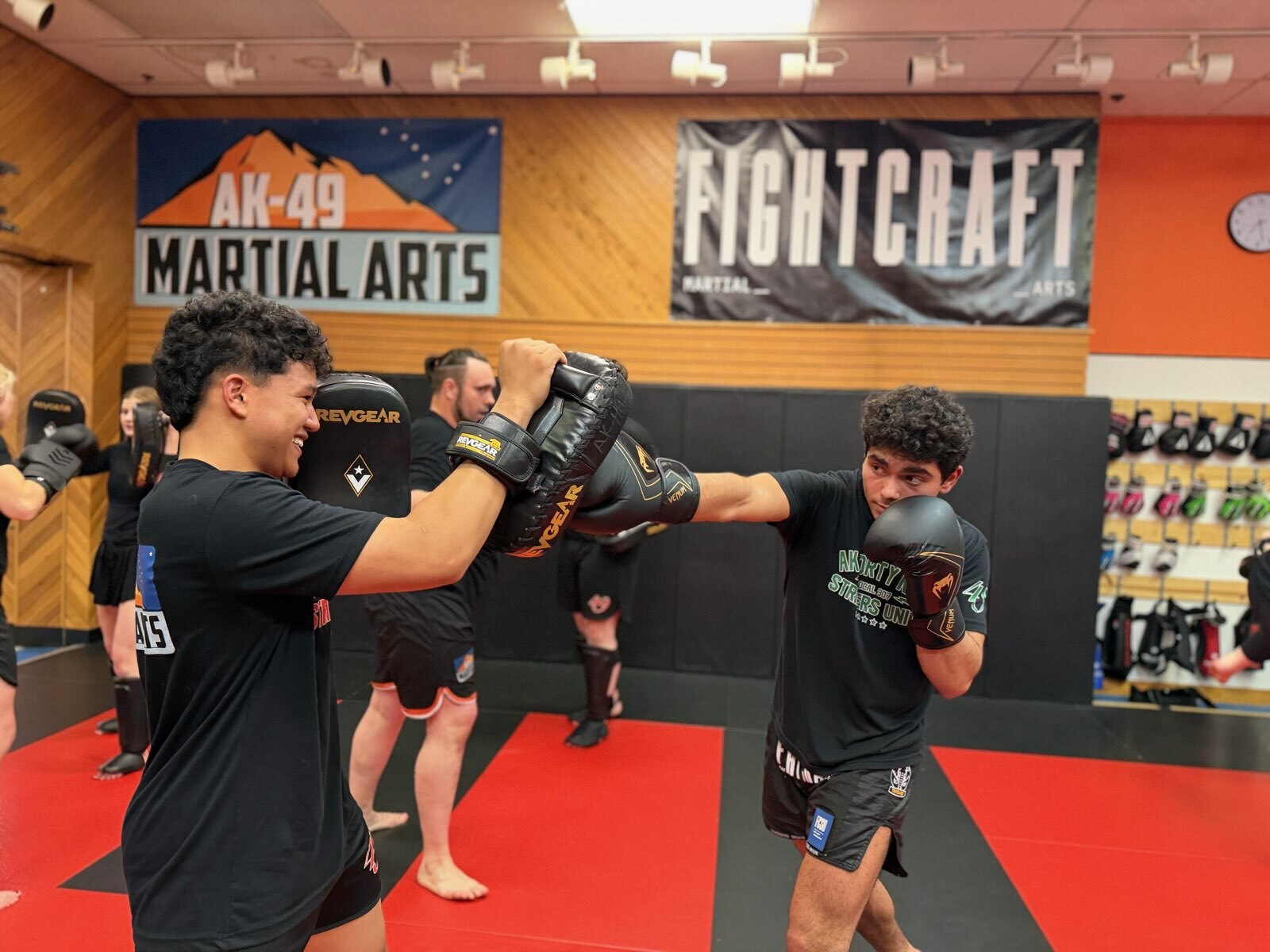
Parry
Boxing | Defense
How to Parry a Punch in Boxing
A parry is a short tap with your hand that knocks a straight punch off line just before it reaches your face. Let the punch come to you, keep the move small and firm, and don't cross the middle of your body. Then bring the hand straight back to your face.
- 01
Good athletic base
Feet about shoulder width apart, lead foot ahead, knees a little bent and your weight in the middle. A good base lets you stay where you are and parry without leaning back. You should feel steady enough that a push wouldn't knock you over.
- 02
Hands up, elbows in
Both fists sit up by your face, at your cheeks, with your chin tucked a little and your elbows in close to your ribs. Every parry starts from here, so your hand only has a few inches to travel. Keep your chin down and your eyes on the other person, so if a parry misses, your guard is still there.
- 03
Let it come to you
Watch their chest and shoulders, because the shoulder moves as the punch starts. Wait for the punch to get close, then make a short tap, like a cat batting at something. The hand only moves a few inches from your face. If you reach out to meet the punch, a fake will pull your hand away and open you up.
- 04
Rear hand for the jab
Your rear hand parries their jab and your lead hand parries their cross, so each hand takes the punch coming at its own side. The hand that isn't parrying stays on your face. Start with this and keep it simple. This is for when you both stand the same way; against someone in the opposite stance, the coach will show you which hand to use.
- 05
Firm hand, hard part of the palm
Meet the punch with the hard lower part of your palm, with your hand, wrist and shoulder firm. A floppy hand gets pushed right back into your own face. It should feel like a quick, solid tap on their glove.
- 06
Turn the hand in, stay on your side
Turn the parrying hand in to push the punch off line, so it slides past your face just outside your other shoulder. It's a small turn of the palm and forearm, an inch or two, ending with the palm angled a little toward the punch's path. Keep your elbow and shoulder out of it. Stop before your hand crosses the middle of your face. If you go past your center line, you open up a hook on the side you came from.
- 07
Back to your stance
As soon as the punch goes by, your hand comes straight back to your cheek. Your feet stay set in your stance and your eyes stay on the other person. Now you're ready for the next punch, or to punch back.
When to use it
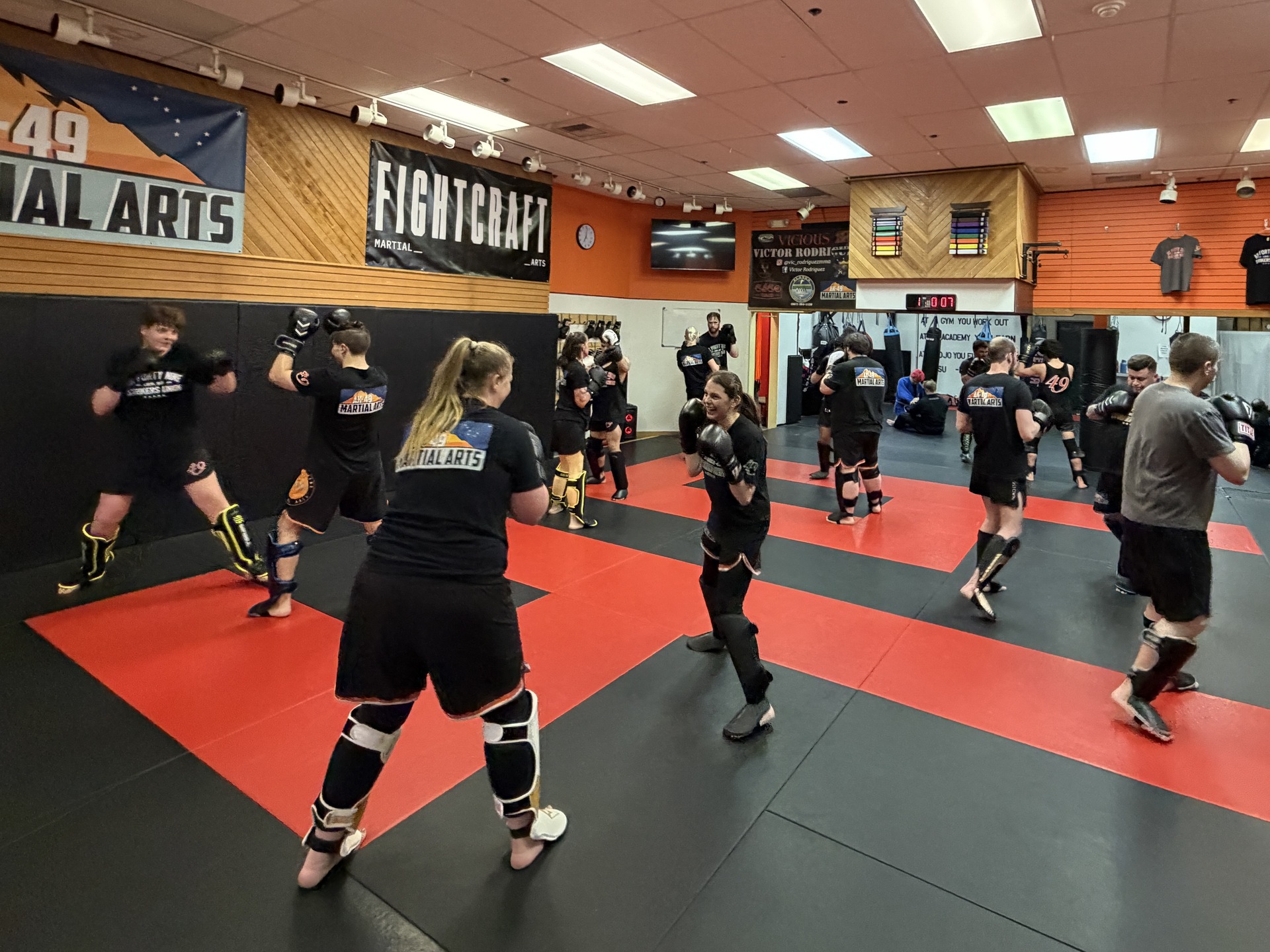
Against the jab and cross. The jab is the punch you'll see the most, and the parry is one of the simplest ways to handle it. Knocking it off line lets you stay at a longer distance, where you're not trading punches face to face. Right after the parry is a good moment to throw your own jab or cross back. In class you'll start parrying a slow, light jab from a gloved partner, then a jab and cross, before anything gets mixed up.
Paired with a slip. Once the parry feels natural, add a small slip, moving your head just to the outside of the same punch. If your parry is a little late, your head is already off the line, so you have two defenses on one punch. It's a good habit while you're still learning timing. Mix it in with blocking too, because no single defense works on everything.
Things to look out for
Reaching for the punch
Your hand goes out to meet the punch before it gets to you. It burns energy, and a simple jab fake pulls your hand away and leaves your face open for the real punch.
The fix: Let the punch come to you and keep the parry within a few inches of your face. Think of tapping it past you at the last moment.
Crossing your center line
The parrying hand swipes all the way across your face. It feels safe, but it leaves the side it came from wide open, and a hook can land right there.
The fix: Stop the parry at the middle of your face. Shadow box in front of a mirror and watch that your hand stops at your nose.
Floppy hand
Your hand and wrist are loose when the punch meets them. A hard punch pushes the soft hand back into your own face, so you still get hit.
The fix: Tighten your hand and shoulder right as you parry and use the hard lower part of your palm. Stay loose between punches and firm on contact.
Swinging from the elbow
The whole arm swings out from the elbow or shoulder to knock the punch away. The move gets big and slow, and your ribs open up for a body shot.
The fix: Turn the hand in and keep the elbow down by your ribs. The motion comes from the hand and forearm and stays a few inches long.
Dropping the other hand
While one hand parries, the other slides down off your face. If they follow the jab with a second punch, there's nothing there to stop it.
The fix: Keep the other glove touching your cheek on every parry. In the mirror, watch that hand instead of the one doing the parry.
Looking away or closing your eyes
You flinch, blink or turn your head as the punch comes in. You lose sight of the other person and can't see the next punch coming.
The fix: Keep your chin down and your eyes on the other person the whole time. Slow drills help most here, because the flinch fades once you trust your hands.
Parrying and doing nothing
You knock the punch away, then stand there waiting for the next one. The other person gets to keep throwing as long as they like.
The fix: Get in the habit of punching back after a parry, even a single jab, or stepping out if you can't. Either way, both hands come home after.
What to Practice at Home
Drill 01
Mirror parries
3 rounds of 2 minutes with 1 minute rest, in front of a mirror. Round one, slow rear hand parries against a jab you picture coming at your face, checking that the hand stops at your center line. Round two, lead hand parries against a cross you picture, with the other glove glued to your cheek. Round three, mix both sides and throw a jab back after every parry.
Drill 02
Short tap reps
Stand in your stance and do 3 sets of 20 parries on each hand, with 30 seconds rest between sets. Keep every tap a few inches long and snap the hand right back to your cheek. Tighten the hand only at the moment of the tap and stay loose between reps. Keep your thumb tucked against your hand or inside the glove so it doesn't catch on anything.
Drill 03
Parry and punch back
3 rounds of 2 minutes of shadow boxing with 1 minute rest. Picture a partner throwing a jab and a cross, parry both, then come back with your own Two Hands. Move your feet a step or two between reps, and finish every counter back in your stance with your hands up.
Frequently Asked Questions
Which hand parries the jab?+
Your rear hand. If you stand with your left foot forward, your right hand parries their jab and your left hand parries their cross. If the other person stands the opposite way, just use the hand on the side the punch is coming toward. Your coach may show you other options later, but that's the place to start.
What part of the hand do you parry with?+
The hard lower part of your palm, with your hand and wrist firm. That part of the hand is strong and stable, so the punch moves instead of your hand. With gloves on, it feels like a short, solid tap on the other person's glove.
Should I parry or block?+
Both have a place. The parry works best on straight punches like the jab and cross, and it keeps you at a distance where you can punch back. Hooks come around the side, so you block those with your gloves tight on your head, and body shots are usually blocked with your elbows. Mix your defenses and don't lean on just one.
Is parrying good for beginners?+
Yes. It's one of the first defenses you learn. In partner drills you both wear gloves and a mouthguard, the punches are slow and light, and the coach sets the pace. You start in set patterns, a jab and then a cross, before anything random. Speed comes once the movement feels natural.
Why do I still get hit when I parry?+
Usually the hand reaches out too early, crosses your center, or is too loose. A fake pulls a reaching hand away, and a loose hand gets pushed back into your face. Keep the parry small and firm, close to your face, and wait for the punch to come to you.
Are You Ready?