
Do I Need to Get Fit First
Boxing | Questions
Do You Need to Be in Shape to Start Boxing?
No. Training is what gets you in shape, so come as you are and work at your own pace. Your first few classes will tire you out and probably leave you sore, and a few weeks in you'll feel the change in your wind and your legs.
How to start out of shape
- 01
Grab a free pass
Your first class is free. Pick a class, grab a free pass so we know you're coming, and get there about 10 minutes early to fill out the waiver. Tell the coach it's your first class and that you're working on your fitness, so they know to keep an eye on you. If you have a heart condition, high blood pressure, an old injury, or you haven't exercised in a long time, check with your doctor before you start.
- 02
Wear what's comfortable and bring water
A shirt and shorts is all you need, plus clean sneakers or whatever the coach says for the mat, and the gloves and wraps you need for class are provided. Bring a water bottle and use it between rounds.
- 03
Go at your own pace
When your arms get heavy or your breathing gets away from you, slow down instead of quitting the round. Take a break when you need one, grab some water and jump back in. Throwing at about half effort and keeping your hands moving is easier to keep up for a full round than going hard and stopping. If you feel chest pain, dizziness or sick to your stomach, stop, sit down and tell the coach right away. Class is practice, so nobody is keeping score on your first day.
- 04
Learn the basics before the hard work
Your first classes are mostly stance, guard and a few punches. Good athletic base, hands up, elbows in, punch from the face and back to the face. Getting those right matters more than how hard you hit or how many rounds you last.
- 05
Keep breathing
New people hold their breath when they punch, and that's what tires them out fastest. Breathe normally and keep it steady the whole round, and stay loose between punches. You'll last a lot longer in the round.
- 06
Keep showing up
Two or three classes a week, with a day or two in between, is a good start. The first week is the hardest. Each class after that feels a little easier, because your body is catching up to the work.
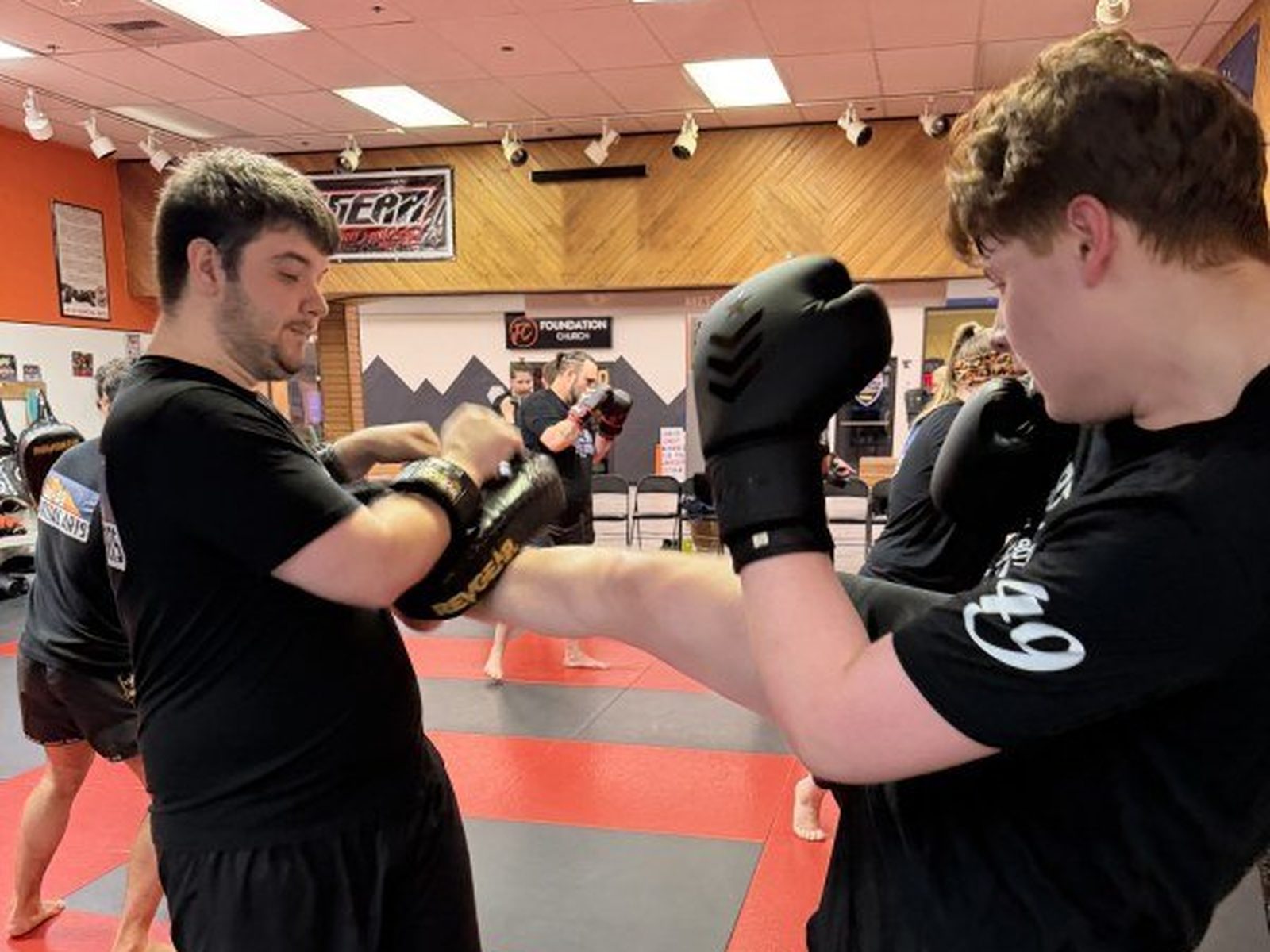
What to expect
Your shoulders tire first. Holding your hands up at your face is new work for your shoulders, so they burn before anything else. Your legs feel it too from staying bent in your stance. That's normal, and it's one of the first things that gets better. Keep the hands up as long as you can, and rest them when the coach calls time.
Soreness shows up a day or two later. You might feel fine the day after your first class and wake up sore the day after that. Soreness from new exercise usually builds over a day or so and is worst somewhere between one and three days later. It fades on its own, and it gets much milder once your body is used to training. Drinking water, getting a good night's sleep and easy movement like a walk the next day all help. Sharp pain or pain in a joint is different, so tell the coach and take it easy.
Things to look out for
Putting it off until you're fit
People plan to run or diet for a while first so they won't look out of place. Months go by, and the class that would have gotten them in shape never starts.
The fix: Come in as you are. Everyone in the room was new once, and most of them remember how awkward their first class felt.
Going all out the first week
You show up every day and push every round as hard as you can. Most people who start that way get so sore and burned out that they stop coming.
The fix: Pick two or three classes a week and treat the first week as learning. Leave a little in the tank at the end of class, and build from there.
Trying to keep up with the person next to you
The person beside you might have years of training. When you match their pace, your form falls apart and you finish class wrecked and discouraged.
The fix: Compare yourself to how you did last week, not to anyone in the room. Class is practice for learning a skill, and nobody is racing you.
Holding your breath
You tense up and hold your breath every time you punch. You run out of air in a minute and your punches get stiff and slow.
The fix: Keep breathing normally the whole time, and let a breath out with your power shots. If you can't breathe, slow your punches down until you can.
Flailing when you get tired
When you're gassed, it's tempting to drop your hands and swing at the bag just to feel like you worked. That builds bad habits and leaves your face open.
The fix: Slow down and keep your form: hands up, elbows in, punch from the face and back to the face. Throw fewer punches if you need to, and make each one clean.
Keeping a health problem to yourself
The coach can't adjust anything for an old injury, a heart condition or a bad back if they don't know about it. You end up guessing what's safe in the middle of a round.
The fix: If you have a health concern, or you haven't exercised in years, check with your doctor before you start. Sharp pain in a joint, wrist or shoulder is a reason to stop and tell the coach too. Then tell the coach before class so they can help you adjust.
Frequently Asked Questions
Do I need to be in shape to start boxing?+
No. Come as you are. Training is what gets you in shape, and you can go at your own pace while you learn. Nobody expects a beginner to last every round on day one. Sparring is optional and comes much later, so your first weeks are drills, pads and the bag at your own pace.
How long until I feel fitter?+
Most people feel a change within a few weeks of training two or three times a week. Your breathing settles faster between rounds and your hands stay up longer. Keep showing up and it keeps getting better.
What if I can't keep up in class?+
Slow down, take a break when you need one, and jump back in. Coaches would rather see you do fewer rounds with good form than push through and get hurt.
Will I be sore after my first class?+
Probably, mostly in your shoulders, arms and legs. Soreness from new exercise usually peaks a day or two after class and then fades. It gets much milder after your first couple of weeks.
Should I get in shape at home before I come in?+
You don't have to. If you want to do something, walking, easy jump rope or a few minutes of shadow boxing in front of a mirror all help. Starting class is still the fastest way to get fit for boxing.
Are You Ready?