Do You Have to Spar
Boxing | Starting Out
Do You Have to Spar in Boxing
No. At AK-49 Martial Arts, sparring is completely optional. You can learn real boxing skills and get in shape on pads, the bag and partner drills, and decide later whether sparring is for you.
What you can do instead
- 01
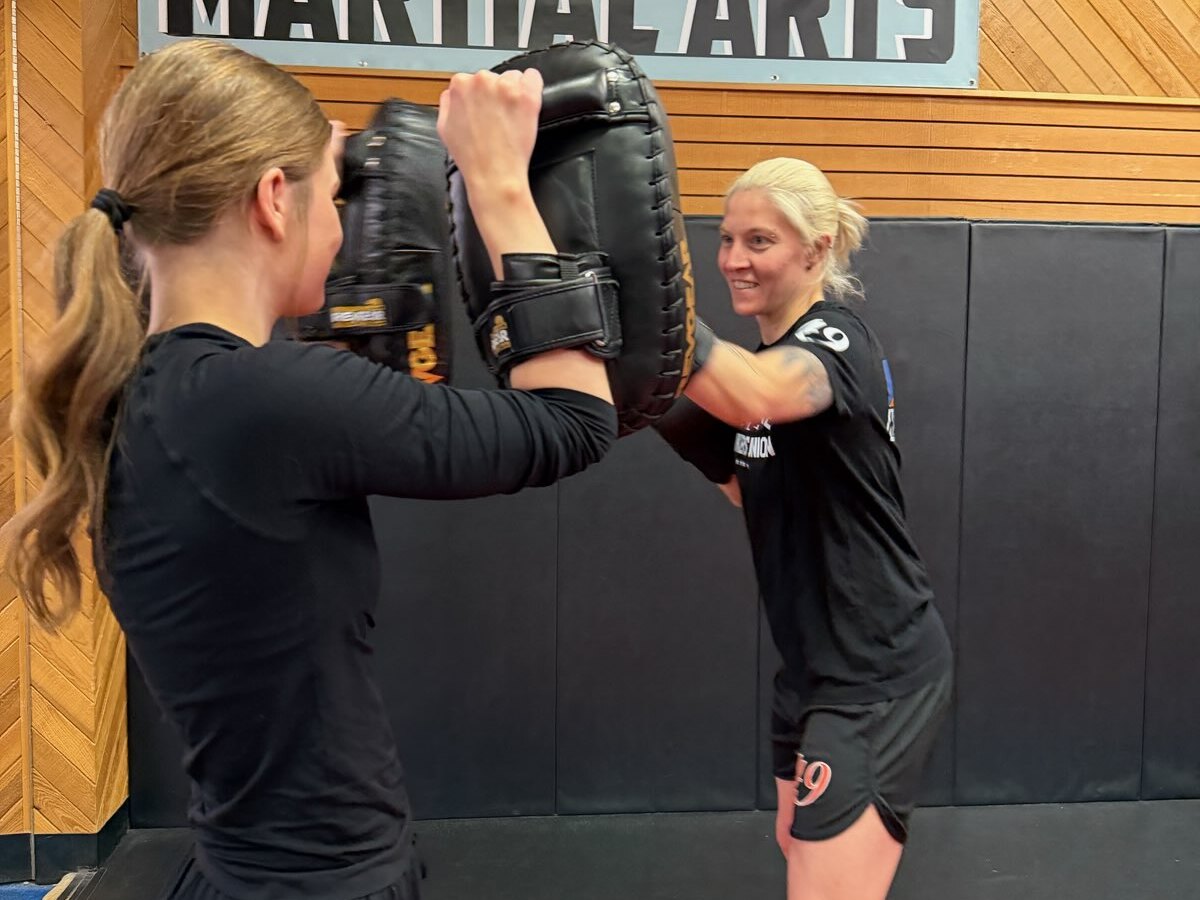
Pads
A partner holds focus mitts and you hit them with the combinations from class. The whole point of pad work is to improve your sparring and your fighting, so you train the same punches, timing and distance without anyone hitting you back. Then you switch and hold, and watching every punch come in teaches you a lot too. Pads can't fully copy a partner who moves and hits back, but they build the skills you'd use against one.
- 02
The bag
Bag rounds build your punches, your movement and your conditioning. You can hit as hard as you like, and the bag never fights back. Move around it and aim where a real head and body would be, so it feels more like a person.
- 03
Partner drills
These sit between drilling and sparring. In one for one, you throw one punch and your partner defends, then they throw one and you defend. In offense against defense, one person attacks one punch at a time and the other only defends, at a speed you both agree on.
- 04
Defense drills
Blocking, slipping, rolling and stepping out of range get drilled slowly, alone or with a partner. You learn how to get out of the way of a punch long before anyone throws one at you for real. Keep your eyes on your partner the whole time, even when you move your head.
- 05
Shadow boxing
Picture an opponent and move, punch and defend against nobody. It's the safest way to build the habits sparring tests: good athletic base, hands up, elbows in, punch from the face and back to the face. How you look shadow boxing is how you'll look if you ever spar.
If you want to try it
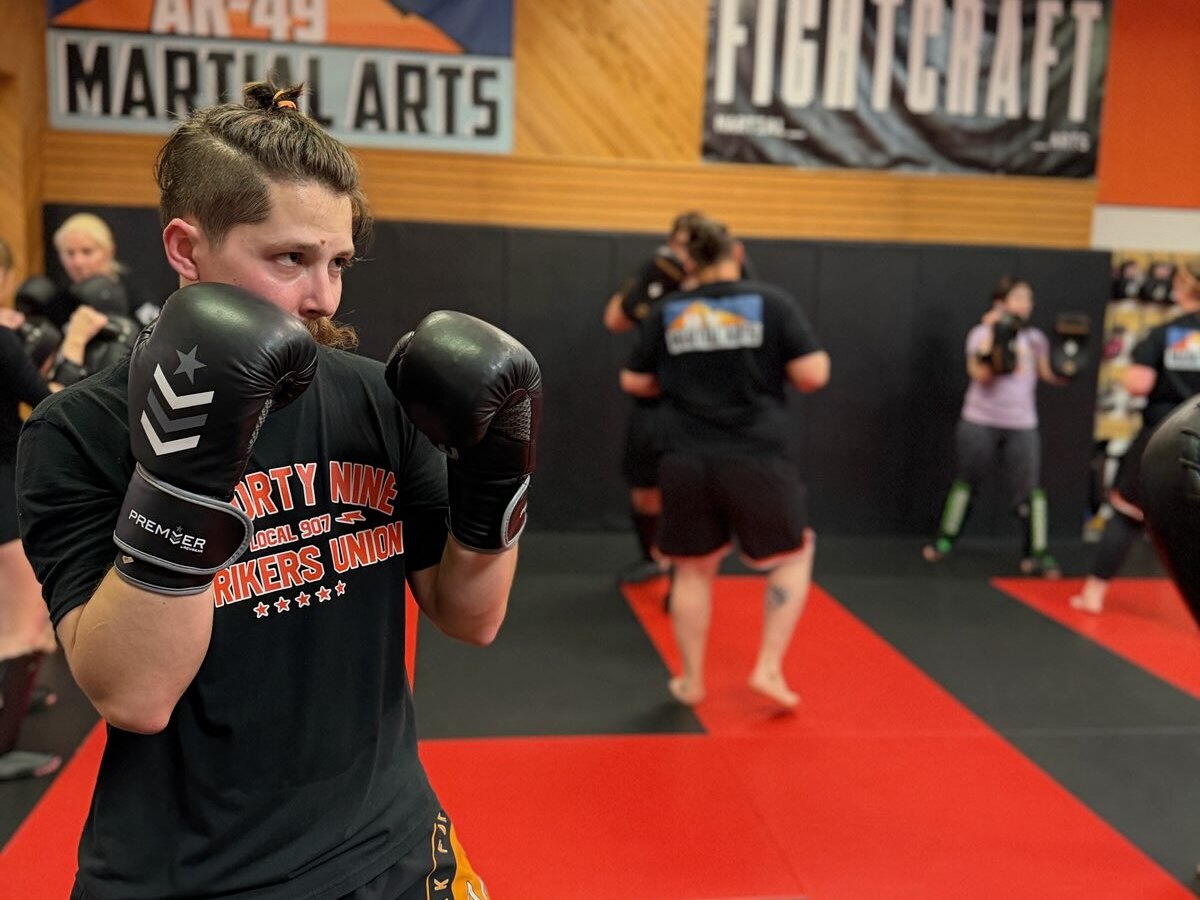
Wait until the basics are automatic. Most people train for at least a few months before they spar. You should be able to hold your guard, keep your stance and move your feet without thinking about them, throw a clean jab and cross, and block or slip a slow punch without closing your eyes. Ask your coach if you're ready, since they've watched you train. If you ever take a hard shot to the head, feel dizzy or get a headache, stop for the day, tell the coach, and don't spar again until you're cleared. See a doctor if the headache gets worse or you have vomiting or confusion. If the answer is not yet, they'll tell you what to work on first.
Start light, with the right partner. Your first rounds should be slow and light, with control on every punch. Work with a calm, experienced partner close to your size, skip it on days you're sick or banged up, agree on how hard you're going before the round starts, and speak up if it gets faster than you want. Wear a mouthguard that fits and 16 ounce gloves, or the size your coach says fits your weight, and add headgear as it gets harder. Men should wear a cup. First rounds are usually short, one or two minutes, and only a few of them. You can stop any time.
Things to look out for
Thinking you have to spar to belong
Some people stay away from a gym because they think everyone there fights. Others quit because they feel like they're missing the real thing.
The fix: You don't have to spar, ever. Plenty of people train for the skill and the workout, and they're as much a part of the room as anyone.
Sparring before the basics
If you can't hold a guard and keep your stance while you move, sparring shows you every hole at once. Your hands drop, your feet cross, and you get hit with things you never learned to stop.
The fix: Get your reps on pads, the bag and partner drills until the basics show up on their own. Then let your coach help you decide when to try it.
Going hard on your first try
Nerves make beginners throw too hard and too fast. Your partner answers back, the round turns into a fight, and neither of you learns anything.
The fix: Agree on a light pace before the bell and keep it. If your partner won't ease off, stop the round and tell the coach. Throw at a speed where you can see your partner's punches coming and still think.
Trying to win every round
You treat practice like a fight you have to win, so you load up on every punch and get frustrated every time you get hit. You stop learning and start brawling.
The fix: Go in with one small goal, like keeping your hands up or jabbing more. Getting hit in sparring shows you what to fix next.
Holding your breath and tensing up
Nerves lock your shoulders and stop your breathing. You're exhausted after a minute and your punches turn slow and stiff.
The fix: Keep breathing and drop your shoulders between exchanges. Loose arms and steady breathing make a round feel much shorter.
Looking away from punches
Beginners turn their head, close their eyes or twist so far on a slip that they lose sight of their partner. You can't block or slip what you can't see, so the next punch lands clean.
The fix: Keep your eyes on your partner the whole round, with your chin down. Practice it on pads first, where you watch every punch come at the mitt.
Frequently Asked Questions
Do you have to spar in a boxing or kickboxing class?+
Not at AK-49 Martial Arts. Sparring is completely optional. Most students end up wanting to try it at some point, but nobody is pushed. You can learn and train for years without it.
What is sparring?+
Practice rounds where you and a partner use your skills on each other with control. It isn't a fight, and the goal is to learn. Good sparring partners keep it at a level where both people can think and improve.
Can I get good at boxing without sparring?+
You can learn real technique and get in much better shape from pads, the bag and partner drills. Sparring is where you test your timing against someone moving and hitting back, so it adds something drills can't. Whether you ever add it is up to you.
What do I need for my first spar?+
A mouthguard that fits, 16 ounce gloves or the size your coach picks for your weight, a cup for men, and usually headgear, plus a calm partner and a coach watching. Agree on a light pace before you start. Your first rounds are short and slow.
Do kids have to spar?+
No. Sparring is optional in Kids Kickboxing too, and coaches pair kids carefully. Kids who spar wear full sparring gear, and depending on age, some kids have contact to the head at the level the coach sets. Kids work on pads, footwork and drills, and nobody is asked to do more than they're ready for.
Are You Ready?