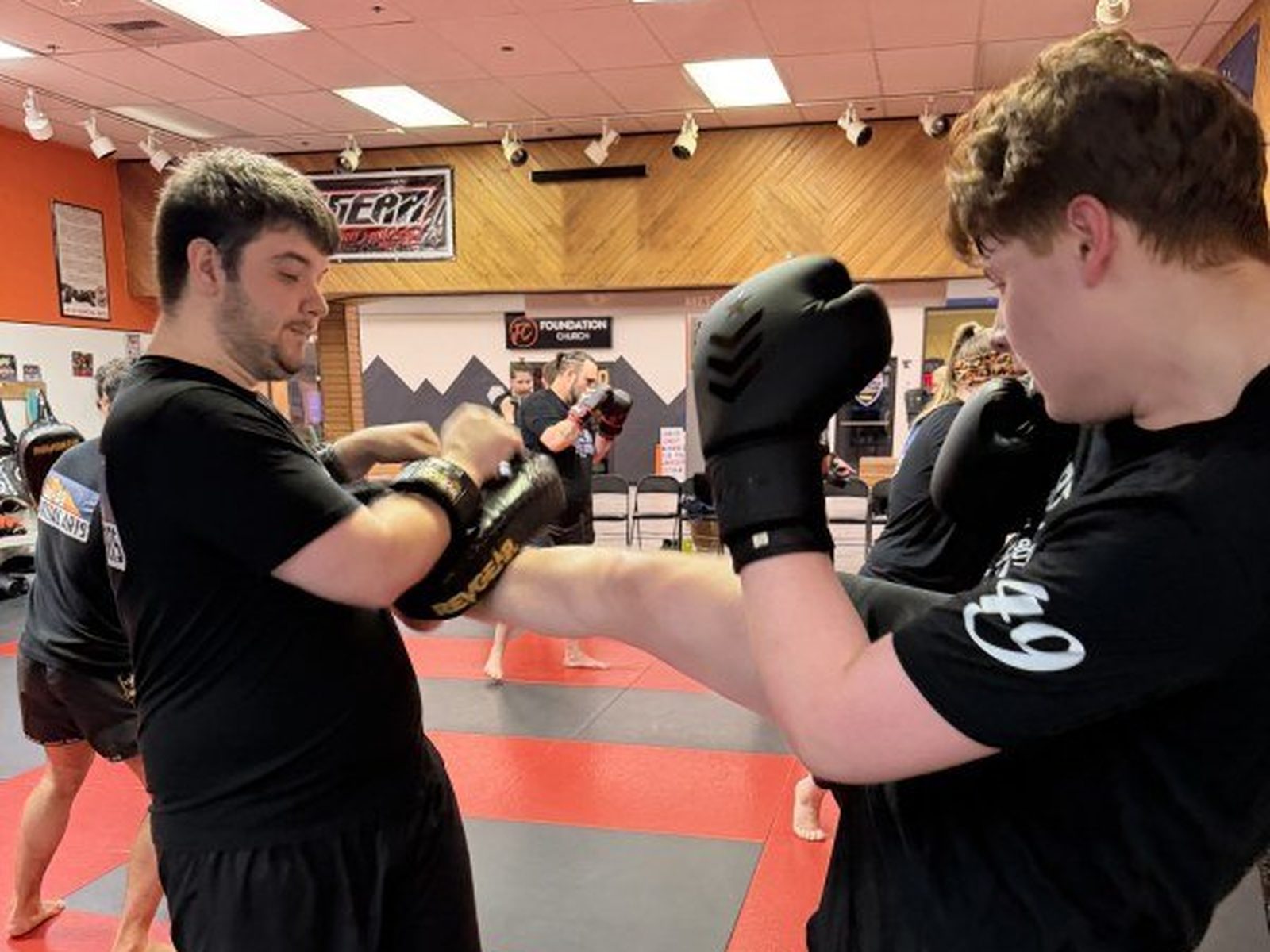
The Jab
Boxing | Punches
How to Throw a Jab in Boxing
The jab is the straight punch you throw with your front hand, and it's the first punch every beginner learns. The big things are a good athletic base, hands up, elbows in, punching from the face and bringing it right back to the face. Get those four right and every other punch builds on them.
In kickboxing and Muay Thai you jab with your front toes pointing more forward. A turned out front foot leaves your calf open to low kicks.
- 01
Good athletic base
Feet about shoulder width apart side to side and staggered about a step front to back, front foot ahead and pointing at the target or turned in a little, back foot angled out with the heel slightly up. Knees a little bent and your weight in the middle. You should feel balanced enough that a push wouldn't knock you over.
- 02
Hands up, elbows in
Both fists sit up by your face, at your cheeks, with your chin tucked a little. Your elbows stay in close to your ribs. This is your guard, and it protects your head and your body at the same time.
- 03
Punch from the face
The jab starts at your face and goes straight out to the target, with no wind up and no dropping the hand first. Reach until the arm is nearly straight, with a soft elbow, and let your front shoulder come up to cover your chin. Your lead hip and shoulder turn in a little with it, and your weight shifts slightly toward your front foot, so it's more than an arm punch. Keep the elbow pointing down, turn the fist over in the last couple of inches, and land on the first two knuckles with a straight wrist and your thumb on the outside of the fist.
- 04
Back to the face
Bring the hand straight back to your cheek along the same line, as fast as it went out. Don't let it drop or loop down on the way home. Your rear hand stays on your face the whole time, you keep breathing steady, and your eyes stay on the target.
- 05
Add a step
Once the jab feels good standing still, push off your back foot and let your front foot step in as the punch lands, then bring the back foot up the same distance. To step back out, move the back foot first and let the front foot follow. Later you'll learn to step off to the side after the jab, so you're not standing in the same line when they punch back. Your stance should be the same size before and after, so your feet never cross and you're always ready to throw again.

When to use it
To start a combination. Almost every combination you learn starts with the jab. It's the fastest punch and the closest to the target, so it gets your hands moving and sets up the cross behind it. The jab cross, which we call Two Hands, is the first combination most beginners learn. When you're not sure what to throw first, throw the jab.
To find your distance. The jab is how you measure how far away the other person is. If it falls short, step in a little. If it jams up close, step back. Once the jab reaches, you know your other punches will reach too.
Things to look out for
Dropping the other hand
While the front hand jabs, the rear hand slides down off the face. It's one of the most common beginner habits, and it leaves your chin open right when you punch.
The fix: Keep the rear fist touching your cheek on every jab. Shadow box in front of a mirror and watch that hand, not the one that's punching.
Jabbing short
The arm stops halfway and the punch falls short of the target. It doesn't score, it doesn't move them, and it leaves you standing in range for nothing.
The fix: Punch out until the arm is nearly straight, with a soft elbow. If you still can't reach, you're too far away, so use your feet to get closer. You should feel the arm reach right at the end.
Pushing the target
The fist lands and stays there, shoving the bag or pad instead of hitting it. A push is slow, it doesn't sting, and your hand is away from your face for too long.
The fix: Pop it and snap it straight back. Think of touching a hot stove. The return should be as fast as the punch.
Elbow flaring out
The elbow swings out to the side and the jab turns into a loop. It's slower, they see it coming, and your ribs open up for a body shot.
The fix: Keep the elbow pointing down until the very end. A thumb up jab helps a lot. Shadow box slowly in front of a mirror and watch that the elbow tracks straight forward.
Holding your breath
You tense up and hold your breath while you punch. You get tired fast, the punch gets stiff and slow, and after one round you're gassed.
The fix: Breathe normally and keep it steady the whole round, in and out without stopping. Stay loose between punches and only make a tight fist as it lands.
Leaning in
You reach for the target with your head and upper body, so your head ends up past your front foot. You're off balance, your rear hand loses power, and your head is the closest thing to them.
The fix: Keep your head over your stance and let your feet cover the distance. If you have to lean to reach, take a step instead.
Looking down
You look at your hand, the floor or the bag instead of the target, or your eyes close as the punch goes out. You can't see what's coming back at you.
The fix: Pick a spot on the target and keep your eyes on it from start to finish. Chin down, eyes up.
What to Practice at Home
Drill 01
Shadow box the jab
3 rounds of 2 minutes with 1 minute rest, in front of a mirror if you have one. Round one, slow single jabs, checking stance, guard and the rear hand on every rep. Round two, breathe steady the whole round and snap it back fast. Round three, double jabs, popping both and coming back to your guard.
Drill 02
Elbow check
Stand side on to a wall with your front shoulder about a hand's width from it, and throw 3 sets of 20 slow jabs without touching it. If your elbow drifts toward the wall, it's flaring. Keep the wrist straight and turn the fist over only at the very end.
Drill 03
Jab and step
4 rounds of 2 minutes, in the air or on a bag with wraps and gloves on. Start a step away, push off the back foot, step in and jab, then step back out, back foot first. On the bag, wear wraps and gloves every time, and stop if your wrist, elbow or knuckles hurt and ask your coach to check your fist. Keep your stance the same size the whole time. Once it's smooth, add a cross after the jab.
Frequently Asked Questions
Which hand do you jab with?+
Your front hand, the one closest to the other person. If you're right handed you'll usually stand with your left foot forward, so your left hand is the jab. If you're left handed it's usually the other way around. Your coach will help you figure out which stance feels right.
Should you turn your fist when you jab?+
Most coaches teach turning the fist over so the palm faces down as it lands, and only in the last couple of inches. A thumb up jab is also correct, and it helps keep your elbow in. Either way, land on the first two knuckles with a straight wrist.
Should my arm go all the way straight?+
Nearly straight, with a soft elbow. Keep a little bend in it so the joint never snaps out hard at the end. If you can't reach the target without leaning, you're too far away, so take a step.
Why does my jab feel weak?+
Usually it's short or it's pushing. Punch until the arm is nearly straight and snap it straight back. Speed matters more than power with the jab, and when you want more on it, the extra comes from pushing off your back foot, not leaning in.
Can I practice the jab at home with no equipment?+
Yes. Shadow boxing in front of a mirror is the best way to start, and you don't need gloves or a bag. Go slow and get the form right first. Speed and power come after the movement feels natural.
Are You Ready?