Punching Power Basics
Boxing | Punches
How to Punch Harder in Boxing
Punching power comes from the floor up: your back foot pushes and turns, your hips turn, and your weight goes into the punch, with the arm just delivering it. Stay loose until the punch lands, punch from your face with no wind up, and snap it back to your face. Clean technique comes first, and the power follows.
In kickboxing and Muay Thai you often keep a longer stance with the front foot pointed forward to deal with kicks, and that costs some punching power. Go back to the boxing version when nobody is kicking your legs.
- 01
Good athletic base
Feet about shoulder width apart, lead foot ahead, knees a little bent and your weight in the middle. Power starts at the floor, so your feet need to be right under you. From a stance that's too long you can't turn your hips no matter what, so slide the back foot up a little before a power punch, a small adjustment and not a big step.
- 02
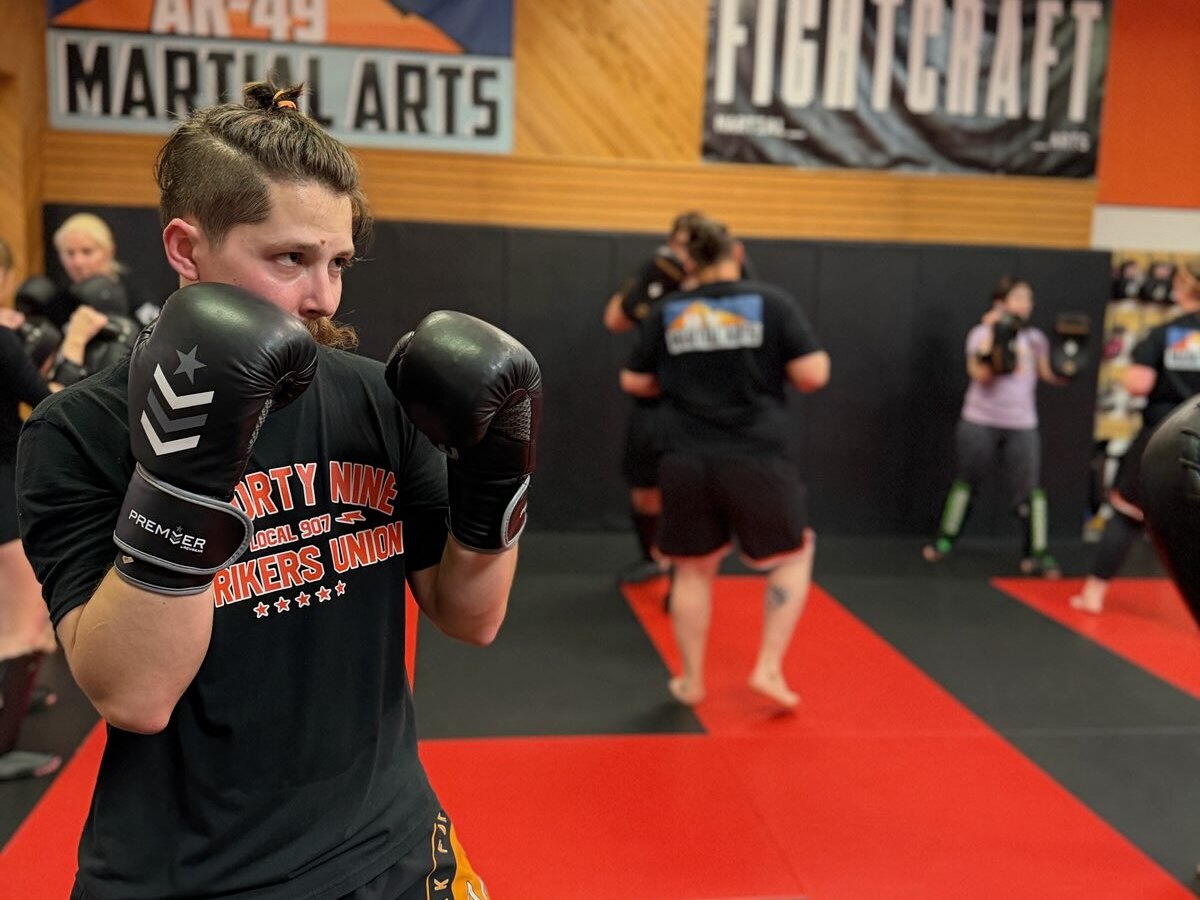
Hands up, elbows in
Both fists sit up by your face, at your cheeks, with your chin tucked a little and your elbows close to your ribs. The hand that isn't punching stays home on your face the whole time, even on your hardest punch.
- 03
Punch from the face
Every power punch starts at your face with no wind up. Pulling the hand back first adds almost nothing and shows them it's coming. Straight punches go out until the arm is nearly straight with a soft elbow, landing on the first two knuckles with a straight wrist.
- 04
Push and turn the back foot
Push into the floor with your back foot and turn on the ball of that foot, so the heel swings out as you throw. That turn is what lets your hip turn, and the hip turn is where the power comes from. Keep the back heel off the floor, the arch strong, and let your big toe turn with the foot instead of collapsing in. On a cross, the heel turns until your back knee and hip face the target. If you stand southpaw, it's the same thing with your left foot back.
- 05
Hips, then shoulders, then arm
The power travels up from your feet, through your hips and your middle, and out through your shoulder. The arm is the last link, and it delivers the punch more than it makes it. It should feel like your whole body turned into the punch.
- 06
Hooks and uppercuts too
The same chain works on every punch. On the lead hook, your lead hip and shoulder turn with the arm bent and the elbow up behind the fist. On uppercuts, stay low enough to have your legs under you and let the legs and hips lift the punch.
- 07
Drop into the cross
On the cross, bend your knees just a touch as the punch lands so your weight settles into it. Keep the sink small, an inch or two, with your head level. Your head stays over your stance and doesn't lean out past your front knee. Leaning in feels strong, but it takes away power and balance.
- 08
Loose, then tight
Stay relaxed while the punch travels and squeeze your fist only as it lands. A tight arm is a slow arm, and a slow punch hits softer. Keep breathing steady and let a breath out with your power shots.
- 09
Back to the face
Snap the hand straight back to your face as fast as it went out. Pushing the punch or leaving it out there doesn't add power, and it leaves you open. Reset your stance and you're ready to throw again.

Where the power goes
On the last punch. In a combination, touch with the first punches and put your power on the last one. The first punches get you there and make them cover up, and the last one is the one you sit down on. Trying to hit hard with every punch slows everything down and wears you out.
Once the punch is clean. Power is the last thing you add. Get the punch clean in the mirror first, then go to the bag and throw single power shots with a full reset between each one. Once the pattern is smooth, the speed comes up and the power follows.
Things to look out for
Punching with just your arm
Your back heel stays flat and your hips stay still, so only the arm moves. The punch has no weight behind it, and your shoulder gets tired fast.
The fix: Turn the back heel out on every cross and let the hips follow. If your punch feels weak, check your hips before anything else.
Collapsed arch
As you turn, the back foot rolls in and the big toe presses down while the arch caves. The turn leaks power and your base gets wobbly.
The fix: Keep the foot strong and let the big toe turn with it. Do a few slow crosses and look down at the back foot between reps.
Stance too long
You stand with your feet too far apart to feel solid. From there your hips can't turn, so you have no power whether you pivot or not.
The fix: Keep a shoulder width base, and bring the back foot up a little before a power punch. You should feel your hips free to turn.
Leaning in for power
You throw your head and chest forward to hit harder, and end up over your front knee. It actually takes away power, puts you off balance, and leaves your head right in front of them.
The fix: Keep your head over your stance and let the feet and hips make the power. Freeze at the end of a punch and check where your head is.
Tensing up the whole time
You squeeze your fist and shoulders from start to finish, trying to hit hard. Tight muscles move slowly, so the punch lands softer and you tire out fast.
The fix: Stay loose on the way out and squeeze only as it lands. Shake your arms out between rounds.
Pushing the punch
The fist lands and keeps shoving the bag instead of hitting it and coming back. A push moves the bag but doesn't hurt, and your hand is away from your face too long.
The fix: Hit the target and snap it right back. The return should be as fast as the punch.
Hitting everything hard too early
You try to throw every punch as hard as you can before the technique is there. The form falls apart and you get tired quickly.
The fix: Touch the first punches and put your power on the last one. Clean first, and the power comes with it.
What to Practice at Home
Drill 01
Hold the pivot
3 sets of 10 slow crosses, in the air or on a bag. Throw it, then freeze at the end for two seconds and check that your back heel turned, your hips turned toward the target, your head is over your stance and your lead hand is on your face. Then bring it home and go again.
Drill 02
Mirror power shadow
3 rounds of 2 minutes with 1 minute rest, in front of a mirror if you have one. Round one, slow Two Hands, watching the back heel turn on every cross. Round two, add the lead hook and watch your lead hip turn. Round three, normal speed, loose on the way out and breathing steady the whole round.
Drill 03
Power singles on the bag
If you have a heavy bag, wrap your hands, put your gloves on, and do 4 rounds of 2 minutes with 1 minute rest. Shadow box a round first so your shoulders and wrists are warm. Throw one power cross or lead hook at a time at about 70 percent for the first few weeks, reset your stance all the way, then throw the next. Aim a little past the surface of the bag without reaching or leaning, and snap the hand back right away. Use a bag that gives a little when you hit it; a rock hard bag is rough on beginner wrists. If your hand or wrist hurts, stop and check your wraps and your fist, and keep your thumb wrapped outside your fingers.
Frequently Asked Questions
Where does punching power come from?+
From the floor up. Your back foot pushes and turns, your hips turn, and your weight goes into the punch. The arm delivers it, but it isn't where the power comes from.
Should you pivot on every punch?+
Not always. On fast combinations you won't turn all the way on every punch, and that's fine. When you want to sit down on a punch, have the full turn of the foot and hip.
Does a longer stance give you more power?+
Not for punches. From a stance that's too long your hips can't turn, so you have no power whether you pivot or not. Bring the back foot up a little before a power punch.
Should beginners punch hard?+
Clean technique comes first. Once the pattern is smooth, the speed comes up and the power follows. Hitting hard with bad form mostly teaches a bad punch and sore wrists. Kids work at light power with a coach watching, and build up slowly.
Why does my punch feel weak on the bag?+
Usually it's all arm, or you're pushing the bag instead of hitting it. Check that your back heel turns and your hips go with it. Then stay loose, squeeze as it lands, and snap it back.
Are You Ready?