Am I Too Old to Start Jiu Jitsu
Brazilian Jiu Jitsu | Questions
Am I Too Old to Start Jiu Jitsu
Almost always, no. The IBJJF belt system sets minimum ages, not maximum ones, so age alone doesn't rule you out. What changes as you get older is how you train: lean on control over speed, tap early, and give yourself more time to recover between classes.
Starting in your 40s? See Starting BJJ After 40.
How to start at any age
- 01
Start at white belt
Everybody starts at white belt, whatever their age. The 20 year old next to you is learning the same first moves you are. Your goals can be your own, whether that's getting in shape, learning a skill, or spending an hour with people who want you to do well.
- 02
Tell your coach about old injuries
Bad knees or a sore back, say so before class starts. Most moves can be done a few different ways, so a good coach can show you a version that works for your body. A bad knee might mean starting rounds from the knees or skipping certain guards, and a stiff neck might mean staying out of positions that bend it, like being stacked. If you have a health condition, check with your doctor before you start.
- 03
Warm up and stretch
Get to class a few minutes early and move: easy bridges, shrimps and hip circles. Your joints take longer to loosen up than they did at 25. Stretch again after class while you're still warm. Hold easy stretches for about 30 seconds, and back off anything that pinches or hurts.
- 04
Drill more than you roll
You can learn a lot of jiu jitsu just by drilling. Nobody needs you to roll hard on your first night, or your tenth. When you do roll, pick partners who move with control, and ask to go light.
- 05
Play a control game
The older or less athletic you get, the more you should lean on control. Slow your partner down and hold them in place so you aren't trying to out move someone younger. On the bottom, closed guard and half guard keep the pace slow. On top, settle your weight and hold the spot before you look for anything else.
Why it works later in life
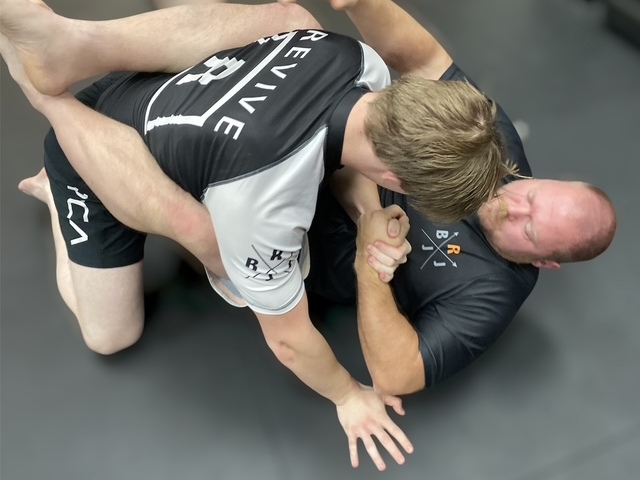
You're racing yourself. A 45 year old white belt isn't racing a 20 year old. You're only trying to beat the person you were last month. Good defense matters even more for older beginners, because it keeps you out of the bad spots where people get hurt. Every escape you learn makes the next round calmer.
You set the pace. Much of the work happens on the ground, at a pace you and your partner control. It's still a contact sport, though. You get swept, you fall and partners put their weight on you, so learning to fall well and picking careful partners matters. Ask to start rounds from the knees instead of standing while you're new. You don't need speed or big jumps to get good at it. You're solving a puzzle with your whole body, and the skill keeps growing the longer you stay with it. Plenty of people train for decades and just adjust how hard they go as the years add up.
Things to look out for
Trying to keep up with the young guys
You match the strongest 22 year old in the room round for round on your first night. You go home wrecked, stay sore for days, and miss the next few classes.
The fix: Slow the round down and hold position. Adults who tap early and take it slow tend to stick around. Work at a pace you could keep for the whole class.
Scrambling with faster partners
A younger, quicker partner gets loose and you chase them, trying to match every movement. That's the hardest fight for an older beginner, because their wind usually lasts longer than yours.
The fix: Take the scramble out of it. Close the space, keep them in front of you or under you, and make them deal with your weight and your grips.
Tapping late
You hang on in a lock or a choke because you think you can wait it out. Older joints don't bounce back as fast, and one stubborn moment can keep you off the mat for a while.
The fix: Tap the moment you know you're caught. Tap early and tap often, then reset and go again.
Skipping the warm up
You walk in from the car and go straight into drilling. Cold shoulders, knees and backs take the strain, and little aches turn into reasons to stop showing up.
The fix: Don't skip the warm up, even when you're running late. Move for a few minutes until you feel warm and loose before the first drill.
Skipping recovery
You train hard on back to back days because it felt fine at the time. The soreness stacks up, your form gets sloppy, and you burn out fast.
The fix: Recovery can take a little longer than it did at 25. Take your rest days seriously, get good sleep, and come back when you feel ready to move well.
Drills you can do at home
Drill 01
Easy bridges
3 sets of 10 with 30 seconds rest. Lie on your back with your feet flat near your butt and your elbows tucked in. Drive your hips up and turn onto one shoulder, chin tucked and your weight off your neck, then come down and go the other way. Go slow and stop if your back or neck complains.
Drill 02
Shrimps
3 rounds of 1 minute with 1 minute rest. On your back, plant one foot, push off it and slide your hips away to the side, ending on your side with your elbow and knee close together. Come back and switch sides. This is the most used escape movement in jiu jitsu.
Drill 03
Seated back fall
2 sets of 8 on a soft surface. Sit with your knees bent, tuck your chin and roll back onto your rounded back, slapping the floor with both arms out at your sides as your upper back touches. Keep your head off the floor every rep. Learning to fall well matters more as you get older.
Frequently Asked Questions
Is 50 too old to start BJJ?+
No. At 50 you just want to be a little choosier about how you train. Pick partners who move with control, tell your coach about old injuries, and skip the hard rounds until you feel ready. You can learn a lot of jiu jitsu just by drilling.
Is there an age limit for BJJ belts?+
No. The IBJJF sets minimum ages for belts, not maximum ones. White belt is open at any age, and how fast you move up is your instructor's call.
How should an older beginner roll?+
Lean on control. Hold position and slow your partner down so you aren't scrambling with someone younger and faster. Pick partners you trust to go light, and tap early. Keep your nails short, wash your gear after every class, and get any rash or skin spot checked and cleared before you roll.
How many classes a week should an older beginner take?+
For most beginners, two or three classes a week is plenty, and once a week still moves you forward. In your 60s, one or two a week is a good start. Leave a rest day between classes while you're still sore, and add more once you bounce back easily. How you recover, your health history and what your coach sees matter more than any number here.
Should I see a doctor first?+
If you have a health condition, check with your doctor before you start. That's good advice for any new kind of exercise, and it matters most if you take blood thinners, have osteoporosis, a joint replacement, or a neck or back problem. Then tell your coach what your doctor said, so they can help you work around it. On the mat, stop right away and get help for chest pain, dizziness or trouble breathing. If a joint pops or swells, stop and get it checked before you train again. If you take a knock to the head, you're done for the day, tell the coach, and no contact until you're cleared. Get checked right away for a headache, vomiting, confusion or symptoms that get worse.
Are You Ready?