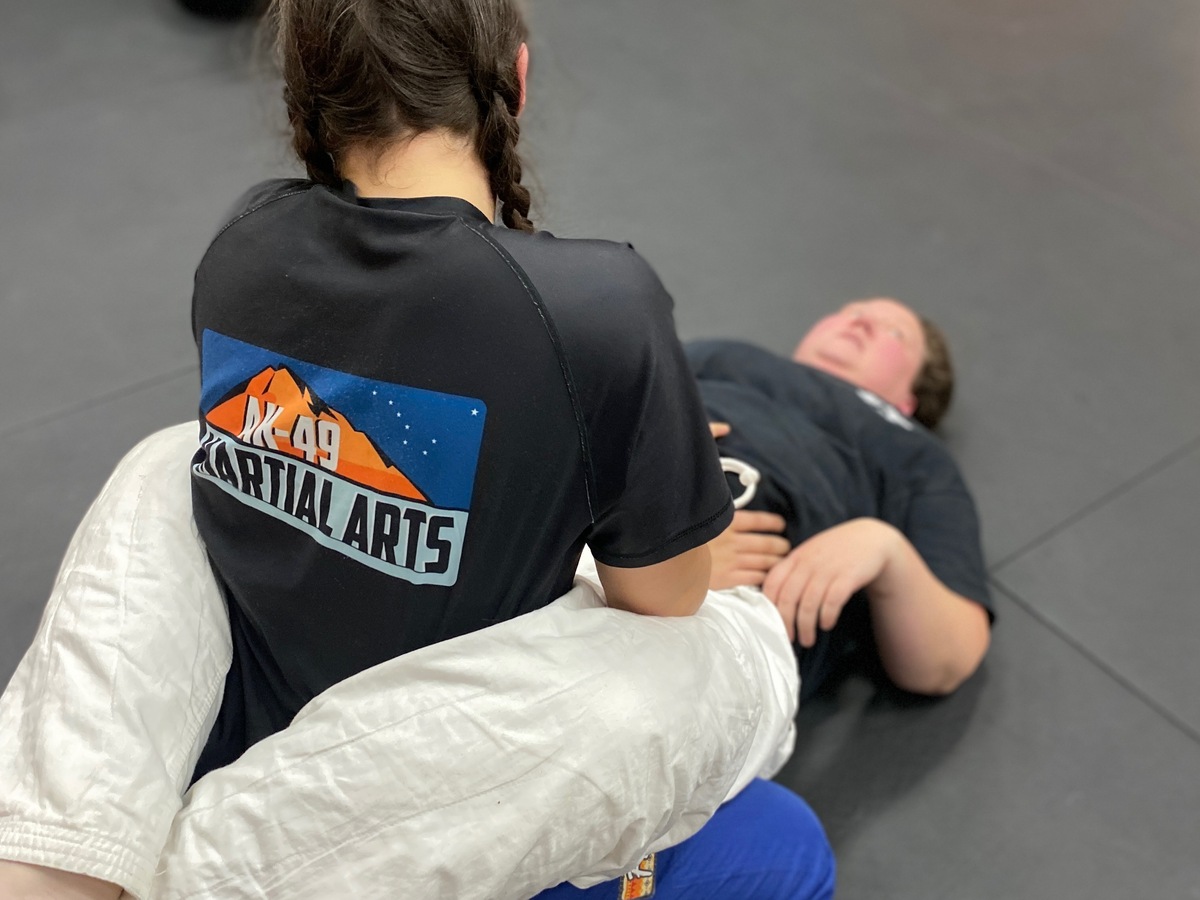
Americana
Brazilian Jiu Jitsu | Submissions
How to Do an Americana in BJJ
The americana, also called the keylock or American lock, is a shoulder lock on a bent arm. You pin their wrist to the mat up by their head with the palm facing up, slide your other hand under their arm to grab your own wrist, and slowly lift their elbow while the wrist stays down. It works best once you've got a steady mount or side control, so the position comes first and the lock second.
- 01
Settle your mount
Before you reach for an arm, get a steady mount. Keep your knees and feet tight to their body, your knees up near their armpits and your weight forward over their chest. If you're sitting back or wobbling, one bridge sends you flying the moment you commit both hands to the lock.
- 02
Get an arm away from their body
Most people on the bottom keep their arms tight, often crossed on their chest. Wait for an elbow to come away from their ribs, or work the arm out, then move it up beside their head above the shoulder line. An arm glued to their side can't be attacked, and grabbing at the head instead just helps them escape.
- 03
Pin the back of the hand
Grab their wrist with a thumbless grip, thumb alongside your fingers. Keep that arm straight and your head forward over their hand, and drive the back of their hand flat to the mat with your whole body. You should feel your weight stacked over the wrist, not your arm doing the work.
- 04
Lock the grip, elbows in
Slide your other hand under their upper arm and grab the wrist of your pinning hand, again with no thumb. Their arm should be bent at about a right angle. Your forearm by their head lies on the mat with your elbow close to their ear. Pull your two elbows in close together so their arm can't straighten or slip out.
- 05
Lift slowly
Keep the back of their hand on the mat the whole time and slide it a few inches down toward their hip, like painting a line on the mat, while you slowly lift their elbow. The wrist stays down and moves along the mat, so their forearm turns in a small arc toward their hip while the elbow comes up a little. Lifting the elbow straight up without that slide loses the bend. Some people tap from a small lift, so take your time. Stop the instant they tap with a hand, a foot or their voice, and never yank the elbow up. A brand new partner may not know when to tap, so with beginners go extra slow and check in.
When to use it
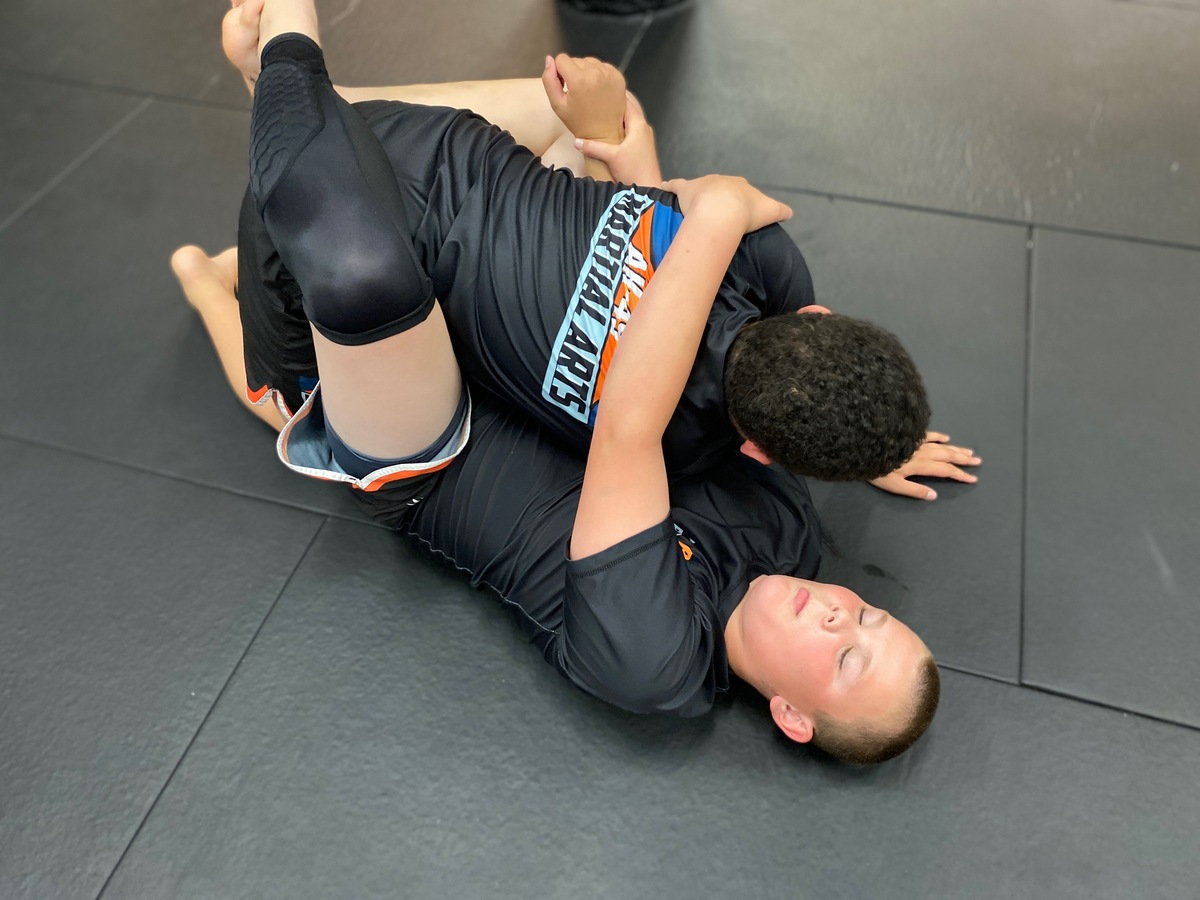
When they push on you from the bottom. From mount or side control, people on the bottom often push on your chest or neck to make space. That arm has left their body, and the hand doing the pushing is the one you pin. It's one of the first finishes beginners learn from the top for exactly that reason. Pushing feels natural when someone is on top of you, so the opening comes up a lot.
To make them move. The americana doesn't always finish, especially against people who know to keep their arms in. Even then, the threat makes them pull their arm back, turn or bridge to get away from it. That movement is what opens up other things your coach will show you, like the armbar or taking the back. Holding the position while you look for the arm is good practice on its own.
Things to look out for
Going for it before the position is solid
You see an arm and dive on it while your mount is loose. Both your hands are busy, so the first bridge rolls you right off, and now you're on the bottom.
The fix: Settle the mount first, knees tight, weight forward. Ask yourself if you could stay there with no hands for a few seconds. If not, fix the position before you touch the arm.
Chasing an arm that isn't free
Their elbows are tight to their ribs and you yank at them anyway, or grab their head to get a reaction. You burn energy, lose your balance and give them room to start escaping.
The fix: Stay patient and keep the pressure on. Wait for an elbow to come away from their body, then take it. A pushing hand is the easiest one to catch.
Leaning on it with bent arms
You lean over the wrist and push with bent arms, your weight going into their chest. They bend the arm back, pull it in, and your hips come up off them so the bridge is easy.
The fix: Lock your arm straight and put your head forward over their hand so your whole body drives the back of their hand to the mat. Your hips stay heavy on them the whole time.
Elbows flared wide
Your elbows drift apart once the grip is on. Their arm straightens or the elbow slides out, and the lock falls apart in your hands.
The fix: Pull your elbows in tight together and keep the elbow by their head close to their ear. Think about squeezing their arm between your forearms.
Wrapping your thumbs
You grab with a C grip, thumb wrapped around. When they pull and twist, the thumb is the weakest part of your hand and the grip opens.
The fix: Use a thumbless grip on both hands, thumbs alongside your fingers. It feels odd for a few weeks and then it's normal.
Yanking the elbow up
You get the lock and jerk the elbow off the mat. Some people's shoulders are much less flexible than others, and a fast lift can hurt them before they can tap.
The fix: Lift slowly and steadily, and stop the second they tap. You have the position, so there's no rush. Let go right away on any tap, including a foot tap or a spoken tap when their hands are trapped.
Tapping late when it's on you
Someone has the lock and you try to wait it out. The shoulder can be hurt without much warning.
The fix: Tap early and reset. To keep it from happening, keep your elbows tight to your body and your hands close to your chest instead of pushing with long arms. If they do pin your wrist, keep your elbow bent and pull it back toward your ribs before they lock the grip.
Drills you can practice
Drill 01
Mount base holds
Kneel over a big pillow or folded blanket as if it's someone you've mounted, knees tight to it and weight forward. Do 4 rounds of 45 seconds with 30 seconds of rest. Every few seconds picture them bridging to one side and post that hand out wide to catch your weight, then come back to center. Keep your hips low the whole time.
Drill 02
Pin and lock in slow motion
Use a rolled up towel or a pillow on the floor as their arm. From your mount position, do 3 sets of 10: grip the wrist with a thumbless grip, drive it to the floor with a straight arm and your head over it, slide the other hand under and grab your own wrist. Check your elbows are close together on every rep.
Drill 03
Shadow the americana
3 rounds of 2 minutes with 1 minute of rest. Picture someone under you who keeps pushing on your chest. Round one, settle the mount and wait for the push. Round two, catch the pushing hand, pin it and lock the grip in slow motion. Round three, picture them pulling the arm back in, let it go and settle the mount again. Solo reps build the shape. The pressure and the feel for when to stop come from slow partner drilling in class with your coach watching.
Frequently Asked Questions
What is an americana in BJJ?+
It's a shoulder lock on a bent arm. You pin their wrist by their head with the palm up, lock your grip under their arm, and lift the elbow slowly while the wrist stays low. It's one of the first submissions beginners learn from the top.
Is the americana the same as a keylock?+
Yes. Americana, keylock and American lock all mean the same submission. You'll hear all three on the mat, depending on who's teaching.
What's the difference between a kimura and an americana?+
They use the same figure four grip on a bent arm, but the arm is bent in opposite directions. In the americana their palm faces up, the hand points toward their head and the wrist is pinned on the mat by their head. In the kimura their hand points toward their hips and gets turned up behind their back.
Is the americana good for beginners?+
Yes. It teaches you to hold a position, wait for an arm and finish slowly, which matters for every submission. Against experienced people it's harder to catch on its own, so it's often used to make them move. That's still useful, because the movement opens other attacks.
Why can't I finish the americana?+
Usually one of three things. Your elbows are apart so their arm straightens, the back of their hand isn't flat on the mat, or your mount is loose and they bridge before you finish. Fix the position first, then the grip, then lift slowly.
Are You Ready?