
Kimura
Brazilian Jiu Jitsu | Submissions
How to Do a Kimura in BJJ
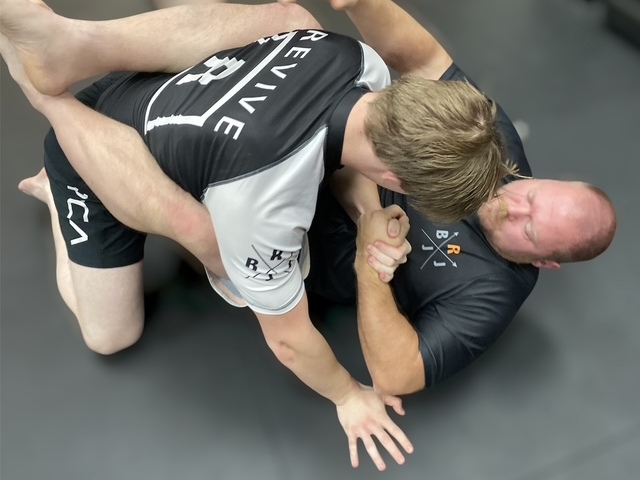
The kimura is a shoulder lock. You hold your partner's wrist with one hand, reach your other arm behind their arm and grab your own wrist, then turn the bent arm behind their back. Doing it right comes down to control: take the wrist before you sit up, keep their arm bent and tight to you, and finish slowly by pulling their elbow while their hand stays put.
Apply it slowly in training so your partner has time to tap, and tap early when it's on you.
- 01
Break their posture
From closed guard, pull your knees toward your chest so their weight tips forward onto their hands. Someone sitting tall in your guard is hard to attack, and someone leaning on their hands gives you an arm. You should feel them get heavy on the mat beside your hips.
- 02
Take the wrist first
Grab the wrist of the hand they've posted and pin it to your body, then push it down toward your hip pocket. This is the step beginners skip. If you sit up without the wrist, they just lock their hands together and the kimura is gone.
- 03
Sit up and reach over
Sit up onto your elbow, then your hand, and open your legs as you come up. Reach your free arm over their shoulder, down behind their elbow, and grab your own wrist. Do it as one move so they don't have time to pull the arm back in.
- 04
Grip low, no thumbs
As a beginner, grip like a hook with your thumbs along your fingers instead of wrapped around. Some coaches teach a wrapped grip too, and what matters most is that the grip stays low, right by their hand. A wrapped thumb can be easier to pry open, and a grip up near the elbow lets them straighten the arm and pull it out.
- 05
Get an angle and keep the arm bent
Lie back down and shrimp your hips out so you're at an angle to them, not lined up square. Pull your knees in again and put your back heel on their hip so they can't sit up and pull free. Their arm stays bent at about a right angle with their hand behind their back, and your elbows stay tight to your body.
- 06
Pull the elbow, slowly
Only start the finish once their wrist is trapped, you're at an angle and their arm is bent behind them. Flare your top elbow out toward their elbow and pull it down toward the mat while their hand stays where it is. Most of the power comes from turning your body instead of cranking with your arms. Go slow so your partner has time to tap, and let go the moment they do.
When to use it
When they put a hand on the mat. When someone in your closed guard posts a hand on the mat beside your hip, that hand is often a kimura, as long as their posture is broken and their elbow isn't tucked tight to their body. It's one of the first submissions people learn from the bottom because the opening shows up so often. If they pull the arm back as you sit up, the same sit up turns into the hip bump sweep, so the work isn't wasted.
As a handle when the finish isn't there. Sometimes you get the grip but the hand won't go behind their back. Beginners tend to crank harder, which wears out your arms and hurts nobody. Keep the grip instead and use it to hold their arm in place while you move to a better spot, or to stop them framing on you from the bottom of side control. When the arm opens up again, you finish.
Things to look out for
Pushing their hand toward their head
You lock the grip and shove their wrist up toward their head. The arm travels a long way before anything happens, your arms burn out, and a strong partner just turns into it and waits.
The fix: Hold their hand still and pull their elbow instead. Flare your elbow toward theirs and pull it toward the mat. It should take a small, slow movement to make them tap.
Sitting up before you have the wrist
You sit up fast and reach for the arm with nothing holding it. They grab their own hands together or wrap your body, drive their shoulder into you and pin you back down. Now you've spent energy and you're flat.
The fix: Wrist first, every time. Pin it to your body and push it to your hip pocket before your shoulders leave the mat. Feel the wrist trapped, then sit up.
Wrapping your thumbs
You grab their wrist and your own wrist with your thumbs wrapped around. When they pull or twist, your thumbs are the first thing to give, and the grip pops open.
The fix: Grip like a hook with your thumbs alongside your fingers on both hands. It feels strange at first. Hold it that way every time you drill and your grip gets stronger with it.
Letting the arm straighten
Your grip slides up toward their elbow and their arm opens out. A straight arm has nowhere to turn, and they pull it back to their body and posture up.
The fix: Keep your grip low by their hand and their elbow tight against your chest. Their arm should stay bent at about a right angle the whole time. If it starts to open, pull it back in before you try to finish.
Lying flat and square
You lock the grip but stay flat on your back, lined up straight under them. There's no room to turn the arm, and their posture comes right back up.
The fix: Shrimp your hips out to an angle, pull your knees in and put your back heel on their hip. You should feel like you're turning sideways under them, with their shoulder low and close to you.
Cranking it fast
You get excited and jerk the arm. The shoulder and elbow can get hurt before your partner even has a chance to tap, and nobody wants to drill with you after that.
The fix: Move the arm slowly and steadily, and stop the second they tap. Practice the finish in drilling with a coach watching before you try it in live rounds, and kids should only finish it under a coach's eye. In class you're practicing the position and the control. The finish only needs to be a slow squeeze.
Tapping late when it's on you
Your partner has it locked and you try to wait it out or muscle out. A kimura doesn't give you a small warning pop, and the elbow can go first.
The fix: Tap early, with your hand on them or the mat, or say tap out loud. Then ask your coach how to defend it. Keeping your elbows tight to your body is where that defense starts.
Drills you can practice
Drill 01
Sit up and post
Lie on your back with your knees bent. Sit up onto one elbow, then up onto that hand, and lift your hips as you reach your other arm across like it's going over a shoulder. Do 3 sets of 10 on each side with a minute of rest. Round one slow, then focus on driving your chest forward over the post hand instead of sitting straight up.
Drill 02
Shrimp to an angle
On your back, plant one foot, push off it and move your hips out to the side so your body turns about 45 degrees, then pull your knees back to your chest. Do 3 sets of 10 on each side. Keep your elbows tight to your ribs the whole time and finish every rep with your knees in, the way you'd pull them in to break someone's posture.
Drill 03
Shadow the kimura
3 rounds of 3 minutes with 1 minute of rest, picturing someone in your guard. Round one, go through it in slow motion: knees in, take the wrist, sit up, reach over, grab your own wrist with a thumbless grip, lie back. Round two, add the shrimp to an angle and the heel on the hip. Round three, if your imaginary partner pulls the arm back, finish the sit up as a hip bump instead.
Frequently Asked Questions
What is a kimura in jiu jitsu?+
It's a shoulder lock. You hold their wrist, wrap your other arm behind their arm and grab your own wrist, then turn their bent arm behind their back. You can do it from the bottom or the top, and it's one of the first submissions most beginners learn.
Can you do a kimura from the bottom?+
Yes, and closed guard is the most common place beginners learn it. Break their posture, take the wrist, sit up and reach over, then lie back at an angle and finish. The wrist has to come first or they'll lock their hands and stop it.
What's the difference between a kimura and an americana?+
Both bend the arm and work on the shoulder, but they turn it opposite ways. In a kimura their hand goes behind their back. In an americana their wrist gets pinned to the mat up by their head, and you slide the wrist down toward their hip while you lift their elbow.
What if they grab their own hands and I can't finish?+
Don't rip at it. Their grip is usually stronger than your pull, and you'll burn your arms out. Keep the kimura grip and use it to move, or switch to the hip bump sweep when they lean back. If they pull the elbow tight to their ribs instead, let it go and work back to your guard rather than forcing it. Your coach will show you the ways to break their grip once the basics are solid.
When should I tap to a kimura?+
As soon as you feel the shoulder getting tight and you can't get out. The kimura can hurt the elbow and shoulder without a lot of warning, so don't wait for it to be painful. Tap early, reset and try again.
Are You Ready?