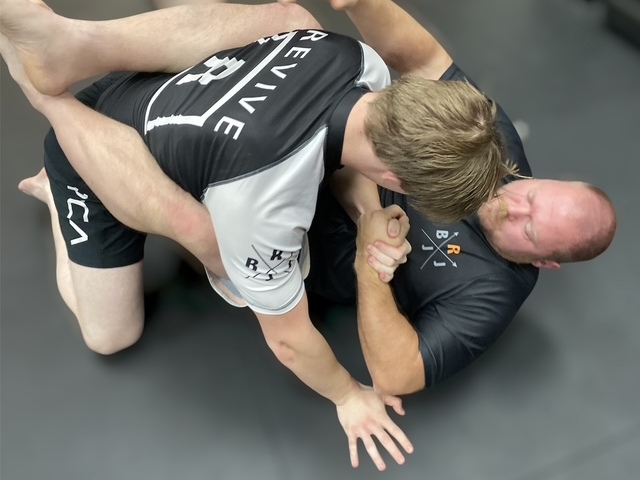
Breakfall
Brazilian Jiu Jitsu | Movement
How to Breakfall in BJJ
A breakfall is how you land safely when you're swept or taken down. You tuck your chin so your head never hits the mat, stay relaxed and round, and slap the mat with your arms at the moment your back lands so the impact spreads out. You learn it from sitting first, then squatting, and only later from standing.
- 01
Start low
Sit on the mat with your knees bent and feet flat. Every breakfall starts this close to the floor, because the falling motion has to feel normal before you add height. Going straight to standing falls is how beginners get hurt. Tell the coach first if you have neck, back or wrist problems, and stop the drill if anything hurts.
- 02
Chin tucked the whole time
Tuck your chin to your chest before you go back, and keep it there until you're done. This is the most important part of every fall, because it keeps the back of your head from whipping into the mat.
- 03
Round your back
Cross your arms in front of your chest and roll back like a rocking chair, one part of your back at a time. The arms stay crossed until your upper back is about to touch, then they open out for the slap. A round back rolls onto the mat. A stiff, flat back lands all at once and knocks the wind out of you.
- 04
Slap as you land
As your upper back touches the mat, slap down with both arms, palms flat, out to your sides at about 45 degrees from your body. The slap and the landing happen at the same moment. Slap with the whole forearm and a flat palm, firm enough to make a sound but not so hard it stings. Breathe out sharply as you land and let your arms relax right after.
- 05
The side fall
Reach one arm across your body, roll back onto that side with your chin tucked and your eyes looking at that foot, and slap the mat with that arm. Keep your feet apart so they don't bang together when they come down. Practice both sides the same amount.
- 06
Get back to your base
After you land, bring your knees and feet back up between you and your partner. In jiu jitsu you keep fighting after you land, so you want to be guard ready the moment you hit the mat.
When to use it
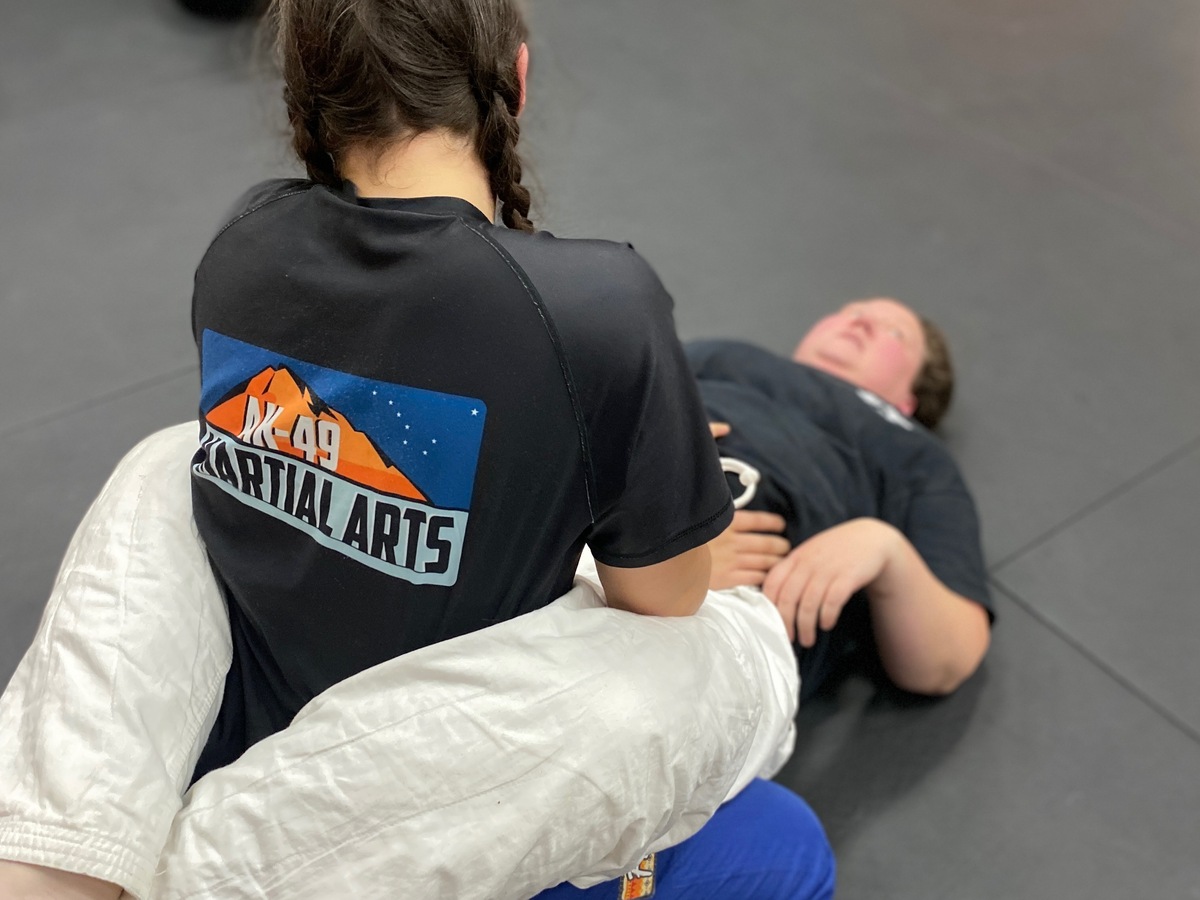
When you get swept or taken down. Any time your partner sweeps you or takes you down in class, you fall. Most beginner falls happen in drilling, when you're the partner the move is being practiced on. A good breakfall lets you take that fall over and over without getting sore or dizzy, which means you can keep drilling. Your partner can also practice harder when they trust you to land well. In drilling you often land with a partner still holding a grip or coming down with you, so keep your chin tucked even while they pull, and let go of a grip rather than post a hand behind you. Falls that go forward use a forward roll, which your coach teaches separately.
Before you train standing. Learn to fall before you do any standing takedown work. Standing rounds mean you'll hit the mat from higher and faster than anything you've practiced on your knees. If falling is already automatic, you can think about the grip fight and your feet instead of worrying about landing. It also helps outside the gym, on ice or a slippery step.
Things to look out for
Head snapping back
Your chin lifts as you go over and the back of your head bounces off the mat. It rattles you and can cause a real head injury.
The fix: Tuck your chin before you move and keep it tucked until you've stopped. If your head touches the mat, go back to falling from sitting until it doesn't. If your head hits hard, stop for the day, tell the coach and do no contact until you're cleared, and get checked right away for a headache, vomiting, confusion or symptoms that get worse.
Reaching back to catch yourself
Your hand shoots out behind you with a straight arm to stop the fall. All your weight lands on the wrist or elbow, which is how people get hurt falling, on the mat or on ice.
The fix: Give your arms a job. They cross in front, then slap out to your sides as your back lands. If you catch yourself reaching, slow down and do 10 seated falls thinking only about the arms.
Slapping at the wrong time
You slap before you land or after you've already hit. Early, and your arms take the hit with nothing behind it. Late, and your back takes the whole fall.
The fix: Slap at the same moment your upper back touches. Start slow from sitting until you hear the slap and feel your back land together.
Going stiff
You tense up and fall like a board. You land flat and hard, knock the wind out of yourself and feel it the next day.
The fix: Stay round and relaxed through the whole fall. The only tight moment is a quick brace of your stomach as you slap and land, about as tight as if someone were about to poke you in the belly, then relax again right away.
Holding your breath
You hold your breath as you go over. When you land, the air gets forced out of you and you end up gasping.
The fix: Breathe out with a short sharp breath as you hit the mat. Some people make a small sound to remind themselves.
Feet crossing on a side fall
Your legs come down together and your ankles or knees knock into each other. It hurts, and it can twist a knee.
The fix: Keep your feet apart as you land. Do a few slow reps and watch where your feet come down.
Starting too high
You skip straight to falling from standing. Without the habit built yet, your head comes back or your arm reaches out, and you get hurt learning.
The fix: Sit, then squat, then stand. Stay at each height until it's automatic and boring, then move up.
Drills you can do at home
Drill 01
Seated back falls
On a mat, carpet or bed. 3 sets of 10 with 1 minute of rest. Set one, roll back slowly with your arms crossed and chin tucked, no slap, just checking that your head stays up. Set two, add the slap as your back lands. Set three, breathe out sharply with every slap and come straight back up to sitting.
Drill 02
Side falls from a squat
3 sets of 8 on each side, alternating sides, with 1 minute of rest. Squat low, reach one arm across your body, roll back onto that side and slap. Focus on chin tucked, eyes on that foot, and feet apart as you land. Only move on to falling from a higher squat once your head never touches and your arms slap on time without thinking about it.
Drill 03
Fall and get back to base
4 rounds of 1 minute with 30 seconds of rest. Do a back fall or side fall, then immediately bring your feet up as if someone is standing over you, then sit back up and go again. Round by round, speed up a little, but stop and slow down if your head touches the mat.
Frequently Asked Questions
What is a breakfall?+
It's the way you land when you fall, so the impact spreads across your back and arms instead of your head, wrist or elbow. You tuck your chin, round your back and slap the mat as you land. It comes from judo, and every grappling gym teaches some version of it.
Why do you slap the mat?+
The slap gives your arms something to do, so you don't reach out and land on your wrist. It also helps spread the force of the fall and goes with a quick brace of your stomach right as you land. Done right, it makes a loud sound and doesn't hurt your hands.
Do you need breakfalls for jiu jitsu?+
Yes. You'll get swept and taken down in class, and in drilling you'll be the person falling over and over. A good breakfall keeps your head and joints safe and lets you keep training without getting beat up.
Can I practice breakfalls at home?+
Yes, from sitting and squatting on something soft like a mat or carpet. Don't practice falls from standing at home on a hard floor. Leave those for the gym, where there are mats and a coach watching your form.
How long does it take to learn to breakfall?+
Most people get the basic back fall in a few classes. Making it automatic, so you do it without thinking when you're surprised, takes regular practice. A few minutes at the start of each session goes a long way.
Are You Ready?