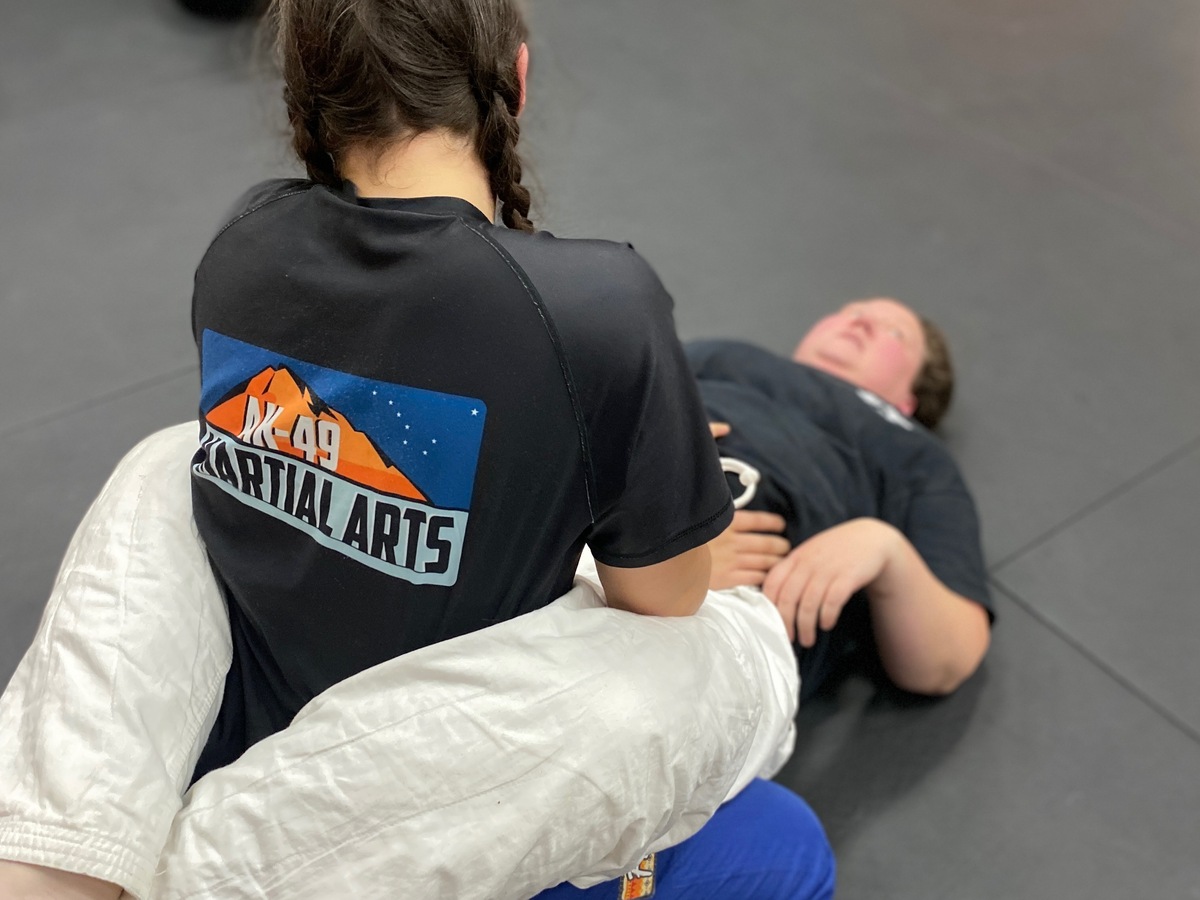
Bridge
Brazilian Jiu Jitsu | Movement
How to Bridge in BJJ
The bridge is driving off your feet up onto one shoulder to lift your hips and knock someone on top of you off balance. It's the first half of an escape: bridge to move them, then curl up and get your elbows and knees back inside, because a bridge alone rarely finishes the escape. Keep your feet close, your elbows tight to your body, and go up over a shoulder instead of straight up.
The bridge turns into a full escape on the Mount Escape: Bridge and Roll page.
- 01
Feet in close
On your back, bring both feet in toward your butt with your feet flat on the mat. Close feet give you a short, strong push. If your feet are far away, your hips barely leave the mat and they don't feel a thing.
- 02
Elbows tight to your body
Keep your elbows in close to your ribs, pointing at the person on top instead of out to the sides or up at the ceiling. Elbows in protect your arms and keep them from climbing higher up your chest. Your arms stay bent and strong instead of reaching out where they can be grabbed.
- 03
Trap a side first
If they're in mount, trap an arm and the foot on the same side, the side you're bridging toward. Hold their wrist and elbow tight to your chest, and put your foot on the outside of their foot on that same side. Then you bridge toward the trapped side, where they have no hand or foot to post. Otherwise they post a hand or a foot out and stop you.
- 04
Bridge up over a shoulder
Turn your head and look toward the mat on the side you're going, then drive your hips up and over that shoulder. Keep your chin tucked and your head light on the mat. Your feet stay flat and dug in, so you carry their weight instead of sliding. It should feel like you're lifting them up and over your shoulder, not pushing them straight up.
- 05
Go all the way up
Drive until your hips are fully up, with your weight on your shoulder and your feet. A half bridge just jiggles them. A full one lifts them high enough that they have to put a hand down to stay on. It works best when their weight shifts forward, like when they reach for your neck or lean in.
- 06
Then curl up
Start the curl the moment they come back down. Round your shoulders forward, keep your head tight to their chest and shrimp your hips away so your elbows and knees can come back in. Their cross face and your jaw are what they want, so hiding your head takes that away.
- 07
Get your elbows and knees back inside
Use the space you just made to get your elbows and knees back between you and them, then work back to your guard. The bridge makes the space and the curl uses it.
When to use it
Stuck under mount. Mount is where you'll bridge most as a beginner. Trap the arm and foot on one side, look that way and bridge up over that shoulder. If they don't have a hand to put down, the bridge turns into the bridge and roll and you come up in their guard. If they post and stay on, the bridge still lifts them so you can curl up and get an elbow inside.
When they move or you're under side control. Bridge when they switch positions, like going from side control to mount, because that's when they're least stable. Under side control, get your forearm frames on their hip and neck first, then bridge into them to move their weight for a moment. Use that moment to shrimp your hips away and slide a knee in. Bridging while they're settled and balanced burns your energy for nothing.
Things to look out for
Bridging and stopping there
You bridge, they ride it, and you drop back flat where you started. Do that over and over and you'll be tired in a minute with nothing to show for it.
The fix: Bridge to move them, then curl up and get your elbows and knees back inside. Think of the bridge and the curl as one move.
Pushing on their chest with straight arms
You shove up with locked arms while you bridge. It burns energy, it doesn't escape, and a straight arm out in front of you is how you get armbarred.
The fix: Keep your elbows bent and tight to your body. Bridge to move them, then frame with your forearms once there's space.
Bridging straight up
You lift your hips straight toward the ceiling. They go up and come right back down in the same place, still on top of you.
The fix: Go up onto one shoulder with a turn. Look at the mat on the side you're going and drive over that shoulder.
Feet too far away
Your feet slide out or sit far from your butt, and the foot you drive off isn't dug in. The bridge flops and they barely move.
The fix: Bring your heels in close before you start and keep your feet planted. You should feel the push come from your feet and up through your hips.
Elbows flaring out
Your elbows drift out to the sides or up toward the ceiling. They slide up higher on your chest and your arms are easy to grab and isolate.
The fix: Keep your elbows in and pointing at them. Picture holding a ball between each elbow and your ribs.
Going up onto your head
You arch back onto the top of your head and neck instead of your shoulder. It puts strain on your neck and the bridge goes the wrong direction.
The fix: Roll onto your shoulder, with your head turned to the side. Your head stays light on the mat, and your shoulder and feet hold your weight.
Drills you can do at home
Drill 01
Solo bridge
Lie on your back with your heels close to your butt and your elbows tight. Bridge up over your right shoulder, come down, then over your left. Do 3 rounds of 1 minute with 1 minute rest. Round one slow, checking the feet and elbows. Round two, look at the mat on the side you're going. Round three, curl up each time you come down. In class you'll drill the trap and bridge with a partner who sits in mount and gives light resistance, and when you're the one on top, let them roll you instead of fighting it.
Drill 02
Bridge and turn to your knees
Bridge up over one shoulder, then keep turning and bring your knees under you so you end up on your hands and knees. Lie back down and go the other way. Do 3 sets of 10, alternating sides, with 1 minute rest. This drills the bridge leading into a turn to your knees, one of the ways to get off your back from side control once their weight is moving.
Drill 03
Single leg bridge
Lie on your back with one foot planted and the other leg straight up in the air. Drive your hips up off the planted foot, keep your hips level, hold for a second and lower slowly. Do 3 sets of 10 each leg with 30 seconds rest. It builds the one leg drive you use when the other foot is trapping their foot.
Frequently Asked Questions
What is a bridge in BJJ?+
It's driving off your feet up onto one shoulder to lift your hips and knock someone on top of you off balance. It's one of the first movements you learn, along with the shrimp. You use it in almost every escape from the bottom.
Should you bridge straight up or to the side?+
To the side, up onto one shoulder with a turn. A bridge straight up rarely helps, because they come right back down still on top of you. Look toward the mat on the side you're going and drive over that shoulder.
Why doesn't my bridge get them off?+
A bridge alone doesn't finish it. Bridge to knock them off balance, then curl up and get your arms and knees back inside. If you're in mount, trap their arm and foot on that side first so they can't post.
What is the upa?+
It's the name for the bridge in a mount escape where you trap their arm and foot on one side and then bridge and roll them over. It's often one of the first escapes beginners learn. The bridge on this page is the movement inside it. Roll them over the trapped side, and you land in their guard. Sit back with your hips low and your back straight as you land so they can't pull you right back down.
Should I bridge on my head like a wrestler?+
No. Wrestling and gymnastics use the bridge differently, so don't copy that look. In jiu jitsu you go up onto a shoulder, which keeps your neck safe and sends them over to the side.
Are You Ready?