
How to Tap Safely
Brazilian Jiu Jitsu | Submissions
How to Tap Safely in BJJ
To tap, pat your partner firmly two or three times where they can feel it, tap the mat or use your foot if you can't reach them, or say "tap" out loud. Tap as soon as a lock is on or a choke is closing, before it hurts, and when your partner taps you, let go right away. Tapping is how people of every size and age train hard together and come back the next day.
How to tap
- 01
Tap your partner
Pat your partner firmly two or three times with an open hand, anywhere you can reach: their arm, shoulder, leg or back. Tapping their body is best, because they feel it even when they can't see your hand. Make it loud and obvious. A light one finger pat can get missed in the middle of a round.
- 02
Tap the mat if you can't reach them
If your hand can't get to your partner, slap the mat hard, at least twice, so they hear it. If you can shift a little to reach their body, do that, because a tap they can feel is harder to miss than a sound. When the room is loud, slap the mat and say it at the same time.
- 03
Use your foot
Sometimes both arms are trapped, like in a tight choke from behind or when someone is holding your wrists. Tap the mat or your partner with your foot, at least twice. It counts the same as a hand tap.
- 04
Say it out loud
Say "tap" loudly, more than once. Your voice is always a legal tap, and it's the fastest one when your arms and legs are tied up. In live rounds, saying it while you tap makes it easy to catch. A yell or a sound of pain counts as a tap too, and your partner should stop.
- 05
Let go the moment they tap
When your partner taps, open your grip and release right away. Don't add an extra squeeze or a last crank to make a point. They trusted you with their arm or neck, and letting go fast is how you earn that trust back. If you're not sure it was a tap, let go and ask.
- 06
Finish slowly in practice
When you're the one putting on the submission, bring it on slowly and steadily. Pressure that builds slowly gives your partner time to feel it and tap. A fast snap takes that time away, and that's how training partners get hurt.
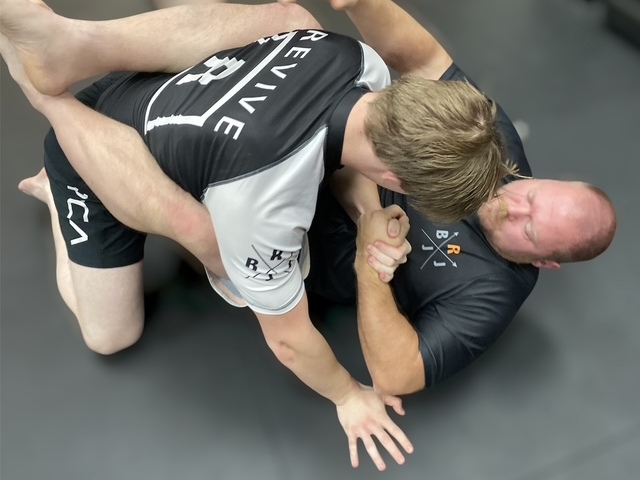
When to tap
Joint locks: tap when it's locked. Tap as soon as you feel the lock is on and you can't get out, before it starts to hurt. Heel hooks and some knee locks often don't hurt much until something is already damaged. Armbars, shoulder locks and ankle locks usually give some warning, but it can be short if the lock comes on fast, so don't wait for pain. Neck cranks and anything that bends your spine or twists your neck get the same rule: tap early. With a heel hook, tap as soon as your heel is caught and you feel it start to turn, and don't spin or explode to escape it, because that twist is what hurts the knee. If you feel anything pop, grind or feel strange, tap right then.
Chokes: tap before you fade. A choke that's only uncomfortable, where you can still breathe and think, is something you can stay calm in and work to escape. A choke that's closing and about to put you to sleep is a tap, every time. If your vision changes or you start to feel light headed, tap immediately. As a beginner, if you can't tell which one it is, tap and ask your coach afterward. If you're the one choking and your partner goes limp or stops moving, let go right away, roll them onto their side, check that they're breathing and answering you, and call the coach over.
Things to look out for
Waiting for it to hurt
You hold on because it doesn't feel that bad yet. With joint locks the damage can come before the pain does, and one stubborn moment can keep you off the mat for weeks.
The fix: Tap when you know you're caught and can't get out, before pain. Think "locked means tap." When in doubt, tap and sort it out later. If something does get hurt, stop rolling and tell the coach right away.
A soft tap they can't feel
A quick one finger pat on their back, or a tap on the mat behind them, gets lost when you're both moving and breathing hard. Your partner keeps squeezing because they honestly don't know you tapped.
The fix: Tap firmly two or three times with your whole hand, on their body if you can reach it. If they don't stop, tap harder and say "tap" out loud. If they still don't let go, yell for the coach. The same goes for anything that isn't a submission, like a tweaked knee in a scramble: say "stop" out loud and your partner stops.
Freezing instead of tapping
You get caught, panic and lock up, or you try to invent an escape you've never learned. The submission keeps getting tighter while you think about it.
The fix: If you don't know the escape, tap. Then ask your coach or partner to show you the escape after the round, and drill it so next time you have an answer.
Treating the tap like losing
Pride keeps you from tapping to a newer person, a smaller person or someone you want to beat. That's the round people get hurt in, and nothing was riding on it.
The fix: Treat a tap as part of learning. Everybody who trains taps a lot, and that's how they got good. Tap, then reset and go again.
Cranking the finish
You get the armbar or the choke and snap it on fast because you're excited. Your partner has no time to tap, and a fast crank on a training partner is how arms and necks get hurt.
The fix: Get the position, then bring the pressure on slowly. Listen and feel for the tap the whole time you're finishing.
Letting go slowly
Your partner taps and you keep the grip for another second, or you loosen it bit by bit. To them it feels like you didn't hear the tap, and they stop trusting you.
The fix: The instant you feel or hear a tap, open your hands and release the pressure. Then give them space to pull their arm or head back out.
Frequently Asked Questions
How do you tap out in jiu jitsu?+
Pat your partner firmly two or three times with your hand, anywhere they can feel it. If you can't reach them, slap the mat hard or tap with your foot. You can also say "tap" out loud, and your partner lets go right away.
Can you tap with your feet?+
Yes. If both arms are trapped, tap the mat or your partner with your foot, at least twice. Saying "tap" out loud works too, and it's often the fastest way when your arms and legs are tied up.
When should a beginner tap?+
As soon as you're caught and don't know how to get out. Don't wait for a joint to hurt or for a choke to make you dizzy. If you're not sure whether to tap, tap, and ask your coach about it after the round.
Is tapping out embarrassing?+
No. Everybody who trains taps, and it's how people learn without getting hurt. Nobody will think less of you for tapping early. You get to train again the next day.
Do kids learn how to tap?+
Yes, it's one of the first things they learn. Kids BJJ at AK-49 Martial Arts is for ages 6 and up and teaches chokes from the beginning, so kids learn to tap clearly and to let go right away when a partner taps.
Are You Ready?