
Is BJJ Good for Self Defense
Brazilian Jiu Jitsu | Self Defense
Is BJJ Good for Self Defense
Brazilian Jiu Jitsu is useful for self defense because it teaches you to control someone, get out from under them and get back to your feet without needing to out strike them, and you practice it against a partner who's really resisting. Real self defense starts earlier, with awareness of your surroundings and staying out of bad situations. Once it turns physical, the skills only hold up after regular training over time, so one class won't get you there.
Ending up on your back? See When a Fight Goes to the Ground.
What BJJ gives you
- 01
Control without striking
Jiu jitsu teaches you to hold someone down and keep them from hurting you without throwing a punch. You learn to get to a strong position on top and stay there with your weight and your hips. That's useful when you'd rather stop someone than injure them.
- 02
Getting out from underneath
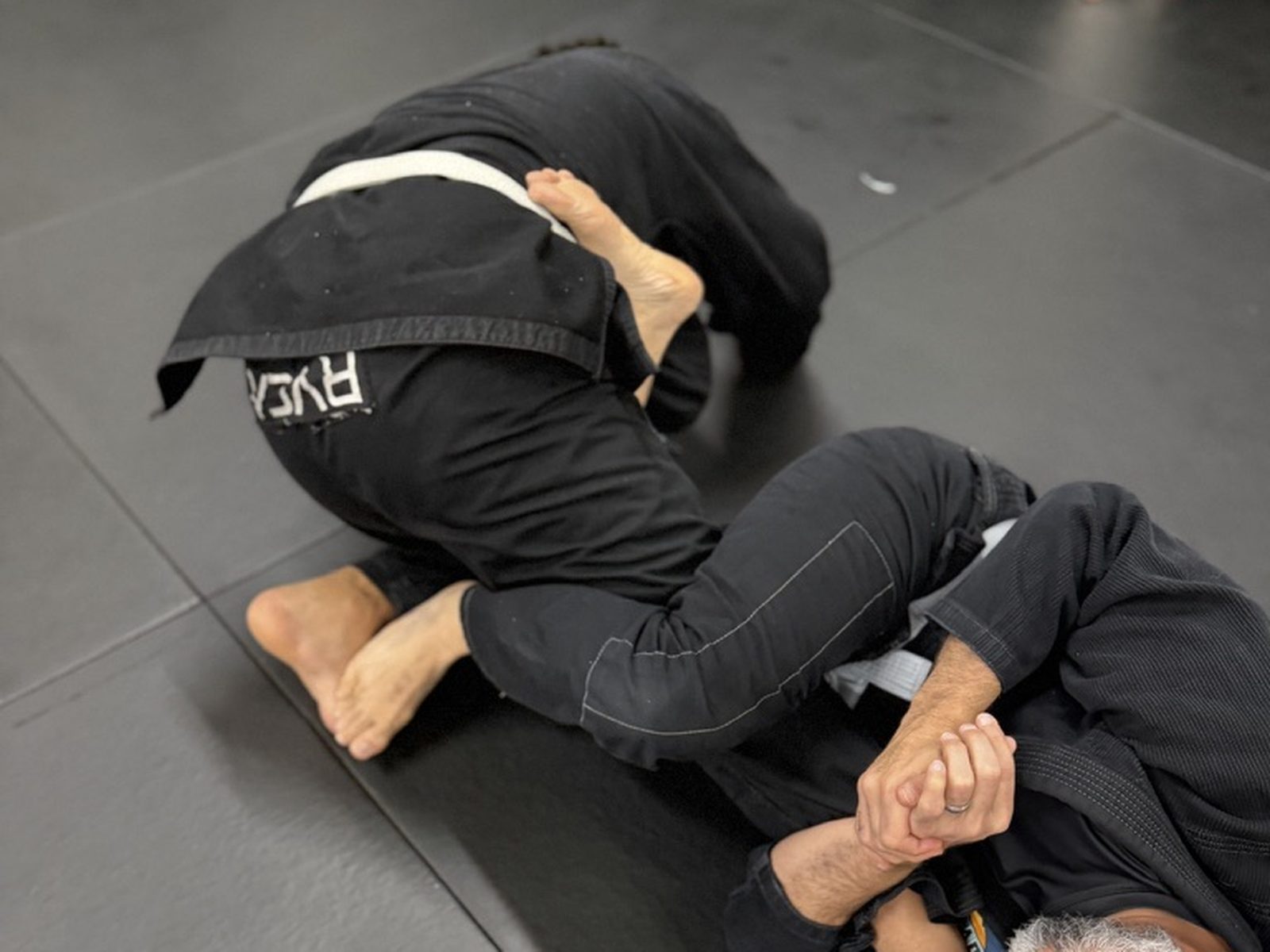
A lot of trouble starts with a shove or a trip that puts you on the ground. Mount is the worst spot to be stuck in, because they can strike down with their weight behind it, and someone on your back can choke you. Jiu jitsu drills escapes like the bridge and roll from mount over and over: trap one arm and the foot on the same side, bridge up and roll them over that side. Keeping them close to your chest while you work also makes it hard for them to hit you.
- 03
Not getting hit on the bottom
If you're on your back, the first job is protecting your head and neck, with your chin tucked and your hands close. Either keep them tight to you with your hands inside and your elbows in, which takes away the room to swing, or keep them far away with a foot on their hip so they can't reach you. Try not to let them sit up in the middle with room to swing. If they're standing and you're down, stay on your hip with your knees in and keep turning to face them.
- 04
Getting up safely
The technical stand up gets you off the ground without leaning your face toward the other person. If they're close, push them back with a foot first. Then sit up on one hip, post a hand behind you, keep the other hand up in front of your face, lift your hips and swing your leg back under you so you land in your stance, out of reach. Every good self defense plan on the ground ends with getting up and getting away.
- 05
Training against resistance
In class you drill a move, then try it on a partner who's really trying to stop you. That's how you find out what actually works for you. It also gets you used to someone heavy on top of you, so the panic of a real struggle feels a little more familiar and you can keep breathing and thinking.
Where self defense starts
Awareness comes first. Real self defense is knowing your surroundings and what you do and don't do to stay out of bad situations. The most common thing that cuts your awareness is distraction: your phone, earbuds, walking on autopilot. If something feels wrong, trust it and choose your safety over being polite. Spotting trouble early and leaving is the skill that keeps most people safe.
Training over time, with honest limits. Once it turns physical, one class won't prepare you for someone strong and athletic. The escapes and get ups only work under stress after months of regular training against resisting partners. Jiu jitsu is also built for one person who's unarmed. Against a weapon or more than one attacker, distance and getting away are the better answers.
Things to look out for
Treating jiu jitsu as a replacement for awareness
You train hard and start to feel like you can handle anything, so you stop paying attention to where you are. A hit you never saw coming is hard to stop, no matter what you know.
The fix: Keep the basics: head up, phone away when you're walking, notice what looks out of place. Paying attention and leaving early come first.
Pulling guard on the street
In class, sitting down to your guard is normal, because nobody is punching or kicking you. On a parking lot, your back on the pavement with someone free to strike or kick you is a bad spot. Closed guard is a lot less safe when punches are allowed.
The fix: Treat the ground as somewhere you end up, never somewhere you go on purpose. If you do end up there, protect your head and work to get up.
Staying on the ground to win
Sport habits say keep working for the submission or the better position. In real trouble, a long battle on the ground just keeps you there longer, and you can't see who else is around.
The fix: Get to a safe spot, then get up and get away. Staying on top and leaving beats winning the exchange.
Forgetting about strikes
Jiu jitsu classes don't include punches or kicks, so it's easy to forget the guard you play in class leaves your face open. On the street, the other person isn't following those rules.
The fix: Know that gap is there. Adding kickboxing teaches you to keep your hands up, see strikes coming and manage distance on your feet.
Thinking a few classes make you ready
Some people take a couple of classes or a one night seminar and feel prepared. Under real stress, a move you've done a handful of times won't show up, and false confidence can put you somewhere worse.
The fix: Plan on training regularly for months. The moves hold up when you've repeated them against a partner until they happen without thinking.
Grabbing hold when you could leave
Once you know how to grapple, it's tempting to close the distance and tie someone up. If they have a weapon or a friend, getting close puts you next to the thing that can hurt you most.
The fix: Your goal is to get home safe. If you can walk away or put distance between you, do that first.
Frequently Asked Questions
Is BJJ good for street self defense?+
It helps a lot with one part of it. You learn control, escapes and how to get up off the ground, and you practice against people who resist. Awareness and avoiding the fight come first, and jiu jitsu has hard limits, like weapons and more than one attacker.
How long does it take to learn self defense with BJJ?+
There's no honest number of classes. The skills come from training regularly until the moves hold up under stress, and that takes months. Some escapes take weeks or even months of drilling before they click.
Can one self defense class prepare me?+
No. Once it turns physical, one class won't prepare you for someone strong and athletic. A first class is a good start, and it's free at AK-49 Martial Arts, but the real skill comes from coming back.
What if there's more than one attacker or a weapon?+
Jiu jitsu is built for one person who's unarmed. Grappling with one person leaves you open to a second, and getting close to a weapon is the worst place to be. Awareness, distance and getting away are the answers there.
Should I train striking too?+
It helps, because jiu jitsu doesn't teach punches, kicks or how to defend them before you're grabbing hold. At AK-49 Martial Arts you can train Adult Kickboxing alongside Brazilian Jiu Jitsu, and our No Gi classes are a hybrid of Brazilian Jiu Jitsu and wrestling. The wrestling side covers the part that comes before the ground: clinching, sprawling and stopping takedowns.
Are You Ready?