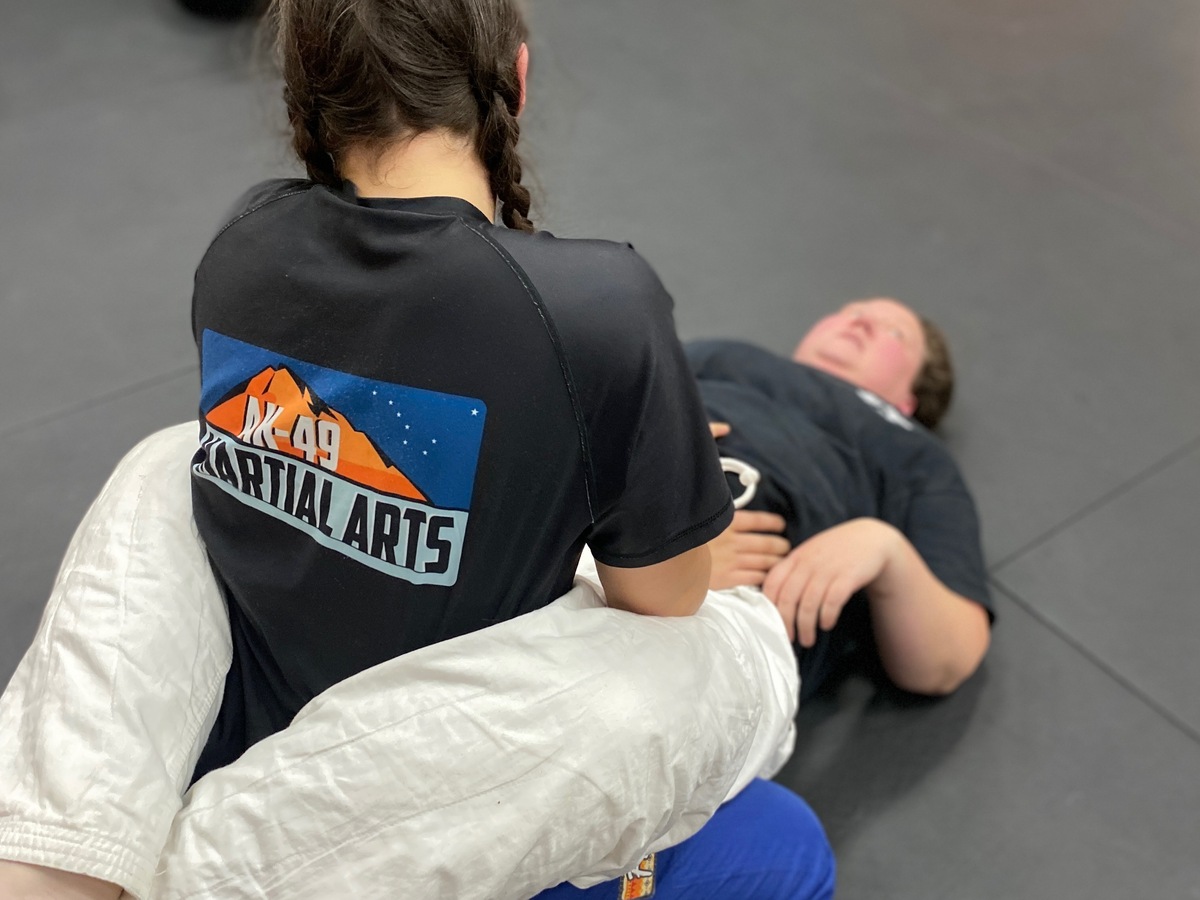
Mount Escape: Bridge and Roll
Brazilian Jiu Jitsu | Escapes
How to Escape Mount With the Bridge and Roll
The bridge and roll, often called the upa, is the first mount escape most people learn. You trap one of their arms and the foot on the same side, then bridge up and over that shoulder so they have no hand or foot to catch themselves, and you roll them over and land on top in their guard. The trap is what makes it work, and the bridge goes over your shoulder with a twist instead of straight up.
- 01
Elbows in, protect your neck
Before anything else, keep your elbows tight to your ribs and pointed at them, with your hands up near your chest and neck so a choke or arm triangle can't slide in. If a choke does lock up, tap early. Elbows flared out or reaching up let them slide higher on your chest and isolate an arm. Tight elbows keep you safe while you wait for your chance.
- 02
Feet in close
Bring your heels in near your butt with your feet flat and planted. Your power comes from your feet, and you can't bridge with your legs stretched out.
- 03
Trap an arm
When they reach for your neck or put a hand on the mat, grab that arm just above the elbow and pin it tight to your chest. Bring your body to the arm instead of yanking the arm to you. If that arm is free, they'll post the hand on the mat and stop the roll.
- 04
Trap the foot on the same side
Step your foot on that same side over the outside of their foot so your instep hooks their ankle and it can't slide out. Just laying your foot on top isn't enough, because they'll pull the leg out or step wide. Now that whole side of their body has nothing to catch them.
- 05
Bridge over the shoulder
Turn your head toward the trapped side and drive off your feet, bridging up onto that shoulder with a twist. Lift so you carry their weight, high and diagonal over your shoulder. Straight up just bounces them, and they're still on top of you.
- 06
Roll and come up with good posture
Follow the roll all the way over and land on your knees inside their legs, usually in their closed guard or half guard depending on where their legs end up. Sit your hips back, keep your back straight and your elbows in so they can't pull you down. You've gone from the worst spot to the top, so take a second to settle.

When to use it
When they lean forward or reach. The bridge and roll works best when the person on top is leaning forward, high on your chest, or reaching for your neck or posting a hand. All their weight is up near your head, and that reaching arm is easy to trap. It's one of the first escapes beginners learn because people on top do this a lot. If they sit back on your hips instead, there's a different escape for that.
Paired with the elbow knee escape. When they sit back on your hips, your coach will show you the elbow knee escape, where you shrimp and get your knee back inside. The two work together. A hard bridge makes them post or lean back to stay on top, and that opens the shrimp. If you shrimp and they lean forward to stop it, the bridge and roll is back on.
Things to look out for
Bridging without trapping the arm
You bridge hard with their arm free. They post that hand on the mat, catch their weight and stay on top, and you've used up your energy.
The fix: Trap the arm and the foot on the same side first, then bridge toward that side. Rolling toward their free arm lets them post and stop it. If you can't trap the arm yet, keep your elbows in and wait for them to reach.
Not trapping the foot
You trap the arm but leave their foot loose, or just lay your foot over it. As you bridge, they step that leg out wide and use it as a kickstand.
The fix: Hook your foot over the outside of theirs so it's stuck. Feel their foot pinned against your foot before you bridge.
Bridging straight up
You push your hips straight up to the ceiling. They float up, come back down and they're still on top of you.
The fix: Turn your head toward the trapped side and bridge high and diagonal, over your shoulder. Think about putting them on the mat beside your head.
Pushing them off with your arms
You bench press their chest or hips. Your arms get long, you get tired in seconds, and long arms are easy for them to grab and attack.
The fix: Keep your elbows tight and let your legs and hips do the work. Your arms only hold the trapped arm.
Sliding your hips along the mat
Your bridge is low and your hips slide sideways instead of lifting their weight. Beginners may tip over, but anyone experienced just rides along.
The fix: Feet planted close, lift your hips high enough to carry their weight, then turn. You should feel them come off the mat for a moment.
Trying the same bridge over and over
It didn't work, so you do it again and again. They're ready for it now, and you're worn out.
The fix: Switch to the elbow knee escape when the bridge stalls, then come back to the bridge when they react.
Holding your breath
Being mounted is heavy, and you tense up and stop breathing. You panic, gas out and give up your arms.
The fix: Breathe out as you bridge and breathe steadily while you wait. Stay calm, elbows in, and wait for your moment to trap.
Drills you can practice
Drill 01
Shoulder bridges
Lie on your back with your feet close to your butt. Turn your head to one side and bridge up onto that shoulder, then come back down and go the other way. Do 3 sets of 10 to each side with 1 minute of rest. Focus on feet planted and driving through them, and finish each rep turned onto your shoulder, not flat.
Drill 02
Trap and bridge
Same start, now picture someone mounted on you. Grab an imaginary arm above the elbow and pull it to your chest, step your foot out to trap their foot, then bridge over that shoulder and roll up onto your knees. Do 3 sets of 6 to each side. Go slow on the first set and check every trap before you bridge.
Drill 03
Bridge and shrimp
3 rounds of 2 minutes with 1 minute of rest. Picture someone in mount. Bridge over one shoulder, then come down and shrimp your hips out the other way, then bridge again. Keep your elbows tight the whole time. Round three, finish every bridge with a full roll up to your knees.
Frequently Asked Questions
What is the upa escape?+
It's another name for the bridge and roll. You trap the arm and foot on one side, bridge over that shoulder and roll them off you. You'll hear both names in class.
Why do you trap the arm and the foot?+
Those are what they'd use to stop the roll. A free hand posts on the mat and a free foot steps out wide. Trapping both on the same side leaves that whole side with nothing to catch them.
What if they sit back on my hips?+
The bridge and roll is harder then, because their weight is low and they're not reaching. Use the elbow knee escape instead, where you shrimp and get your knee back inside. Your coach will show you how the two escapes work together.
I'm much smaller than my partner. Will the bridge work?+
It can, because you're not lifting them with your arms. You're using your legs and hips, and with the arm and foot trapped they've got nothing to stop the fall. Timing matters more than strength, so wait for them to lean forward or reach.
Is the bridge and roll good for self defense?+
It's taught in self defense courses because being pinned on your back is a common problem. Like any self defense, it takes regular training before you can do it under pressure.
Are You Ready?