
Turtle
Brazilian Jiu Jitsu | Positions
Turtle in BJJ: What to Do From Turtle
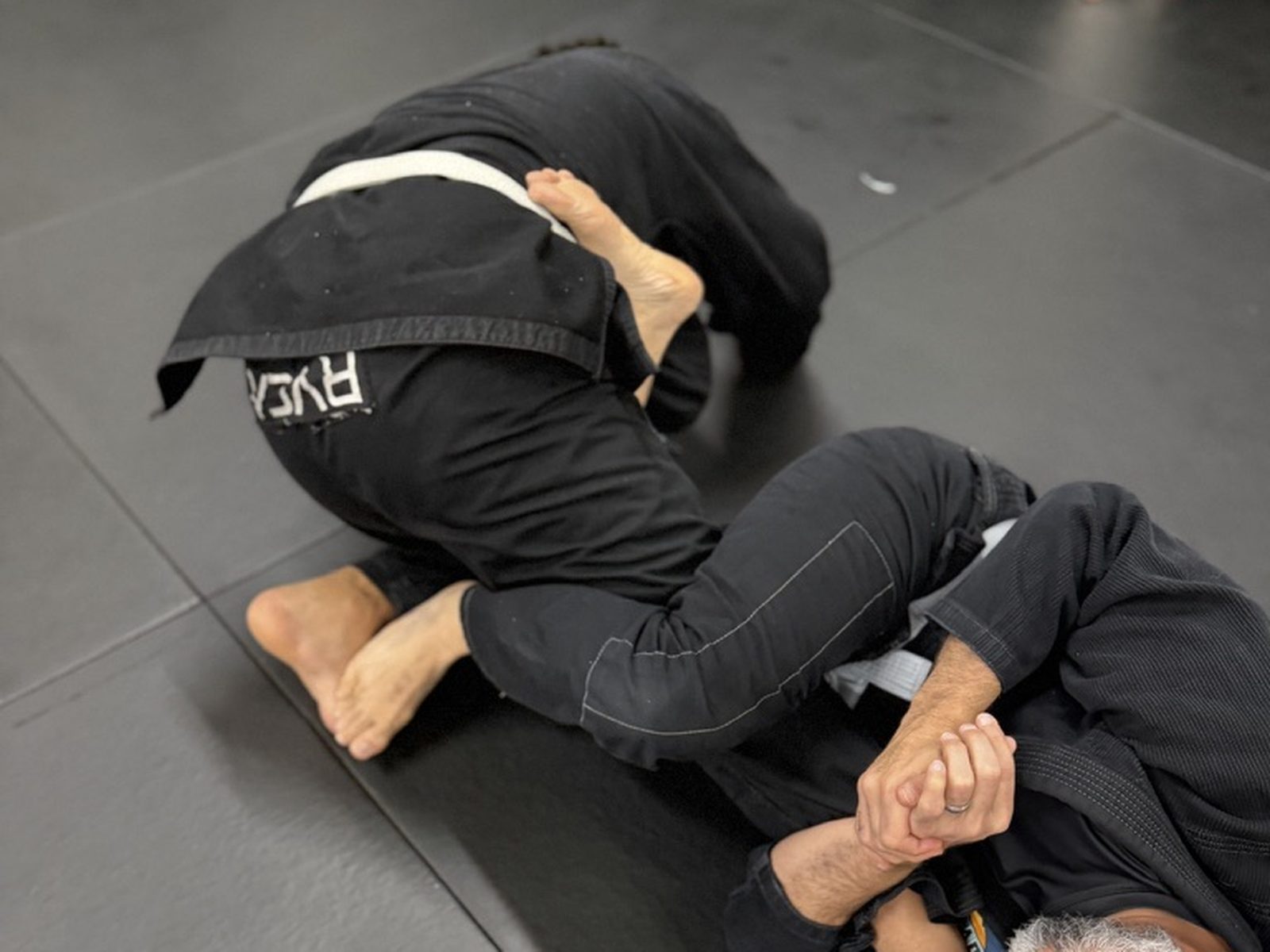
Turtle is when you're on your knees and elbows, curled up tight and facing the mat, usually after you turn away to avoid getting pinned. Keep your elbows tight to your knees, your chin tucked and your hands working, because your neck and back are open from there. Then don't stay: defend the choke, stop the hooks, and get out by sitting back to your guard, rolling or standing up.
What to do
- 01
Elbows to knees, chin tucked
Pull your elbows in tight against your knees, round your back and tuck your chin. Any gap between your elbows and knees is where their hooks or arms slide in. It should feel like a tight ball with nothing sticking out.
- 02
Hands guard your neck
Stopping the choke comes before anything else. Keep your hands working near your neck to clear their grips, and when you can, grab the wrist of the arm reaching around your neck or across your chest with both hands, and keep your elbows in while you hold it. With that arm controlled, it's much harder for them to choke you. If they're behind you with a seatbelt grip, one arm over your shoulder and one under, put both hands on the top arm near your neck. If they're in front of you with your head under their arm, that's a front headlock: keep your chin down, both hands on the arm around your neck, and work your head out to the side before you try to come up. If they lock in a choke and you can't clear it, tap early.
- 03
Don't let the hooks in
The person behind you wants to stay chest to your back, knock you onto a hip and put their feet in as hooks. Keep your knees and elbows close so the hooks have no space, and don't let them roll you onto your side. Two hooks or a locked body triangle, with their chest on your back and an arm across your chest, means they have your back.
- 04
Tight or wide, and switch
Elbows and knees tight makes hooks hard, but you're easier to knock onto a hip. A wider base is steadier side to side, but it's easier to slide hooks in. Switch between the two as they push and pull. Go tight when they're behind you working for hooks, and widen your base when they're at your side trying to knock you over.
- 05
Fake, then move
Treat turtle as a place you pass through. Start every escape with a small push or a fake in one direction, then go the other way. One plain move with no fake is easy for them to follow.
- 06
Get out and face them
Your goal is to get your back to the floor and face them again. Sit back to your guard by moving your head and shoulders away from them first and bringing your knees to your chest, roll across the back of your shoulder into guard, the way your coach shows you for the side they're on, or stand up with your hands still fighting theirs. Whichever you choose, finish facing them.
What to know
When you're about to get pinned. If someone is about to pass your guard into side control or knee on belly, turning to your knees can stop the pin. Turtle is better than being flattened on your back. Use it for a second or two and then get out, either back to your guard or up to your feet. Staying there is how you give up your back.
When you get taken down or sprawled on. In No Gi, and anywhere wrestling comes in, you'll end up on your knees a lot after a takedown or when someone sprawls on your shot. In wrestling the top person wants your back on the mat, and in jiu jitsu they want your back exposed for hooks and a choke. Knowing how to be safe on your knees and get back to guard or your feet is a big part of training. You'll see it from both sides.
Things to look out for
Staying there and waiting
You curl up and wait for them to give up. They don't. They break you down onto a hip, put their hooks in and go for the choke.
The fix: Move right away. Fake one way, go the other, and chain your escapes so they can't settle in.
Gaps between elbows and knees
Your elbows drift out wide from your knees. Their arm or their hook slides into that gap, and they take your back.
The fix: Keep your elbows touching your knees. Squeeze into a tight ball whenever they're working for hooks.
Chin up
You lift your head to look around or to push back into them. Your neck opens up and their arm slides right under your chin.
The fix: Keep your chin tucked to your chest the whole time you're in turtle. Eyes can look up, chin stays down.
Head up when they hold your head and arm
They've got their arm around your head and one of your arms, and you rise up onto your hands with your head up. Nothing is defending the choke there.
The fix: Come up hips first instead of head first, and keep your hands fighting theirs.
Standing up with no hands defending
You push straight up to your feet like a wrestler with your hands on the mat or your knees. They choke you or put hooks in while you rise.
The fix: Keep your hands fighting their hands as you come up. Control a wrist, then stand. When drilling, give each other room and come up slowly so nobody takes a knee or head to the face.
Sitting down right next to them
You sit back to get to guard, but you sit right beside them. They just keep their chest on you and take side control.
The fix: Move your head and shoulders away from them first, about a quarter turn, then sit and bring your knees to your chest to put them in your guard.
Exploding with no plan
You buck and thrash to throw them off. It tires you out fast and leaves gaps they can use.
The fix: Stay tight, fight the hands, and save your burst for the escape once you've set it up with a fake.
Drills you can practice
Drill 01
Sit throughs
From your hands and knees, lift your knees off the mat, kick one leg through under your body and sit onto that hip, then come back to your hands and knees. Do 3 sets of 10, alternating sides, with 30 seconds rest. Keep your chin tucked and your free hand up by your face.
Drill 02
Shoulder rolls
On mats, or a thick padded floor with plenty of clear space around you, kneel, tuck your head to one side and roll across the back of your shoulder, not your neck, coming up facing where you started. Do 3 sets of 5 each side with 1 minute rest. Go slowly at first. If you feel weight on your neck, stop and reset, and skip this one if you have neck or shoulder problems.
Drill 03
Turtle to stand up
Start in turtle with your elbows to your knees. Post on one hand, step one foot up flat, then stand up into your stance with your hands up in front of you. Do 3 sets of 8 each side with 30 seconds rest. Make it one quick motion and try not to pause halfway up.
Frequently Asked Questions
What is turtle in BJJ?+
It's when you're on your knees and elbows, curled up and facing the mat. It usually happens when you turn away to avoid getting pinned. It protects you from the pin, but it leaves your back open.
Is turtle a bad position?+
It's a risky place to stay, because your back and neck are exposed. For a second, it can be better than getting flattened under side control. The rule is to defend the choke and the hooks first, then get back to your guard or your feet.
How do you get out of turtle?+
Sitting back to your guard, rolling across your shoulder into guard and standing up are the main ways out. Start each one with a small fake or push the other way. Keep your hands fighting theirs the whole time.
Why do people take my back from turtle?+
Usually there's a gap between your elbows and knees, or you stayed in turtle too long. Close the gap, tuck your chin and start moving right away. The longer you sit there, the more time they have to get their hooks in.
Is turtle different in wrestling?+
Yes. In wrestling the top person wants to turn you onto your back, while in jiu jitsu they want your back exposed so they can put in hooks and choke you. Our No Gi classes mix both, so you'll learn to handle turtle both ways.
Are You Ready?