Staying Calm Under Pressure
Brazilian Jiu Jitsu | Self Defense
How Jiu Jitsu Teaches You to Stay Calm Under Pressure
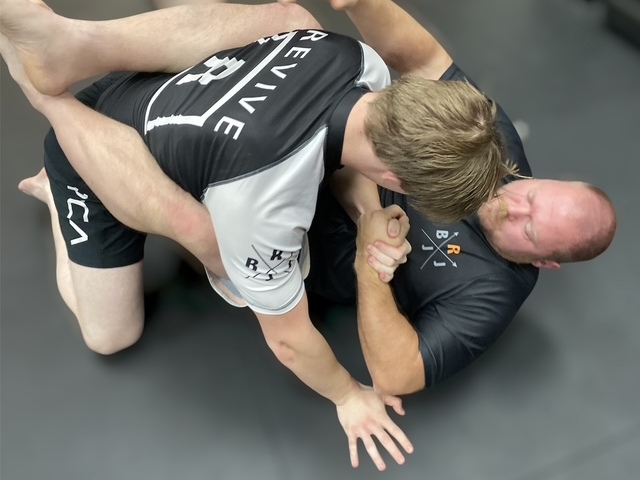
Jiu jitsu puts you under real pressure in a controlled way, like someone heavy lying across your chest, and you learn to breathe, frame and work out one step at a time instead of panicking. That calm comes from knowing the escape, because courage alone runs out. It builds slowly, and every round you spend on the bottom makes that spot feel a little more familiar.
How you stay calm
- 01
Keep breathing
When someone heavy settles on you, the urge is to hold your breath and explode. Keep slow, steady breaths going from your belly instead of quick gulps from your chest. With a lot of weight on your chest, don't push all your air out at once, because it's hard to get it back in until you turn to your side.
- 02
Get composed, then decide
Exploding out of a bad spot with no plan is when mistakes happen. You burn your energy, give up an arm or your back, and end up somewhere worse. Get your composure first, notice where their arms and legs are, then pick your escape.
- 03
Get to your side
Lying flat with someone on your chest is the hardest place to breathe. In side control, turn onto your side toward them with one hip off the mat, and breathing gets easier right away. Turning away from them gives up your back. In mount, keep your elbows in and stay on your back until you bridge, because turning to your side there can hand them your back too. Your side is also where the shrimp starts, and the shrimp is how you make room to get your guard back.
- 04
Let your frames carry the weight
A pin wears you out when your muscles carry their weight. Set your forearms against their body like braces, so the weight rests on bone instead of on your arms pushing. Keep your elbows tight to your sides, because an arm reaching out straight is weak and easy to trap.
- 05
Work the escape in steps
Escapes go in order. First survive: elbows in, chin tucked, on your side. Then bump or bridge to knock them off balance, frame to hold the space it makes, and get a knee or elbow back inside so you can recover your guard. In side control that's frames at the hip and jaw and a shrimp to get your knee in. In mount it's the bridge and roll or the elbow knee escape.
- 06
Know the breathing trick
Good top players put their chest or shoulder over your face on purpose, because pressure on your breathing makes people panic and give up an arm. When you feel it, recognize it for what it is: uncomfortable, but you're okay. If a gi is over your face, open your mouth wide to pull air through the fabric, and keep working one step at a time. If the weight is too much, tell your partner or tap, and a good partner will ease off. If you truly can't breathe or a choke is on, tap.
Why it works
Knowledge beats courage. Gritting your teeth through a bad spot only lasts so long. What keeps you calm is knowing what to do next, and that comes from drilling the escapes until you know them cold. The first time someone settles into side control on you, it can feel like you can't breathe or move. After you've escaped it many times in class, it feels like a problem you know how to solve.
Calm is built a little at a time. A good way to build calm is a little pressure, then a little more. You might start a round in a bad spot where your only job is to breathe and stay relaxed, then add escapes once you can settle there. Confidence comes from what actually works for you on the mat, and once you trust your defense you attack more. You can also tap any time, and knowing that is part of what lets you relax.
Things to look out for
Holding your breath
You lock up and stop breathing the second the weight lands. Your face goes red, your arms get heavy, and you're done in a minute even if you're in good shape.
The fix: Keep slow, steady breaths going the whole round. If you notice you're holding it, relax your shoulders and get a few breaths in before you try anything.
Bucking with no plan
You explode, buck and twist as hard as you can. It might move them for a second, but you burn your gas, open up your arms and neck, and they settle right back on top.
The fix: Pick one step and do it with purpose, like a bridge into them followed by a shrimp into the space it makes. One bridge with a plan does more than ten wild ones.
Pushing with straight arms
You push on their chest with straight arms to get them off. Your shoulders burn out fast, and a straight arm is exactly what they want for an armbar or an americana.
The fix: Bend your elbows, keep them tight to your body and use your forearms as frames. Your frames hold the space, and your hips do the moving.
Lying flat on your back
You stay flat with both shoulders on the mat. It's the hardest spot to breathe in and the hardest to escape from, and their weight sits right on your chest.
The fix: Turn to your side the moment you can, with one hip off the mat. You should feel your weight on one shoulder blade, not both.
Freezing and waiting it out
Some beginners go the other way and lie still until the round ends. The top person gets to settle and work whatever they want, and you never learn the escape.
The fix: Stay relaxed but keep moving. Small steps count: get an elbow back in, turn a little more to your side, recover a knee.
Keeping the panic to yourself
You feel closed in under a heavy partner and don't tell anyone, so you avoid the bottom or start skipping class. The feeling never gets a chance to fade.
The fix: Tell your coach and a partner you trust. Ask to start rounds in that spot at an easy pace, where your only job is to breathe and relax, then build from there.
Frequently Asked Questions
How do you not panic in BJJ?+
Keep breathing, get to your side and get composed before you try to escape. Then work in steps: survive, off balance them, frame and get your guard back. The more often you've escaped a spot in class, the less it scares you.
Why do I get so tired under a heavy partner?+
You're carrying their weight with your muscles and probably holding your breath. Turn to your side, set your forearms as frames so the weight rests on bone, and keep breathing. Pushing with straight arms empties your gas tank fast.
Is it normal to feel claustrophobic in jiu jitsu?+
Yes, plenty of people feel it in their first months, especially under side control or mount. It usually eases with time on the bottom at an easy pace, slow breathing and getting to your side. Tell your coach, and if it doesn't ease, talking to a professional helps some people.
How long until I feel calm on the bottom?+
There's no set number of classes. It comes from time on the bottom and getting out of it over and over. You'll usually notice the panic easing once you know one or two escapes well.
Does staying calm help with self defense?+
Yes. Real self defense starts with awareness and staying out of bad situations. Once it turns physical, staying calm and thinking clearly with someone on top of you is a big part of it, and that only comes from training regularly over time. A real attack adds adrenaline and strikes that class doesn't fully copy, which is why the habits need to be solid.
Are You Ready?