Is Grappling Good for Kids
For Parents | Questions
Is Grappling Good for Kids
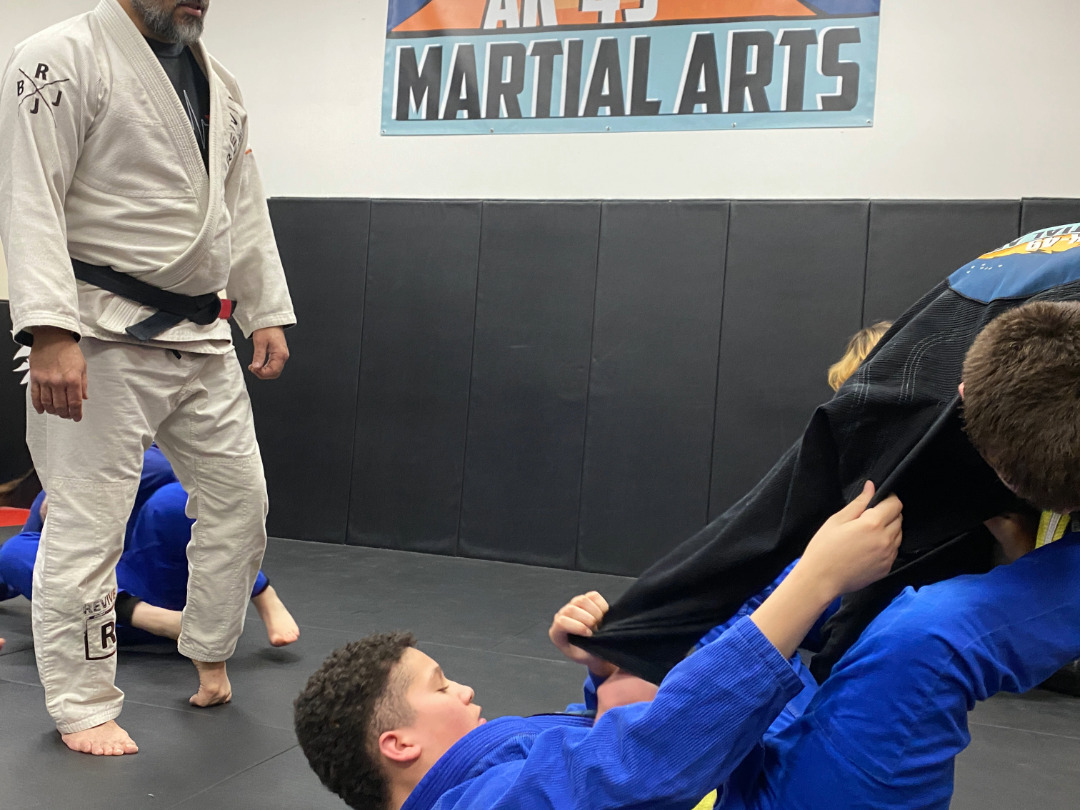
Grappling lets kids train hard against a real partner with no punches or kicks, so there are no blows to the head. Kids learn to fall safely, to tap and to let go when their partner taps, all with a coach watching. At AK-49 Martial Arts kids grapple in Kids BJJ, ages 6 and up, which has its own Kids No Gi class.
What kids get from grappling
- 01
Hard training without strikes
Grappling is pushing, pulling, holding and escaping, with no punches or kicks. Kids get to go hard against a real partner and find out what works, and nobody is getting hit in the head. It's a full body workout that feels like play to most kids.
- 02
Learning to fall first
One of the first things kids learn is how to fall: chin tucked, arms slapping the mat, no reaching back to catch themselves. It's a skill that helps them on the playground and on the bike too. Coaches keep coming back to it until it's automatic.
- 03
Tapping and letting go
Kids BJJ teaches chokes from the beginning, so the tap is one of the first rules kids learn. When a hold gets uncomfortable, they tap their partner or the mat, or say "tap," and their partner lets go right away. Letting go the moment a partner taps matters just as much, and coaches watch for both.
- 04
Getting comfortable up close
Grappling means being close to other kids, on top of them and under them. A lot of kids feel a little uneasy about that at first, and it usually fades over a few classes. Learning to stay calm with someone on top of them is one of the best things they take out of it.
- 05
Safe technique with a coach watching
Kids learn each move slowly and correctly before anything speeds up, with a coach on the mat the whole time. Partners are paired with care, so a small kid isn't thrown in with a much bigger one and left to figure it out. A class usually goes warm up, technique, drilling with a partner, then games or live rounds once kids know the basics. Like any sport, grappling has bumps: heads knocking, a tweaked neck, fingers and knees. If a kid bumps their head and feels dizzy or off, they stop for the day and the coach is told. No contact until they're cleared, and get them checked right away for a headache that gets worse, throwing up or confusion.

What parents should know
Let the coaches coach. It's natural to want to help from the side of the mat, but calling out instructions pulls your kid's attention away from the coach. Kids learn best when they feel free to try things and make mistakes in class. Cheer them on, then ask them on the drive home what they learned. If there's a problem, the coach will come to you.
Clean skin, clean gear. Grappling is skin to skin, so hygiene is part of the sport. Have your kid shower after class, wash everything they trained in before they wear it again, and keep nails short. Check their skin now and then: a red, ring shaped itchy patch, crusty sores or small blisters need a doctor's look before the next class, and let the coach know.
Things to look out for
Letting kids cut weight
Some kids want to make a lighter weight class for a tournament and start skipping meals or sweating it off. Fast weight loss can slow growth and lead to worse problems, and the American Academy of Pediatrics says saunas, rubber suits and diuretics shouldn't be used at any age.
The fix: Let them compete at the weight they are. Growing kids should eat normally and drink water. If weight ever comes up, talk to their doctor before changing anything.
Sending them in with a skin problem
A rash or sore looks minor, so they train anyway. Skin infections like ringworm spread fast on the mat and can go through a whole class.
The fix: Keep them off the mat until a doctor has looked at it, and tell the coach. Most clear up quickly once they're treated.
Coaching from the side of the mat
You call out moves or correct your kid during class. They stop listening to the coach, look over at you, and get flustered.
The fix: Watch quietly and save your thoughts for after class. Ask questions instead of giving corrections, like what was the hardest part today.
Judging it by the first class
Your kid is nervous, clumsy or a little teary after the first class, and you figure grappling isn't for them. Almost every kid feels lost at first, because everything is new.
The fix: Give it a few weeks before you decide. Plenty of kids who start off uneasy end up loving it once they know a few moves and a few friends.
Long nails and jewelry
Kids show up with long fingernails, a necklace or earrings. Nails scratch partners and jewelry gets caught or pulled.
The fix: Trim fingernails and toenails short before class and leave jewelry at home. Tie back long hair.
Frequently Asked Questions
Is grappling safe for kids?+
Kids train hard with no punches or kicks, they learn to fall and to tap, and a coach watches every class. Like any sport where kids move and touch each other, expect the odd bump or bruise. Kids learn moves slowly before they speed up, and partners are paired with care.
What age can kids start grappling?+
At AK-49 Martial Arts, Kids BJJ starts at age 6. Kids No Gi is its own class inside the Kids BJJ program. If your kid would rather punch and kick, Kids Kickboxing starts at 7.
Do kids learn submissions?+
Yes. Kids BJJ teaches chokes from the beginning, with a coach watching. That's why tapping and letting go are some of the first rules kids learn. A partner who taps gets let go right away, every time.
Do you have a kids No Gi class?+
Yes. Kids No Gi is its own class inside the Kids BJJ program, so kids can train with and without the gi. Our No Gi classes are a hybrid of Brazilian Jiu Jitsu and wrestling.
What should my kid wear to a first class?+
A shirt and shorts, whatever is comfortable, with no zippers or pockets. They'll train barefoot. Gi students can use a loaner gi, and gear comes after they sign up.
Are You Ready?
Start Your Training Today
At AK-49 Martial Arts in Soldotna, kids grapple in Kids BJJ, ages 6 and up, which has its own Kids No Gi class. If you homeschool, we work with local homeschool programs. Your child's first class is free, so grab a free pass and come try it with families from all over the Kenai Peninsula.