
Calf Kick
Kickboxing | Kicks
How to Throw a Calf Kick in Kickboxing
The calf kick is a low kick with your back leg that lands on the calf, below the knee, instead of the thigh. It needs only a little hip and shoulder turn, so you keep your hands up, step a little outside, kick, and get back to your stance. Set it up with punches first, because their shin and knee are right there to hurt your foot.
- 01
Good athletic base
Start in your stance: feet about shoulder width apart, front toes pointing forward, knees a little bent and your weight in the middle. You need that balance to stand on one leg while the other one kicks. Keep your hips under you instead of leaning forward to reach.
- 02
Hands up, elbows in
Both fists stay up at your cheeks with your elbows in close to your ribs and your chin tucked. Your hands stay at your face from the first step until your foot is back down. A low kick puts you in punching range, so this is what keeps you from getting hit back.
- 03
Step a little outside
Take a small step, a few inches, with your front foot out toward your lead side instead of straight at them, without stepping on their foot. When you're both in the same stance, it opens your hips and gives your back leg a clear line to the outside of their calf. It also brings you a little toward their back hand, which is one more reason to set it up with punches and keep your hands home. The step is short, so you stay balanced and ready to move.
- 04
Kick below the knee
Swing your back leg around into the meaty side of their front calf, below the knee and never on the knee itself. Land with your shin, a little above the ankle, with your toes pointed so the foot and ankle stay firm. Landing it on the right spot matters more than kicking hard. Turn your hip over a little as it lands so the shin cuts across the calf instead of slapping it.
- 05
Little pivot, little turn
The calf kick needs only a small turn on the ball of the standing foot, enough that your knee isn't twisting, and almost no shoulder turn. That keeps your hands home and makes the kick hard to see coming. Keep your eyes on their chest, not on the leg you're kicking. Keep breathing steady and let a breath out as it lands.
- 06
Back to your stance
Put the kicking foot straight back down and get your feet and hands back in your stance. Then step out or keep punching. Kicking and standing still in front of them is the most common mistake.
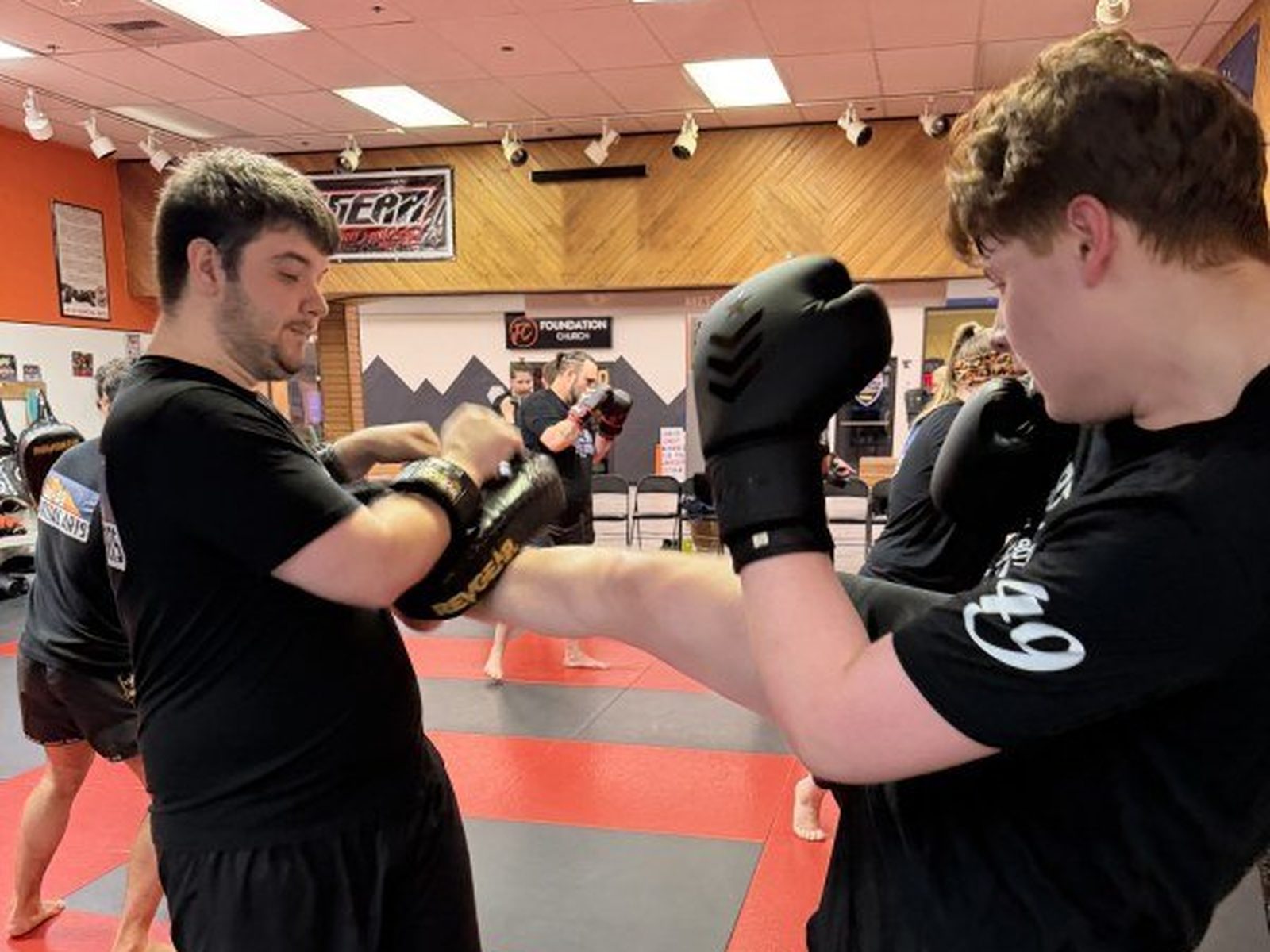
When to use it
After a couple of punches. Throw a jab or a jab and cross first, then the calf kick. The punches make them cover their head and stop moving their feet for a moment, which leaves the leg open. A kick on its own is easy to see and easy to lift the leg against.
When their front leg stays planted. The calf kick works best on a front leg that's standing still with weight on it. If they step forward or sit on that front foot, that's a good time to throw it. Because it lands lower and needs less turn than a thigh kick, you can throw it from a little farther out. It's a simple low target to add once your basic low kick is solid.
Things to look out for
Kicking without a setup
You throw the calf kick out of nowhere. They see it, lift the leg, and your foot or shin lands on their knee or shin, or they punch you while you're on one leg.
The fix: Put punches or a fake in front of it every time. Jab, cross, then kick, so their attention is up high when the kick goes low.
Hitting with the foot
The kick lands with the small bones of your foot instead of your shin. That's how feet get hurt, especially if it lands on their shin.
The fix: Kick with your shin, a little above the ankle. If you keep landing with the foot, take a slightly bigger step in so the shin reaches.
Kicking into the shin in open stance
When you're orthodox and they're southpaw, or the other way around, your back leg kick lands on the inside of their front leg, and their shin is often turned right toward you. Kick there and your foot meets bone.
The fix: As a beginner, use the calf kick mostly when you're both in the same stance, where the outside of the calf is open. In open stance, pick a different target like the body until your coach shows you the open stance version.
Dropping your hands
Your hands come down as the leg swings, and you're right in punching range. A low kick with no guard is how you get punched on the way in.
The fix: Keep both fists on your cheeks and let the kick be small. The calf kick barely needs a shoulder turn, so there's no reason for the hands to move.
Looking at the leg
You stare at their calf before you kick. They see where your eyes go and lift the leg or step back before the kick lands.
The fix: Keep your eyes on their chest the whole time. You'll still see the leg, and they won't know what's coming.
No exit
You land the kick and stand there admiring it. They punch back and now you're stuck trading in front of them.
The fix: Build a move out into every calf kick. Kick, land in your stance, then step out or follow with punches right away. You're on one leg for a moment, so the faster the foot gets back down, the less time they have to punch you or catch the leg.
What to Practice at Home
Drill 01
Slow calf kicks in the air
3 sets of 10 slow kicks with your back leg, with 1 minute rest between sets, in front of a mirror if you have one. Step a little outside, kick to just below knee height, and put the foot straight back down in your stance. Check that your hands never leave your cheeks and your shoulders barely turn.
Drill 02
Jab, cross, calf kick
4 rounds of 2 minutes with 1 minute rest, in the air or on a bag. Jab, cross, calf kick, then back to your stance before the next one. Round one slow, round two breathing steady the whole round, rounds three and four at a steady pace with your eyes up the whole time.
Drill 03
Kick and exit
3 rounds of 2 minutes, in the air or on a bag, picking a spot at calf height. Throw the calf kick, land in your stance, then take two steps out to the side or back, and reset. If you're on a bag, kick light at first so your shin gets used to it.
Frequently Asked Questions
What's the difference between a calf kick and a low kick?+
Both are low round kicks with the back leg. The regular low kick goes into the thigh, and the calf kick goes lower, into the calf below the knee. The calf kick needs less turn and can be thrown from a little farther out. Learn the basic low kick first, then add the calf.
Should I kick with my shin or my foot?+
Learn it with your shin, a little above the ankle. The foot has a lot of small bones and gets hurt if it lands on a shin or knee. Some fighters use the top of the foot to reach from farther away, but that comes later, once your aim and setups are good.
Why did my calf kick hurt my foot?+
You likely hit their shin or knee instead of the calf. It happens when the kick isn't set up and they lift the leg, or when their front shin is turned toward you in open stance. Set it up with punches, land with your shin, and save the calf for when it's open.
How do you defend a calf kick?+
The main defense is the check: lift your front leg, toes up, so the kick lands on your shin. If you see it late, turning your front knee and toes out a little lets the meat of your leg take it instead of the back of the calf. Don't stand too wide, because a wide stance leaves the calf sitting out there as an easy target. Keep your hands up while you do it, because a kick is often followed by punches.
Is the calf kick safe for beginners?+
Yes, when you drill it slow and light in the air and on pads or a bag. The risk is to your own foot if you kick blind or land with the foot, so learn the setup and the shin contact first. In class you work it on pads first, and with a partner you wear shin guards and calf kicks stay very light. The outside of the lower leg has a nerve close to the surface, and a hard calf kick can leave someone limping, so save power for the bag and pads.
Are You Ready?