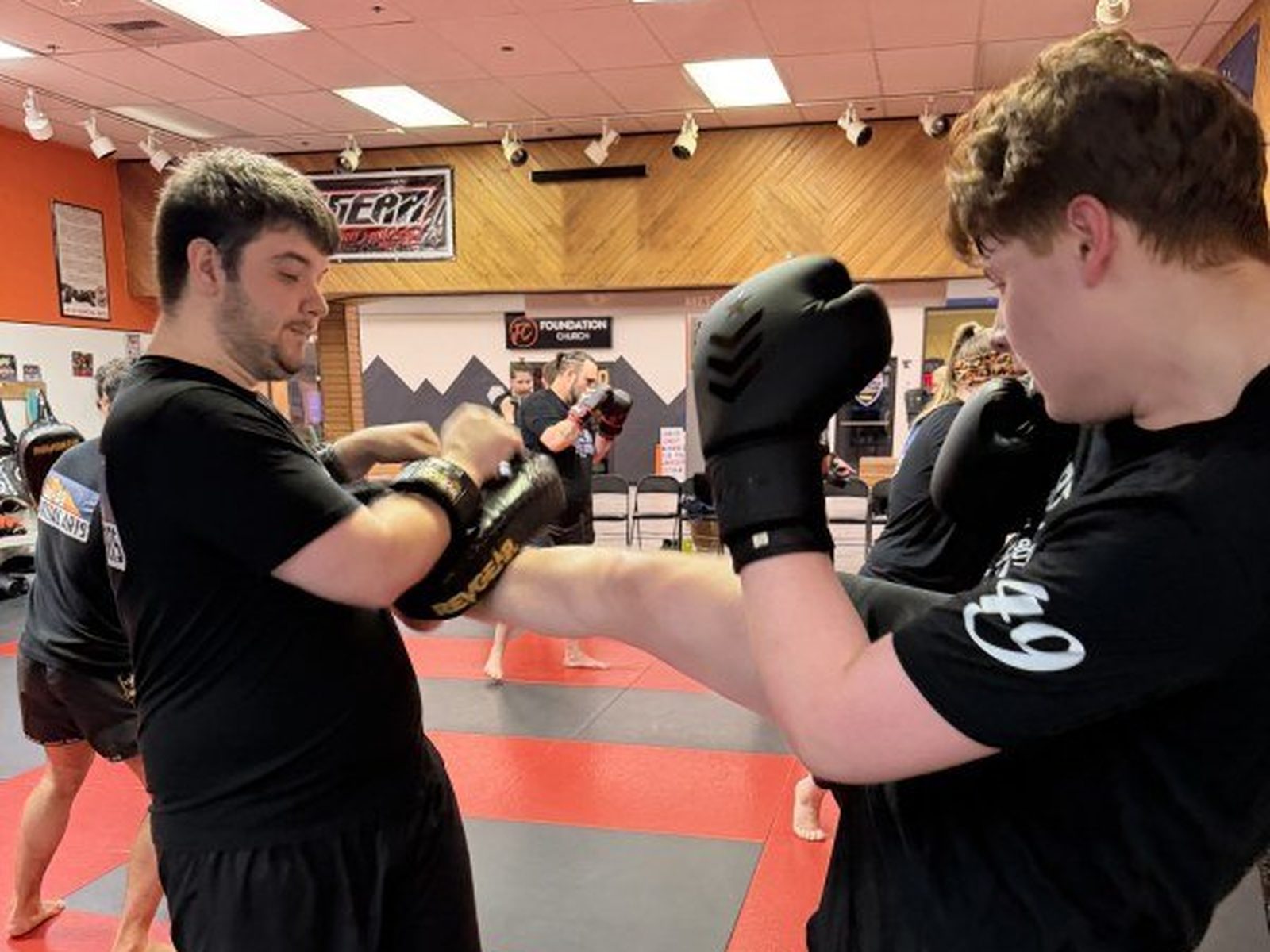
Switch Kick
Kickboxing | Kicks
How to Throw a Switch Kick in Kickboxing
A switch kick is a round kick with your front leg. You swap your feet with a small, quick switch so that leg gets room to turn the hip like a rear kick, then you kick with the shin. Keep a good athletic base, hands up and elbows in the whole way, and land back in your stance.
- 01
Good athletic base
Start from your normal stance, not a long one: feet about shoulder width apart, front toes pointing forward, knees a little bent and your weight in the middle. A long stance makes the switch slow and easy to see coming. You should feel light enough to move your feet quickly.
- 02
Hands up, elbows in
Both fists stay up at your cheeks with your elbows in close to your ribs and your chin tucked. The switch is when you're most open to a straight punch, so your hands stay on your face through the switch, the kick and the landing. Keep your eyes on their chest.
- 03
Keep the switch small
Swap your feet with a quick little hop, low to the floor. Your front foot slides back toward where your back foot was, and your back foot comes up to about where your front foot was. For a split second you're in the other stance, so your old front leg is now behind you with room to kick. Don't jump up. Your head should stay at about the same height the whole time, so it feels like a fast shuffle of the feet that they can't see coming.
- 04
Back foot comes up straight
As your feet swap, the back foot comes straight up and lands on its own side of the center line, not across it, while the front foot slides back in a small curve. If the back foot lands across, your hips are blocked from turning and the kick loses its power. Landing it a touch to the outside opens your hips and gives you more room to turn.
- 05
Lead shoulder stays in front
Keep the same front shoulder forward through the switch instead of turning square. That split second when you're square is when you get hit with a straight punch. You should feel a little sideways, with a small target.
- 06
Turn the hip, kick with the shin
Once your feet land, it's the same move as your rear round kick. Get up on the ball of the standing foot and turn it, drive the hip through, and swing the leg around with a slight bend so the shin lands, not the foot, with your ankle firm and your foot relaxed. Aim at the ribs, or the outside of the thigh for a low kick. The kick travels in a circle, not straight up, and you let a breath out as it lands.
- 07
Back to your stance
Put the kicking foot straight back down and land in your normal stance, then step out or keep punching. Don't let the kick spin you around. Feet back under you, hands still on your face, ready to go again.

When to use it
After your jab and cross. Jab, cross, switch kick to the body is one of the first punch to kick combos you'll learn. The punches make them cover up high, and that leaves the body open for the kick. The cross also puts your weight forward, so the switch flows right out of it. Keep it to two punches and one kick, and land back in your stance.
When they stay right in front of you. The switch kick is your closest kick to the target, so it gets there fast when they're standing in range. If they step back, a switch kick falls short, so step in with your kick instead. It also gives you a kick off the front leg, so every kick isn't coming from the back. If they start lifting their shin to check it, stop throwing it alone. Mix in punches, kick at different heights, or switch and throw a punch instead.
Things to look out for
Starting from a long stance
Your feet are too far apart, so the switch turns into a big, slow step. They see it coming and can punch you while your feet are still moving.
The fix: Bring your stance back to normal size before you switch, about shoulder width. The shorter the switch, the faster the kick.
Jumping on the switch
You hop up into the air and your head rises. It tells them the kick is coming, and you land heavy and off balance.
The fix: Keep the switch low and quick, with your head at the same height. Practice in front of a mirror and watch that your head doesn't bounce.
Back foot stepping across
Your back foot lands across the center line and your hip ends up bent. The kick goes off to the side and loses most of its power.
The fix: Put a line of tape on the floor and keep each foot on its own side of it. Back foot comes straight up, front foot slides back in a small curve.
Squaring your shoulders
Both shoulders face them as you switch. For that moment your whole front is open and a straight punch walks right in.
The fix: Keep your lead shoulder forward until the kick goes. Think of staying a little sideways and small through the whole switch.
Dropping your hands
Your arms drop for balance or to swing the kick harder, and your face is open the whole time your leg is in the air. Keep doing it and you'll get punched every time you kick.
The fix: Keep both fists at your cheeks and let your hips do the work. If you lose your balance, slow the kick down until you can stand on one leg with your hands up.
Spinning around after every kick
The kick swings past and turns you all the way around, so your back ends up facing them. You're slow getting back to your stance, and it shows your hips aren't under control.
The fix: Practice kicking and putting the foot straight back down where it started. Then check that you're still facing forward before you throw anything else.
Holding your breath
You tense up and hold your breath on every kick. You get tired fast, and a tense leg moves slower.
The fix: Keep breathing normally the whole time. Stay loose through the switch and only tighten up on contact.
What to Practice at Home
Drill 01
Switch in place
3 rounds of 2 minutes with 1 minute rest, in front of a mirror if you have one. Only the switch, no kick: swap your feet and swap back, 10 at a time, watching that your head stays level and your hands stay up. In round three, put a line of tape on the floor and keep your back foot on its own side of it.
Drill 02
Slow switch kicks
3 sets of 10 slow switch kicks in the air, with 1 minute rest between sets. Switch, turn on the ball of the standing foot, kick to belly height, and put the foot straight back down in your stance. Before the next rep, check that your hands are at your cheeks and your lead shoulder is in front.
Drill 03
Jab, cross, switch kick
4 rounds of 2 minutes with 1 minute rest, in the air or on a bag if you have one. Throw the jab and cross, switch kick to the body, and land back in your stance before you start the next one. Go half speed at first, and if you're on a bag, kick light so your shins get used to it. Kick the air, a bag or pads, not a wall or a post. Warm up your hips and groin first, and wear shin guards any time you kick with a partner.
Frequently Asked Questions
Which leg throws the switch kick?+
Your front leg. If you stand with your left foot forward, it's your left leg. The switch swaps your feet for a split second so that leg has room to turn the hip like a rear kick. Then you land back in your normal stance.
What's the difference between a switch kick and a rear round kick?+
The rear round kick comes off the back leg, so it travels farther and has more time to build power. The switch kick starts closer to the target, so it gets there quicker. Most people find it harder to learn because of the switch, so get the rear round kick working first. A lead kick with a step forward instead of a switch covers more distance but is slower and easier to see, so it's for when they're farther away.
Why does my switch kick feel weak?+
Usually the back foot stepped across the line and bent your hip, or the kick went straight up instead of around. Keep the back foot on its own side, turn on the ball of the standing foot, and swing the kick in a circle onto the shin. A quick switch matters more than a big one.
Should I jump when I switch?+
No. A big jump is easy to see coming and you land off balance. Keep it a small, quick move low to the floor, with your head at the same height. It only needs to be big enough to swap your feet.
Can I practice the switch kick at home?+
Yes. Practice the switch in front of a mirror with a line of tape on the floor, and you don't need a bag for that. Go slow until your feet land in the right place, then add speed. If you have a bag, start with light kicks and build up.
Are You Ready?