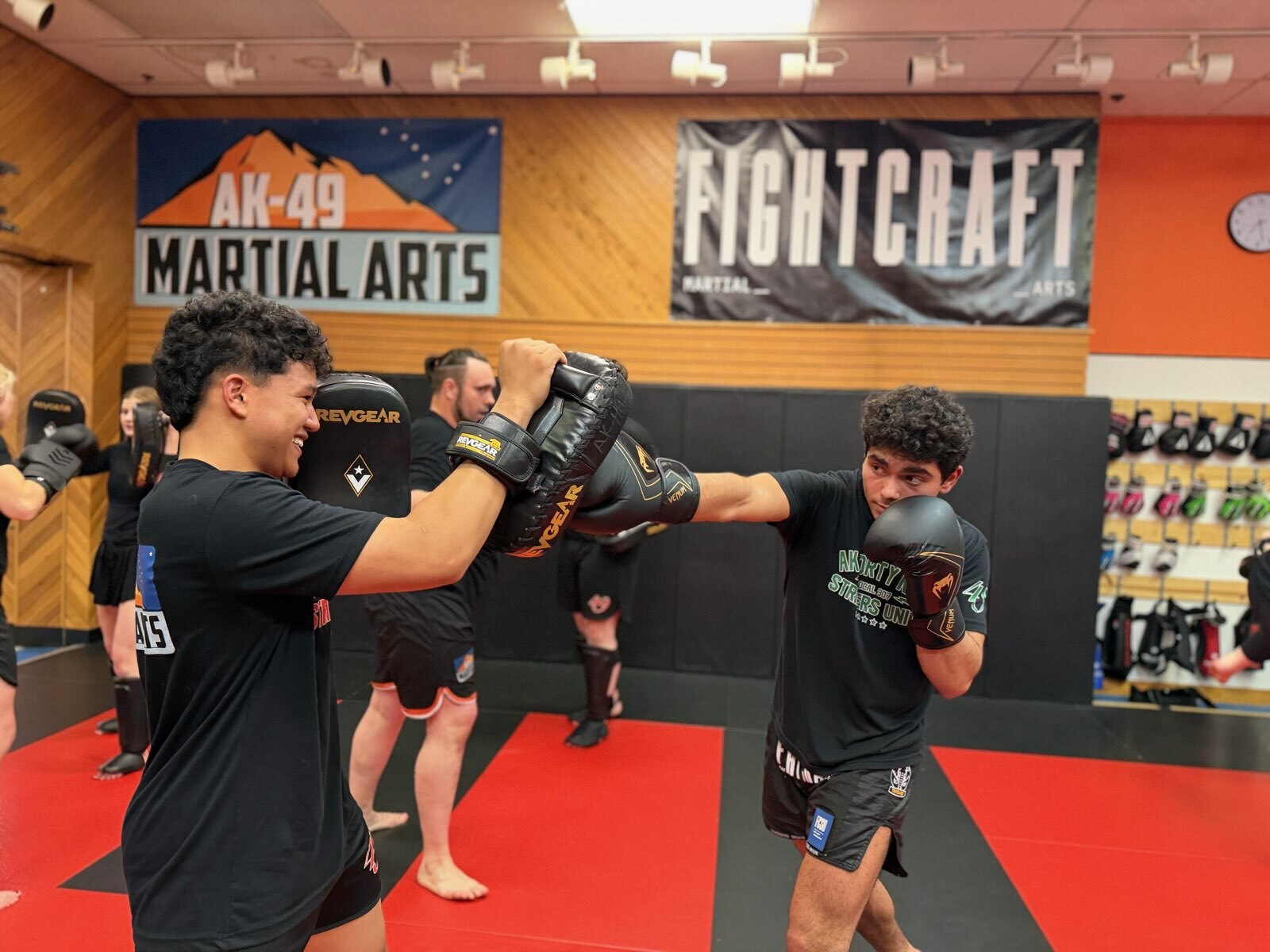
Checking a Kick
Kickboxing | Defense
How to Check a Kick in Kickboxing
Checking a kick means lifting your leg and turning it out so their low kick lands on the hard top of your shin instead of your thigh or calf. Keep your toes up, like your foot is slid into a boot, and keep your hands on your face the whole time. It works best from a good athletic base with your weight centered, and you put the foot right back down and hit back.
- 01
Good athletic base
Feet about shoulder width apart, front toes pointing forward, knees a little bent and your weight in the middle. With your weight centered you can pick up your front leg in a split second. If your stance is too wide or you lean onto the front foot, the leg is stuck on the floor when the kick comes.
- 02
Hands up, elbows in
Both fists sit at your cheeks with your chin tucked a little and your elbows in close to your ribs. Your hands stay there the whole time your leg is up. A low kick often comes right behind punches, so dropping your hands to deal with the kick opens your head.
- 03
Lift and turn it out
Lift the knee of the leg being kicked and turn it out, roughly 45 degrees, toward the kick. Lift until your shin is roughly upright and your knee is about hip height or a little lower, so the shin covers from your knee down. That puts your shin in the path of their shin. Turn from the hip but only as far as you need to face the kick, because opening the hip too far points the shin sideways and leaves you off balance. Lift early, as soon as you see the kick start, so you meet it before it builds speed. Lifting straight up leaves your calf and thigh open, and the kick can slide past and land on your other leg.
- 04
Toes up
Pull your toes up toward your shin, like your foot is slid into a boot. At AK-49 Martial Arts we call this toes up, and foot through the boot means the same thing. It keeps the foot from flopping and the leg firm when the kick lands.
- 05
Take it on the top of the shin
Let the kick land on the upper part of your shin, which is the hardest part. Their kick usually lands lower on their own shin, where the bone is thinner, so a good check hurts the kicker too. Stay upright as it lands, with no leaning back and no folding at the waist.
- 06
Counter
Hit back right away, while they're still bringing their leg back and their balance is off. A cross is the simplest counter for a beginner, because you can throw it the moment your foot touches down. A low kick on the leg they just kicked with comes later, once you can land balanced from the check every time. Think of the check and the counter as one move.
- 07
Back to your stance
Put the foot straight back down in your stance with your hands on your face. Don't leave the leg hanging in the air, because a hanging leg is easy to kick again or push you over. Keep breathing steady and keep your eyes on them.

When to use it
When a low kick is coming at your leg. Check when you see a low kick coming at your front leg and you're close enough that it will land. Kicks to the body get a higher version, with the knee lifted and the elbow coming down to meet it, which your coach covers once the low check is solid. Lift, turn the leg out and take it on the shin. If they're too far away for the kick to reach, you don't need to check it, just stay in your stance or step back out of range. Lifting your leg at every little move wears you out and leaves you on one foot.
To set up your own punch or kick. A check puts you in a good spot to hit back. The kicker is still on one leg and pulling their kick back, so for a moment they can't do much. That's when you throw a cross or a low kick of your own. Drill the check and the counter together so you never block and then just stand there.
Things to look out for
Lifting the leg straight up
Your knee comes straight up in front of you instead of out toward the kick. The kick slides under or around your shin, lands on your calf or thigh, or carries through into your other leg.
The fix: Turn the knee out as you lift, roughly 45 degrees, so your shin faces the kick. Picture your shin squaring up to their shin, and stop turning once it does.
Too much weight on the front leg
You lean forward onto your front foot. When the kick comes, you can't get that leg off the floor in time, so it lands on your thigh every time.
The fix: Keep your weight in the middle of your stance. A quick test: you should be able to lift your front foot at any moment without shifting first.
Stance too wide
Your feet are spread far apart, so the front leg is a long way from your center. It's slow to lift and easy to kick, especially with calf kicks.
The fix: Keep your feet about shoulder width apart, not too wide and not too close. Check your stance in a mirror before every round.
Dropping your hands
You focus so hard on the leg that your hands come down. Punches often come with the kick, so your head is open right when you're standing on one leg.
The fix: Keep both fists on your cheeks every time the leg goes up. Practice slow checks in a mirror and watch your hands, not your foot.
Leaning back or folding over
You lean away from the kick or crunch forward at the waist as it comes. You lose your balance, you take the kick worse, and you can't hit back from there.
The fix: Stay tall, with your head over your hips, and let the leg do the work. Your upper body should look the same as it does in your stance.
Leaving the leg hanging
After the check you hold your leg up in the air. You're stuck on one foot, easy to kick again or push over.
The fix: Put the foot straight back down in your stance as soon as the kick lands. Check, foot down, hit back.
Checking and not countering
You check the kick and then wait. The other person learns the kick costs them nothing, so they keep throwing it.
The fix: Once your foot is down and you're balanced, hit back, even if it's just a cross. A block of a kick is not enough on its own.
What to Practice at Home
Drill 01
Mirror checks
3 rounds of 2 minutes with 1 minute rest, in front of a mirror if you have one. Round one, slow checks with your front leg, holding each one for a second to see your knee turned out, toes up and hands on your face. Round two, check and put the foot straight back down in your stance. Round three, mix it up: check some kicks, and step back out of range on others.
Drill 02
Check and counter
3 rounds of 2 minutes with 1 minute rest, shadow boxing. Picture a low kick coming, check it, put the foot down and throw a cross. Then check, foot down, and throw a low kick of your own. Keep it smooth and make the counter come right after the foot lands.
Drill 03
Moving checks
3 rounds of 2 minutes with 1 minute rest. Move around the room in your stance with small steps, and every few seconds throw a quick check, then keep moving. This teaches you to keep your weight centered while you move, so the leg is ready to come up any time. If you stumble when the leg comes up, your weight was too far forward.
Frequently Asked Questions
How do you check a leg kick?+
Lift the leg being kicked, turn your knee out about 45 degrees and keep your toes up. Take the kick on the top of your shin with your hands still on your face. Then put the foot right back down and hit back.
What does toes up mean when checking a kick?+
Pull your toes up toward your shin, like your foot is slid into a boot. Toes up and foot through the boot mean the same thing. It keeps the foot and leg firm when the kick lands.
Does checking a kick hurt?+
It can sting at first, for both people. That's why new students start with shin guards and light kicks from a partner in drills, so the feeling isn't brand new. Your shins get used to it over time with regular training. A sharp pain that doesn't fade, or a lump that stays tender, is worth getting checked.
Why can't I get my leg up in time to check?+
Usually your weight is too far onto your front foot, or your stance is too wide. Keep your weight centered and your feet about shoulder width apart. Then the leg is free to come up the moment you see the kick.
Should I check every kick?+
Usually not. A kick that's too far away to land doesn't need a check, and lifting your leg at every fake wears you out. You can also step back out of range, move off to the side, or beat the kick with a straight punch. Checking is one answer, and your coach will show you the others.
Are You Ready?