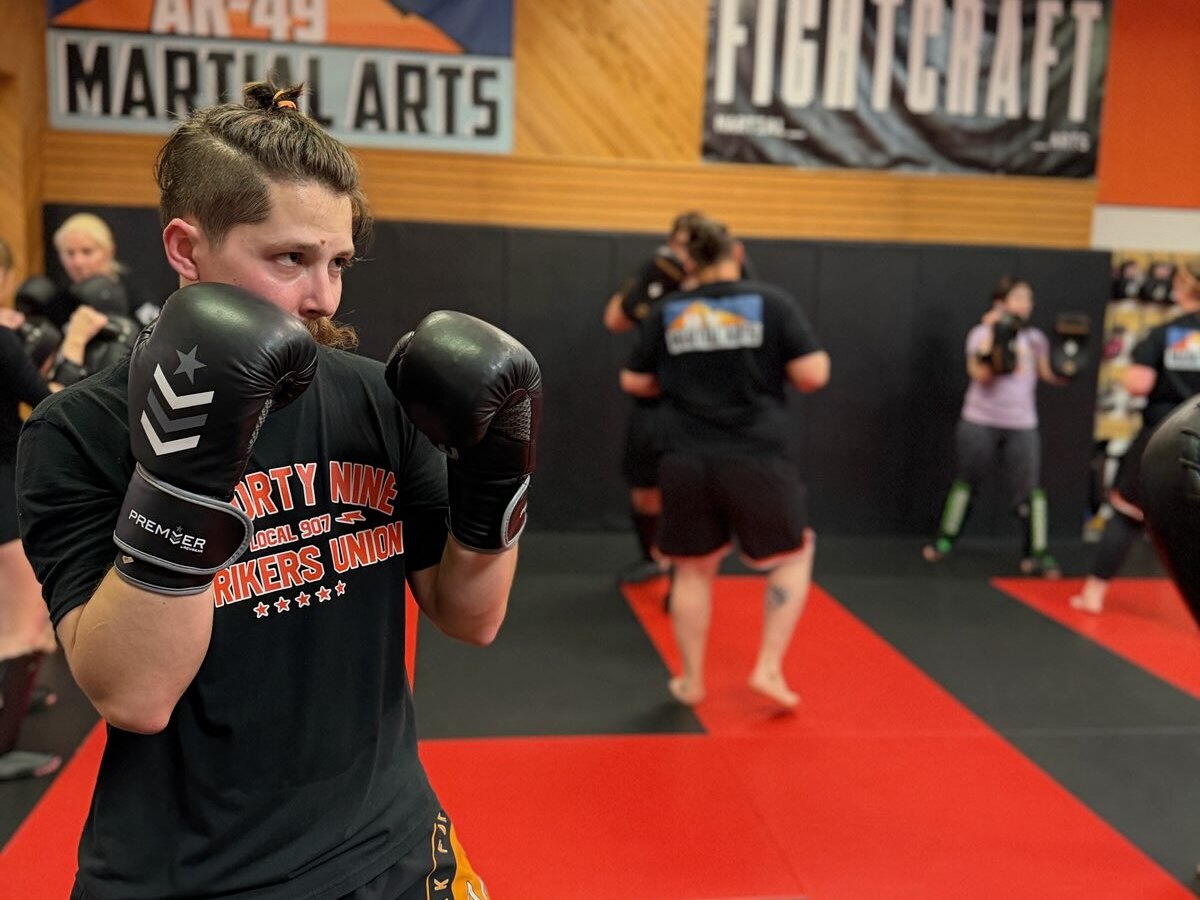
Blocking Punches
Kickboxing | Defense
How to Block Punches in Kickboxing
Blocking means catching punches on your gloves and forearms, and in kickboxing you block more than boxers do because ducking and slipping a lot puts your head where kicks and knees can find it. Start from a good athletic base with your hands up and elbows in, keep one hand covering while the other blocks, and block all the way so the next punch lands on your guard. Then get back to your stance and throw something back.
How to block
- 01
Good athletic base
Feet about shoulder width apart, front foot ahead with the toes pointing forward, knees a little bent and your weight in the middle. That balance lets a punch land on your arms without knocking you off your spot. Stay loose rather than rigid, and keep breathing normally and steady instead of holding your breath when punches come.
- 02
Hands up, elbows in
Both fists sit up by your cheeks with your chin tucked a little, and your elbows stay in close to your ribs. Your gloves cover your head and your elbows cover your body, so a lot of punches land on your guard before you do anything. When one hand blocks, the other stays where it is.
- 03
Eyes open, chin down
Watch their chest and shoulders through your gloves, and keep your eyes open when the punch comes. Beginners blink, look away or turn their head, and then they can't see the next punch. Look between your gloves or just over them, not through a gap you open by spreading them. Chin down, eyes up, the whole time.
- 04
Use your forearms, all the way
In kickboxing you block punches with your forearms and gloves, because knees and kicks come up fast and a head that moves around a lot gets found. Cover all the way, so the punch and the one behind it both land on your guard. A block that swats wide leaves room for the next punch or a kick to come in.
- 05
Glove on your head
When you block, the glove sits on the hard part of your head, at the brow or the temple, with the wrist turned slightly. If there's a gap between the glove and your head, the punch drives your own glove into your face. It should feel like your arm and your head move as one piece.
- 06
Block the cross close
Their right hand comes to your lead side, so catch it on your lead glove and forearm, close to your face, with your body turned a little. Don't reach out to meet it. Reaching pulls your hand off your head, and the left hook that comes after catches you. Some coaches also teach catching the cross on the rear glove or parrying it, and you'll see those in class. The lead side cover is a good first version because it keeps both hands home.
- 07
Hooks: forearm up, wrist turned out
Against a hook, bring that side's glove to your temple, like you're touching your ear, with the forearm standing up and the wrist turned out. The punch lands on your arm and glove instead of your jaw. Keep the other hand on your face, because hooks often come in pairs.
- 08
Body shots: elbow down
Against a punch to the body, drop the elbow on that side to cover your ribs, turn your torso a little toward that side and bend your knees a little. Keep your back fairly straight instead of folding forward at the waist, which drops your head into the next punch. Keep the glove up near your face so you're not open on top. Your elbow and forearm take the punch instead of your ribs.
- 09
Back to your stance
After each block, your hands go right back to your guard and you're balanced in your stance. When you see an opening, throw something back, even just a jab, and if you don't see one, step out at an angle. Standing there blocking and doing nothing only invites more punches.

When to use it
When a combination comes at you. When a partner throws a jab and a cross at you in a drill, blocking is your first answer. You stay balanced, the punches land on your gloves and forearms, and you're still in range to fire back. It's the first defense beginners learn because it doesn't need perfect timing. With a partner, wear a mouthguard and gloves, agree on light speed before you start, and stay slow until your coach has checked your guard.
When it gets fast. When a lot of punches come at once, or you're tired and get caught, bring both hands together tight on your head like a roof. Elbows in, chin down, eyes still on them. This buys you a second to breathe and see what's coming. As soon as there's a gap, step out or punch back so you don't stay stuck in there.
Things to look out for
Closing your eyes
You blink, look down or turn your head away when the punch comes. You lose sight of them, and the next punch or kick lands because you never saw it.
The fix: Keep your eyes on their chest through your gloves, even as you block. Shadow box in a mirror and make yourself watch your own eyes as you cover.
Reaching for the punch
Your hand goes out to meet the punch or swats it wide. That pulls your glove off your head, and the next punch or a kick comes through the gap you just made.
The fix: Let the punch come to your guard and block close to your face. Think small: the glove moves a few inches, not a foot.
Gap between glove and head
Your hands float out in front of your face instead of sitting on your head. A punch hits the glove and knocks it back into your own face, so you take the shot anyway.
The fix: Put the gloves on the hard part of your head, at the brow and the temple, with the wrist turned slightly. You should feel the glove touch your head when you cover.
Dropping the other hand
One hand comes up to block and the other slides down. That's the side they hit next, and it's the most common way beginners get caught on defense.
The fix: Only the blocking hand moves. Shadow box slowly and check that the other glove stays on your cheek every time.
Staying in the shell
You cover up and then just wait while they keep throwing. They get free shots at your arms and body, and sooner or later one gets through.
The fix: Cover, then get out or fire back. As soon as the punches stop for a second, throw a one two or step off to the side.
Backing straight up
Every time punches come, you walk straight backward with your guard up. You stay right in their line, and they keep coming forward until you run out of room.
The fix: Block with your feet set, or step off at an angle after you block. Keep your stance the same size as you move.
What to Practice at Home
Drill 01
Mirror block round
3 rounds of 2 minutes with 1 minute rest, in front of a mirror. Round one, picture a jab and a cross coming in and block each one close to your face, the other hand never moving. Round two, block hooks on both sides with your glove at your temple. Round three, mix in body blocks, dropping the elbow and bending your knees, and keep your eyes up the whole time.
Drill 02
Block and fire
4 rounds of 2 minutes with 1 minute rest, shadow boxing. Every time you block a punch you picture, answer right away with a jab and a cross, then get back to your guard. Go slow the first round, and in the last round add a step off to the side after you punch back.
Drill 03
Hold the roof
4 rounds of 30 seconds with 30 seconds rest. Hold the double forearm cover with your elbows in and your chin down, and step forward, back and to each side while you hold it. Keep your eyes up and breathe the whole time. On the last 5 seconds of each round, open up and throw a one two.
Frequently Asked Questions
How do you block punches in kickboxing?+
With your gloves and forearms, from a good athletic base with your hands up and elbows in. Block all the way so the punch lands on your guard, keep the other hand covering, and keep your eyes open. Then get back to your stance and punch back.
Why block more in kickboxing than in boxing?+
In kickboxing, kicks and knees come up fast. If your head is slipping and ducking a lot, it ends up right where a knee or a kick can land. Blocking keeps your head up and your feet under you, so kickboxers use it a lot, along with footwork to stay out of range. Kicks have their own defenses, like checking with your shin, which you learn alongside punch blocking.
How do you block a hook?+
Bring the glove on that side up to your temple, like you're touching your ear, with the forearm standing up and the wrist turned out. The punch lands on your arm instead of your jaw. Keep your other hand on your face, because a second hook often follows.
How do you block punches to the body?+
Drop the elbow on that side to cover your ribs and bend your knees a little. Keep the glove up near your face so you're not open on top. Then come back up to your normal guard.
What is the shell in kickboxing?+
The shell is a tight cover with your hands on the hard part of your head, wrists turned slightly, and elbows in to cover your middle. It's for when a lot of punches come at once. Use it to get through the moment, then step out or punch back.
Are You Ready?