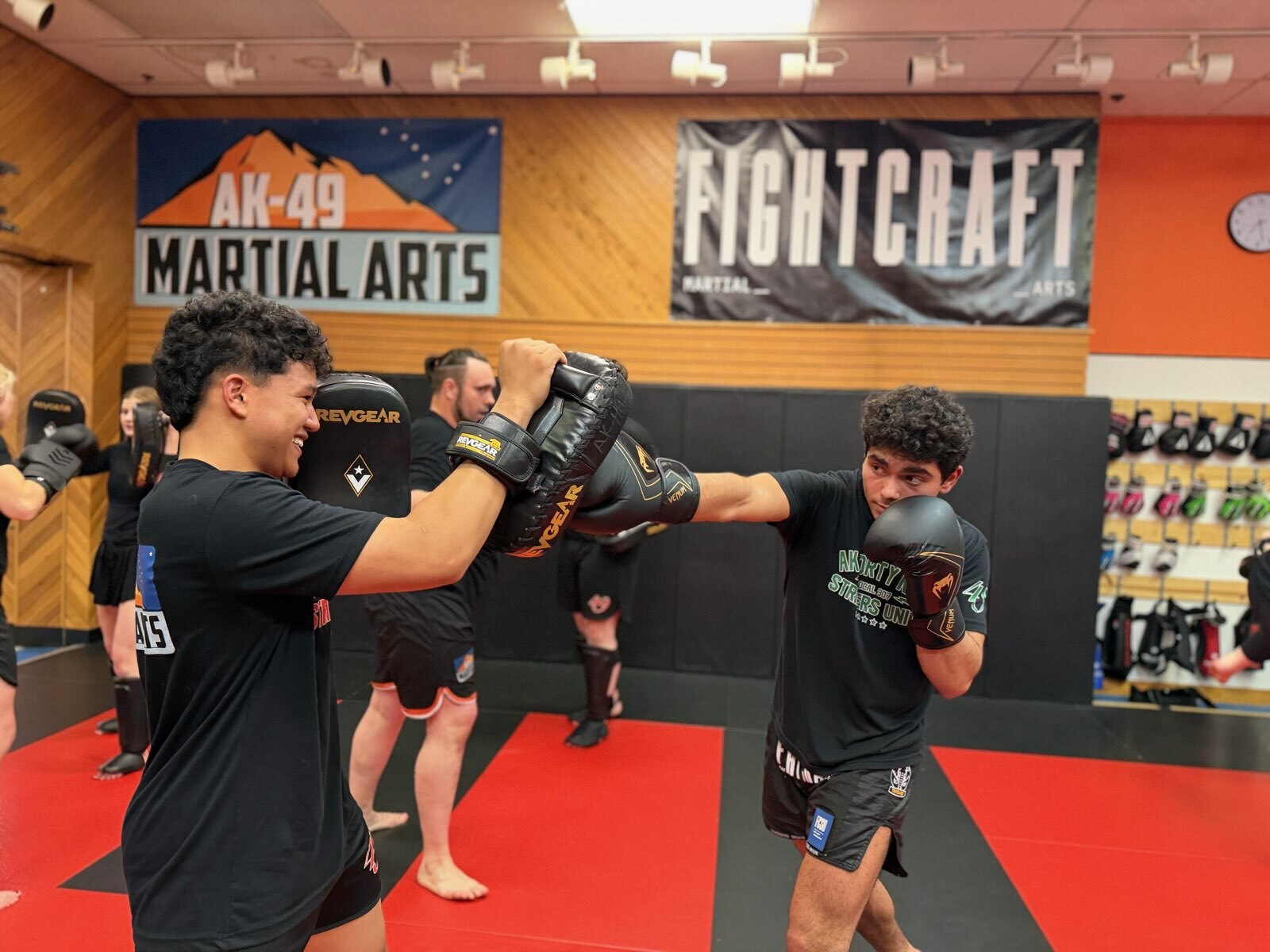
Front Kick and Teep
Kickboxing | Kicks
How to Throw a Front Kick and Teep in Kickboxing
The front kick and the teep, or push kick, both drive the ball of your foot straight forward into the target. The teep pushes your hips through to shove someone away, and the front kick stays more compact and snaps back like a jab. For both, start from a good athletic base with your hands up, lift the knee first, land with the ball of the foot, and bring the leg straight back to your stance.
- 01
Good athletic base
Feet about shoulder width apart, front toes pointing forward, knees a little bent and your weight in the middle. You'll be on one leg for a moment, so you need to start balanced. If your weight is already leaning on one foot, the kick will be slow and wobbly.
- 02
Hands up, elbows in
Both fists stay up at your cheeks with your elbows in close to your ribs and your chin tucked, the whole time the leg is out. Keep your eyes on the target, not on your foot. Don't let your arms swing down to help you balance, because hands on your face mean you can block and punch right after the kick.
- 03
Knee up first
Lift the knee up toward your chest before the foot goes anywhere. This is called the chamber. A high knee lets the kick go over their arms and straight into the target, and it hides which kick is coming.
- 04
Extend and land with the ball of the foot
Push the foot straight out from the chamber and land with the ball of the foot, toes pulled back. Start with the ball of the foot, because it's the easiest way to learn where you're landing. Some coaches teach the teep with the whole sole or the heel for a bigger push, and you may pick that up later. Aim for the stomach, never at the knee in training. Extend with control and don't snap the knee out hard into a straight lock, because that's hard on the joint.
- 05
Use the hips and the standing foot
For the teep, push your hips forward as the leg goes out, so your body weight goes into it. Come up on the ball of your standing foot to drive forward, and let it turn out a little so your hip can come through. If the standing foot stays flat, the kick goes more upward instead of forward. Your upper body tilts back a little to balance the hips going forward, and that's normal for a teep. The front kick stays more upright.
- 06
Push or snap
For the teep, drive the hip through and push them back, but stay over your standing leg and don't chase a target that's too far away. For the front kick, keep the hip more compact and pull the foot back fast, like a jab with your leg. Same knee, same foot, different finish. For the teep, aim at the stomach. For the front kick, aim at the stomach. Higher targets come much later, once your coach says you have the control for them.
- 07
Back to your stance
Pull the leg back along the same line it went out and set it down where it started. Land in your stance with your hands still on your face, ready to punch or kick again. Don't let it drop forward into a big lunging step. Pull it back fast, because a leg left hanging out there is easy for them to catch.
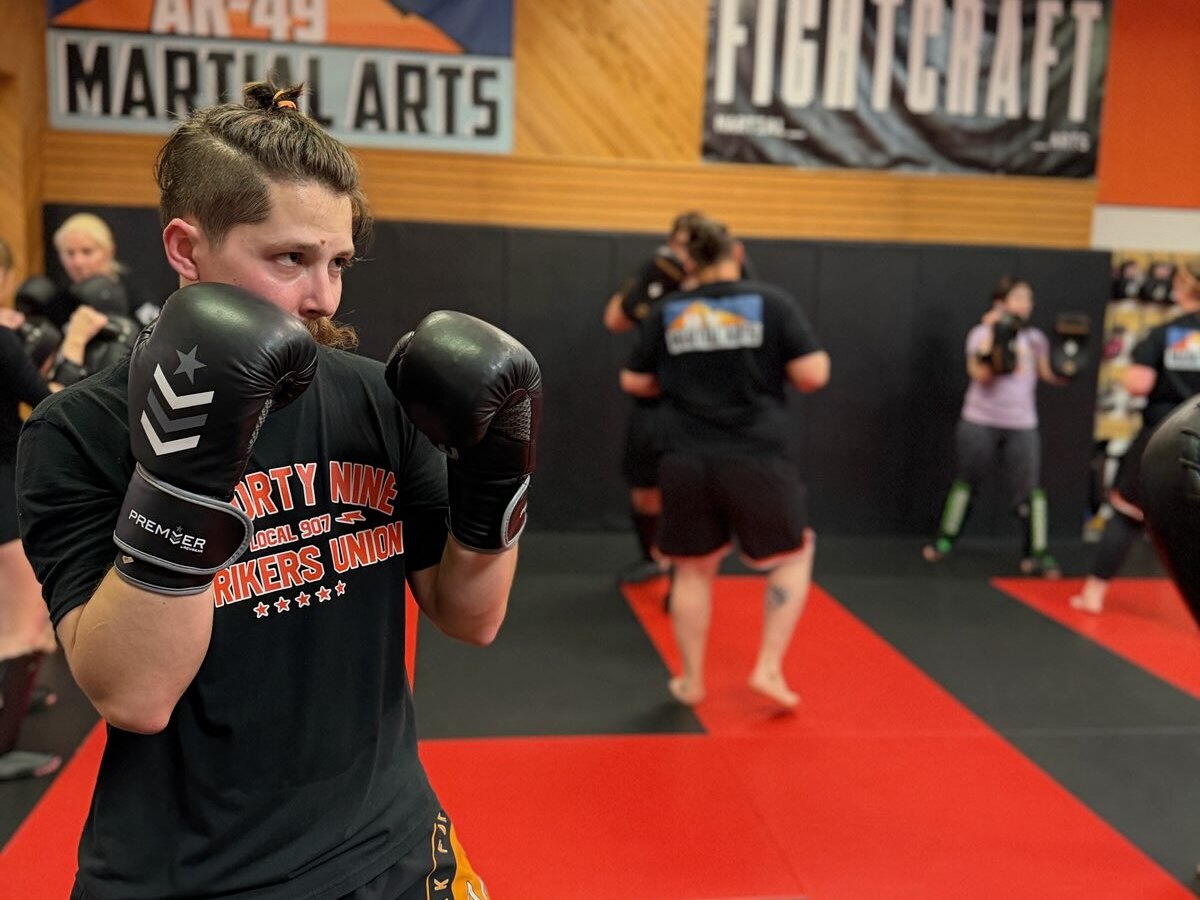
When to use it
To keep someone away. When someone keeps walking forward at you, a teep to the stomach stops them and pushes them back out of range. It gives you space and time to reset your stance. Your leg is longer than your arm, so it reaches them before they can reach you. The front leg teep is quickest for this.
To start a combination. A teep or front kick gets their attention low, and your punches follow as you land. A simple one is teep, then jab and cross, and you can teep with whichever leg feels good. The rear leg front kick is the one with more power when you want it to hurt. Mixing in front kicks with round kicks also keeps them from knowing which kick is coming.
Things to look out for
Dropping your hands
The arms swing down or the hands fall off the face as the leg goes out. It's a very common beginner habit, and it leaves your chin open while you're standing on one leg.
The fix: Keep both fists on your cheeks the whole time. Practice slowly in front of a mirror and watch your hands, not your foot.
Skipping the knee
The leg swings straight up from the floor without lifting the knee first. The kick is weak, easy to see, and it pokes up into their arms instead of going into the stomach.
The fix: Knee up first, every time. Pause for a second at the top in practice so you feel the chamber before you push.
Kicking with the toes
The toes point out and land first. It doesn't push anyone, and it's an easy way to jam your toes.
The fix: Pull your toes back so the ball of your foot lands first. Picture kicking a door shut with the ball of your foot.
Snapping the knee straight
You whip the leg out so hard that the knee locks out at the end. It's hard on your knee, and if you miss, there's nothing stopping it.
The fix: Push out with control and keep a little bend at full extension. Power comes from the hips, not from slamming the knee straight.
Leaning way back
You fold at the waist and throw your upper body backward to get the leg up. You lose your balance and the push goes nowhere, because your weight is going the wrong way.
The fix: Push your hips forward into the kick. A small lean back is normal on a teep, because it balances your hips coming forward, but your head should stay close to over your hips, not way behind them.
Falling forward after the kick
The leg drops straight down in front of you and you end up in a big lunging step. You're off balance, too close, and your stance is gone.
The fix: Pull the leg back first, then set it down. Land in control, in your stance, before you do anything else.
What to Practice at Home
Drill 01
Slow chamber
3 sets of 10 slow kicks on each leg, with a hand on a wall or something solid for balance if you need it. Lift the knee, pause one second, push the ball of the foot out, pull it back to the knee, then set it down in your stance. Focus on the knee coming up first and the toes pulled back.
Drill 02
Shadow box teeps
3 rounds of 2 minutes with 1 minute rest, in front of a mirror if you have one. Round one, front leg teeps only, hands on your face. Round two, back leg teeps only, pushing the hips through. Round three, teep with either leg, then jab and cross as the foot lands.
Drill 03
Keep away on the bag
If you have a hanging bag, 3 rounds of 2 minutes, on a floor that isn't slippery, in bare feet or flat shoes. Push the bag away with a teep, and when it swings back, teep it again to stop it. Switch legs whenever you want. If you miss, that's fine, reset and keep going.
Frequently Asked Questions
What's the difference between a teep and a front kick?+
They look almost the same: knee up, then the ball of the foot goes straight out. The teep drives the hips all the way through to push someone away. The front kick keeps the hips more compact and snaps back like a jab, so it's more of a strike.
What part of the foot do you teep with?+
The ball of your foot, with the toes pulled back. That gives you a firm point to push or strike with. Landing on the toes jams them and doesn't move anyone.
Which leg should I teep with?+
Either one. The front leg is faster and great for stopping someone walking in. With a partner, kick a belly pad or kick shield they brace against their stomach, and keep it light until they're ready. The back leg has more power because your hips come through with it. Practice both and use whichever feels good.
Where should a teep land?+
Start with the stomach. As you get better you'll learn other targets. If they're holding their guard tight, don't kick up into their elbows, bring the knee up and push into the middle.
Why do I lose my balance on a teep?+
Usually it's leaning back, dropping your arms, or starting with your weight already on one foot. Start in a balanced stance, keep your hands on your face and push the hips forward instead of leaning away. Slow chamber reps with a hand on a wall build the balance fast.
Are You Ready?