
Jab Cross Hook Low Kick
Kickboxing | Combos
How to Throw Jab, Cross, Hook, Low Kick in Kickboxing
Jab, cross, lead hook, then a rear leg low kick to the thigh. The punches make them defend their head, and the hook turns your hips so your weight is already loaded for the kick with the back leg. Keep your base and your hands up the whole way, punch from the face, bring every punch back, and finish back in your stance.
- 01
Good athletic base
Feet about shoulder width apart, front foot ahead with the toes pointing forward, knees a little bent and your weight in the middle. Four strikes in a row will pull you off balance if your base is sloppy. You should feel ready to turn your hips both ways without leaning.
- 02
Hands up, elbows in
Both fists sit up by your cheeks with your chin tucked a little, and your elbows stay in close to your ribs. Whichever hand isn't punching stays on your face. During the kick, the hand on your front side stays glued to your cheek.
- 03
Punch from the face
The jab, the cross and the hook all start at your face with no wind up. The jab and cross go straight out until the arm is nearly straight, with a soft elbow, and the cross turns the back foot. The hook stays short, with the elbow level behind the fist.
- 04
Back to the face
Every punch comes straight back to your face before the next one goes. Keep breathing steady, and let a breath out on the low kick. Rushing the punches so they never come back is how your guard falls apart halfway through.
- 05
Lead hook, front foot planted
Throw the lead hook by turning your hip and shoulder, and keep the front foot planted with only a small turn. A big pivot on the hook shortens your stance, and then the kick has no room. A hook with less pivot leaves you set up to kick hard.
- 06
Rear leg low kick
The hook leaves your weight sitting a little on your back leg, like a spring, with your hips turned. Step the front foot a few inches out and forward on a diagonal, toward your lead side, and shift your weight onto it. Come up on the ball of that foot and turn it until your heel points toward them as your hip turns over, landing your shin into the middle of the outside of their front thigh, well above the knee. Keep your eyes on their chest, not on the leg.
- 07
Back to your stance
Bring the kicking leg back and set it down in your stance, with both hands right back on your face. Then step out or move. Don't stand in front of them admiring the kick. If they lifted the leg and checked it, you'll feel shin on shin, so get the foot down fast and cover up, because a punch often comes right behind a check.
When to use it
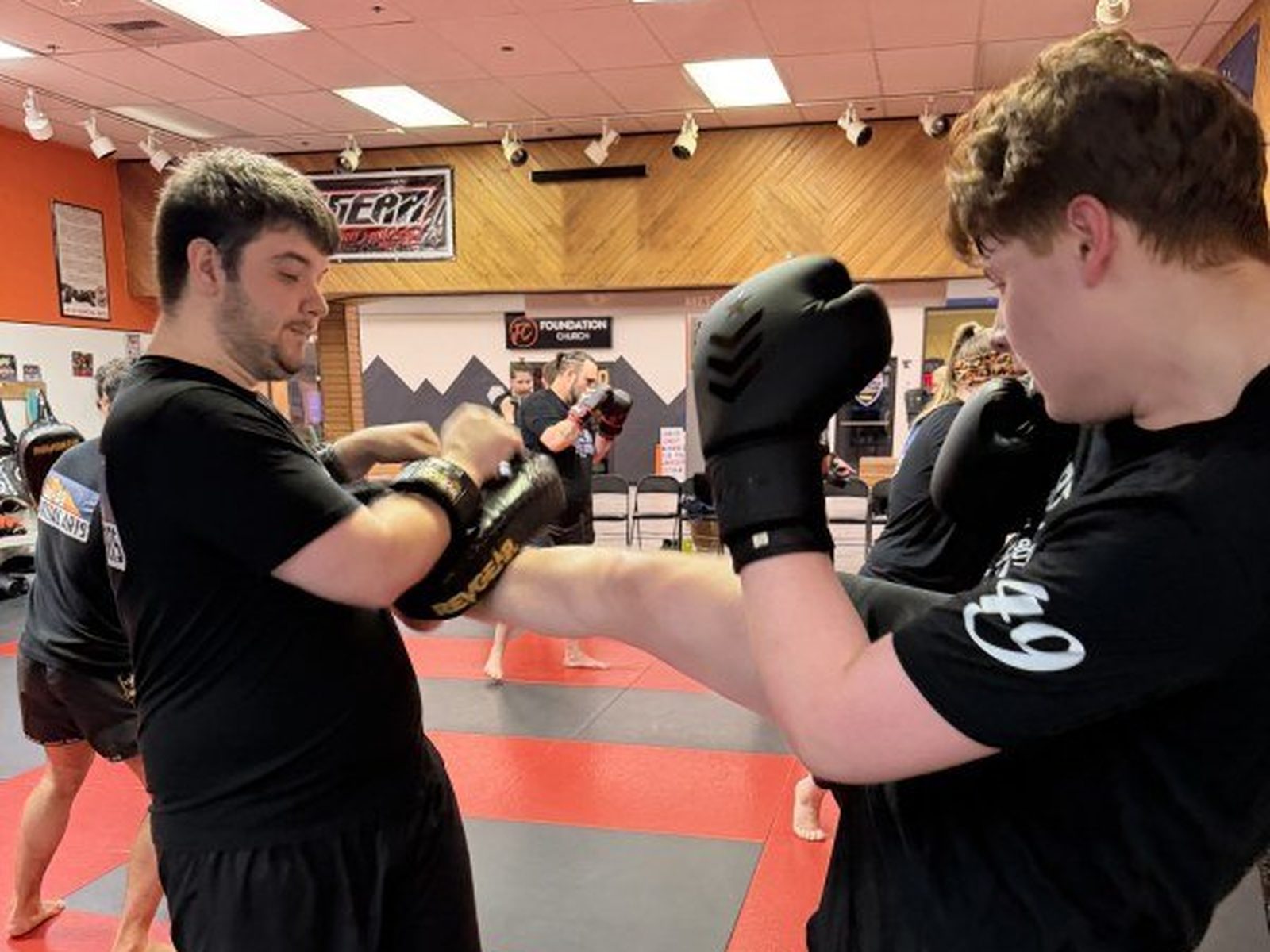
When they cover up from your punches. Three punches in a row make most people bring their hands up and focus on their head. That's when their legs are open. The low kick comes in low while their attention is high. It works because it changes levels, so they have to defend the head first and then the leg.
When you're close after the punches. The hook and the low kick both land from fairly close range, which is why they fit together. After the jab and cross you're close enough for the hook, and that same distance is right for the low kick. If you're farther away, a body kick fits better. Learn this one once your one two and your low kick each feel solid on their own.
Things to look out for
Pivoting the hook too far
You spin the front foot all the way on the hook. Your stance gets short and square, and the kick comes out weak or you have to reset your feet first.
The fix: Keep the front foot planted on the hook and let the hip and shoulder turn. You should feel your weight load onto the back leg, then shift forward onto the front foot as you step and kick.
Dropping your hands on the kick
The arms swing down as the leg goes. You're standing on one leg, in close, with your chin open, right where their punches land.
The fix: Keep the front hand glued to your cheek through the whole kick. Watch that hand in the mirror when you shadow box it.
Rushing the punches
You hurry to get to the kick, so the punches come up short and never come back to your face. Your guard falls apart and the punches don't make them cover up.
The fix: Throw each punch all the way out and all the way back. Go slow until every rep is clean, then speed up.
Kicking with the foot
You land with the foot or toes instead of the shin. It doesn't do much, and it's easy to hurt your foot on a knee or elbow.
The fix: Step a little deeper on the diagonal so the shin lands. On the bag, the mark should show up on your shin.
Kicking from too close
You're right on top of them when you kick. Your shin can end up hitting their knee instead of their thigh, which hurts you more than them.
The fix: If the hook landed jammed up close, take a small step back or out before the kick. The shin should land in the middle of the thigh.
Standing in front after the kick
You throw all four and stay right there. That's when they fire back.
The fix: Bring the leg back to your stance, get both hands on your face and move. Make moving out the last part of the combination every time you drill it.
The same order every time
You always throw it exactly the same way. After a while they know the kick is coming and lift the leg to block it.
The fix: Once it's smooth, mix it up. Leave out the jab, add a second hook, or finish with the kick to the body instead. Start with the basic order first.
What to Practice at Home
Drill 01
Build it up in the air
3 rounds of 2 minutes with 1 minute rest. Round one, cross and hook only, checking that the front foot stays planted. Round two, hook to low kick, focusing on the hips turning and the hand staying on your face. Round three, the full jab, cross, hook, low kick, then back to your stance.
Drill 02
Mirror rounds
3 rounds of 2 minutes in front of a mirror, slow. Do 10 clean reps, rest 20 seconds, and repeat. Watch two things only: every punch comes back to your face, and your front hand stays on your cheek during the kick.
Drill 03
Bag rounds
If you have a hanging bag, 4 rounds of 2 minutes with 1 minute rest, with wraps and gloves on. Throw the full combination with the kick landing low on the bag, then step out and reset. Start at half power and build up only when the shin is landing every time, since your shins need time to get used to the bag. With a partner, they hold a mitt or Thai pads for the punches and a Thai pad at their hip for the kick, never down by the knee, and you stay light until they say go.
Frequently Asked Questions
Why does a hook set up a low kick?+
The hook makes them defend their head, then they have to defend the leg. It also turns your hips and loads your weight onto the back leg. From there you step the front foot out, shift onto it and let the back leg swing through, so the kick comes off the other side naturally.
Do you pivot on the hook in this combo?+
Keep the front foot planted with only a small turn. A big pivot gives the hook more power but shortens your stance and slows the kick down. Let the hip and shoulder do the turning.
Where does the low kick land?+
With your shin, into the middle of the outside of their front thigh, well above the knee. Cut through the leg at a slight downward angle instead of slapping across the surface. Keep your eyes on their chest while you do it.
Which leg kicks?+
Your back leg. If you stand with your left foot forward, it's your right leg. The hook is thrown with the front hand, so the kick comes off the opposite side.
Is this combination too much for a beginner?+
It's four strikes, so learn the pieces first. Get the jab and cross solid, then the lead hook, then the low kick on its own. Once those feel okay, put them together slowly and speed up as it gets smooth.
Are You Ready?